
FAAC Gate Repair in San Diego: A Homeowner’s Guide
FAAC gate repair in San Diego usually costs between $185 and $450 for common fixes like hydraulic line replacement, control board swaps, and operator reprogramming. The challenge isn’t finding someone who says they can fix it. It’s finding someone who’s actually touched a FAAC 400 or 760 before, because most San Diego techs spend their days on LiftMaster and Linear openers. If you’d rather skip the research and get a straight answer, call (877) 517-5469 and we’ll diagnose it over the phone.
Here’s the thing about FAAC that catches San Diego homeowners off guard: these are genuinely superior machines built in Bologna, Italy, with hydraulic engineering that American-market operators never adopted. That’s great when they’re working. When they’re not, the average gate company sends a tech who’s never opened one before, he pokes around for an hour, guesses at the problem, orders the wrong part, and you’re now paying for his education. We’ve fixed plenty of those follow-up jobs. The original repair wasn’t the problem. The misdiagnosis was.
Why FAAC Gates Are Different (And Why That Matters for Repairs)
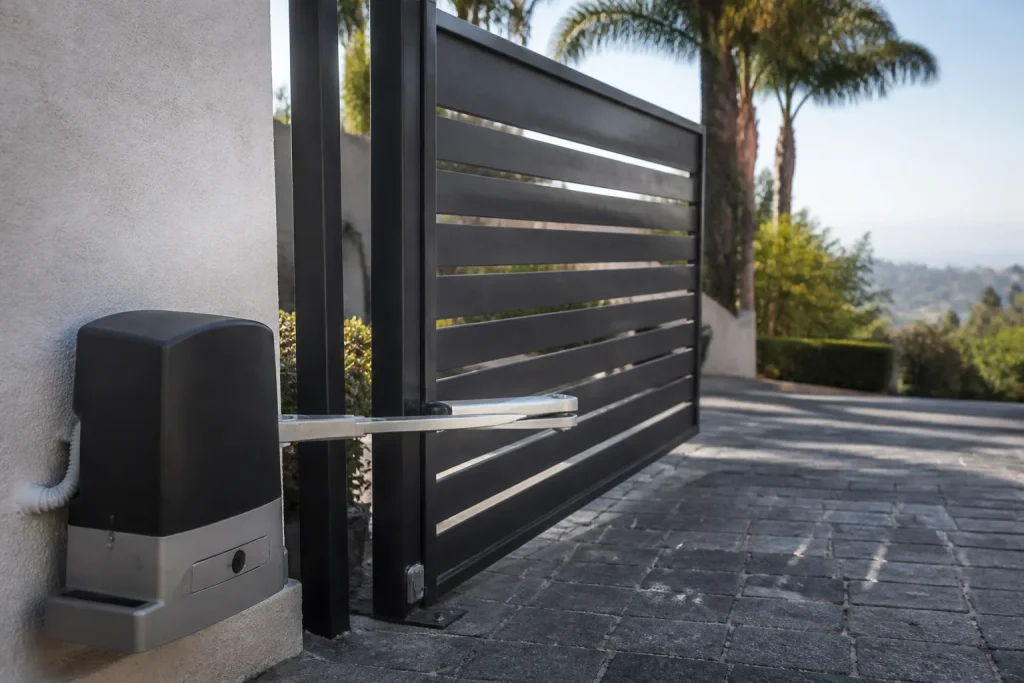
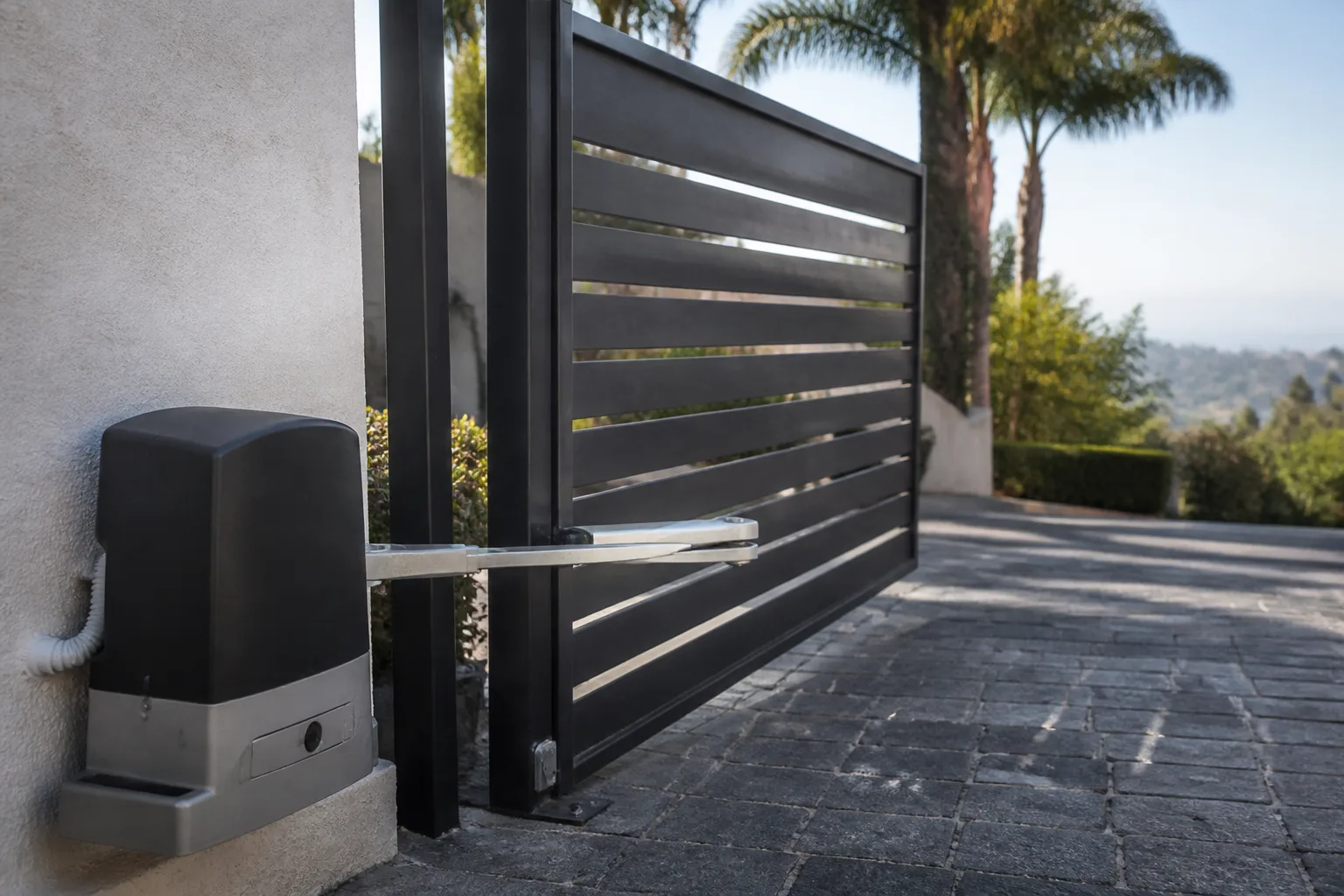
Most automatic gates in San Diego run on electromechanical operators. A motor spins, a chain or belt moves, an arm swings the gate. Simple, proven, and every tech in the county has seen a hundred of them. FAAC’s flagship residential and light-commercial models use something completely different: hydraulics. An electric motor drives a piston through fluid, not through gears and chains. That single design choice changes everything about how the operator behaves, how it wears, and how it fails.
In our experience, the practical difference shows up in three ways. First, hydraulic FAAC operators move with noticeably more authority. A heavy gate, a wind gust off Mission Bay, a slight sag in a 16-foot iron leaf: the hydraulic piston doesn’t struggle the way a gear-drive motor does. Second, they’re quieter at speed. Third, and most important for repair work, the failure modes are completely different. An electromechanical opener in San Diego typically dies from a stripped gear or a burned-out motor. A FAAC hydraulic unit more often fails from a leaking line, a degraded O-ring, contaminated fluid, or a worn internal piston seal. If your tech starts diagnosing based on what he sees on LiftMaster jobs, he’s going to miss it.
Parts sourcing compounds the problem. FAAC distributors in Southern California are fewer and farther between than the LiftMaster supply chain. A shop that doesn’t stock FAAC-certified seals, hoses, and hydraulic fluid is either ordering parts and making you wait a week, or worse, installing generic substitutes that fail inside a year. When we work on a FAAC, we use FAAC-spec parts. Not aftermarket, not “close enough.”
The FAAC Models We See Most Often in San Diego
San Diego’s gate market is a mix of mid-century custom homes in Point Loma and La Jolla, HOA communities in Rancho Bernardo and Scripps Ranch, and newer builds in Otay Mesa and Carmel Valley. Across that range, three FAAC model families dominate.
The FAAC 400 series is the workhorse. Installed by the thousands in San Diego HOA communities during the 1990s and 2000s, these hydraulic swing-gate operators are now hitting the age where seals harden, hoses weep, and pump motors lose torque. They’re generally worth repairing, even at 20+ years old, because the core hydraulic architecture is overbuilt. We regularly see FAAC 400 units from 2001 still opening reliably once we replace the fluid and a $30 seal.
The FAAC B614 is the other common residential unit, typically paired with lighter aluminum or tubular steel driveway gates. This is an electromechanical operator, closer in design to what American-market brands use. It wears differently, and the common failures are what you’d expect: capacitors, control board relay failures, and limit switch drift. These are quick repairs if the tech has the right board on the truck.
The FAAC 760 is the heavy-swing commercial and large-residential option, often specified for apartment complexes and estate gates. Hydraulic, powerful, and durable, but when a 760 goes down, the problem is usually a system issue: a failing pump, a valve block problem, or a control board that’s no longer reading the encoder correctly. This is where a real diagnostic tool makes the difference between an hour job and two weeks of trial and error.
Reading FAAC Fault Codes Before You Call a Technician
Here’s a step most repair companies won’t tell you about, because they’d rather bill the diagnostic trip. FAAC operators have onboard diagnostics, and if you own the handheld programmer or the gate’s control board has a readable display, you can often identify the fault code yourself before you pick up the phone. That information changes the entire conversation with a repair shop. You stop being “someone with a broken gate” and become “someone with a FAAC 760 throwing code E07.” That’s a very different, much faster job.
The easiest way to read codes depends on the model. Older FAAC 400-series boards use a small LCD screen on the control unit, accessed by opening the operator housing (power is low-voltage here, but use common sense and don’t go poking where you’re not comfortable). Newer FAAC models, including the B614 and many 760 configurations, work with FAAC’s handheld programmer. You plug it into the board’s programming port, and the display walks you through active faults.
Common codes and what they usually mean in our experience:
- Fault in motor run or pump timeout: the operator called for movement but the gate didn’t respond within its programmed window. Often points to a failing capacitor or worn pump motor.
- Photocell or safety-edge fault: a beam is blocked or a safety edge is faulting. We see this constantly on San Diego hillside gates where shifting soil has moved the photocell brackets just enough to misalign the beam.
- Fault in encoder or limit switch: the board has lost track of the gate’s position. On hydraulic 400s this often signals a failing internal encoder or a valve not fully closing.
- Low oil or oil pressure fault (hydraulic models only): this one is obvious but worth taking seriously. Low hydraulic fluid doesn’t just stop the gate; running the pump dry can score the piston and turn a $50 fill-and-bleed into a $700 pump rebuild.
One honest caveat before you go hunting for a programmer: not every FAAC board plays nice with every programmer, and there are firmware quirks that confuse even experienced techs. If you’re not getting clean readings, don’t keep guessing. That’s when you should call a San Diego electric gate repair specialist who works on FAAC regularly.
FAAC Hydraulic Leaks: When It’s Not the Seal
Here’s the single most common FAAC misdiagnosis we correct in San Diego: a homeowner sees oil on the operator housing or a puddle near the gate post, a “gate guy” comes out, says “seal’s gone,” and replaces the seal. Two months later, the leak is back and the homeowner is furious. The seal wasn’t the problem.
On hydraulic FAAC operators, fluid can show up for reasons that have nothing to do with a blown O-ring. One culprit we’ve seen repeatedly in San Diego’s marine-heavy air zones (Point Loma, Coronado, Imperial Beach, anywhere the salt fog rolls in) is corrosion on the hose fittings. The salt air oxidizes the brass or steel fitting, the threaded connection loses its seal, and the fluid weeps out around the threads. Replacing the internal seal does nothing because the leak isn’t internal. The fix is a new fitting and often a new section of hose.
Another less obvious cause is overfilled reservoirs. FAAC specs a maximum fill line for a reason. When a previous tech topped off the fluid without bleeding the system properly, the excess has to go somewhere when the piston cycles. It usually finds its way past the reservoir cap or through a breather vent. That’s not a seal failure. That’s a system that was serviced incorrectly.
The third one we don’t see until it’s been going on for a while: micro-cracks in the hydraulic hose itself. San Diego sun and heat cycling (those 95-degree Santa Ana days followed by cool nights, year after year) will eventually dry-rot a hose’s outer jacket and start hairline cracks in the inner lining. The leak is slow, the fluid spread is thin, and the hose looks fine until you bend it. A tech who replaces the seal and says “all good” never looked at the hose.
If you’ve got a leaking FAAC and you’ve already paid for a seal once, ask your next repair company to pressure-test the system instead of just dropping in another O-ring set. We pulled a 2006 FAAC 400 out of an estate in Rancho Santa Fe last year where the owner had been through two seal replacements in eighteen months. The actual problem was a corroded return line fitting hidden behind the pump body. An hour of real diagnostics found it; another forty minutes fixed it.
Questions to Ask Before You Book FAAC Repair in San Diego
Not every gate company in San Diego has FAAC experience. That’s not an insult to them; it’s just the market reality. LiftMaster and Linear dominate the local install base, and that’s what most techs see day to day. The problem comes when a company with no FAAC background takes your money and learns on your job. Here are the questions that separate a real FAAC-capable shop from a guesser.
- “Do you stock FAAC-certified parts, or are you ordering from a distributor after diagnosis?” The answer tells you how long you’ll wait and whether they’re going to push you toward a replacement they have on the truck instead of repairing what you own.
- “Do you carry FAAC diagnostic equipment, specifically a handheld programmer compatible with my model?” A shop without the tool is a shop guessing. Guesses cost you hourly labor.
- “Have you worked on my specific model before?” A FAAC 400 hydraulic swing and a FAAC B614 electromechanical are different machines with different failure patterns. Experience on one doesn’t automatically transfer. Listen for a specific answer, not “we work on all brands.”
- “Will you repair my existing FAAC, or are you going to recommend a full replacement?” The right answer is “it depends on what we find.” A reflex recommendation to replace before anyone has opened the unit is an upsell, not a diagnosis.
- “What’s your diagnostic fee, and is it credited toward the repair if I approve the work?” Reasonable shops charge a trip and diagnostic fee. Shops that are confident in their diagnoses usually credit it toward the repair.
At San Diego Gate Company, every technician who works on FAAC has been trained on the brand’s hydraulic and electromechanical lines. That matters more with FAAC than with almost any other brand, because the design is different enough that bad instincts from other systems lead straight to bad diagnoses.
When to Repair vs. When to Replace a FAAC Operator
This is the financial question behind every service call, so here’s the honest math. Most FAAC units in San Diego are worth repairing at almost any age if the piston body and pump assembly are intact and the hydraulic circuit isn’t compromised. A 20-year-old FAAC 400 with a leaking hose and a tired capacitor is a $400 repair and likely five more years of service. That’s better than $4,200 for a new operator and install.
Replacement starts making sense when the pump has been run dry and scored internally, when the control board has failed twice in three years, or when the operator was undersized for the gate from the beginning (a B614 trying to swing a heavy 400-pound iron gate is a mismatch, not a repair issue). It also starts making sense if your gate itself is structurally failing at the hinges or the post has moved. No operator, FAAC or otherwise, works right on a gate that doesn’t hang straight.
We don’t sell replacements on a repair call. We diagnose the real problem. If the honest answer is “this unit needs to be retired,” we’ll tell you why with specific measurements and codes, not vague hand-waving. If it’s fixable, we fix it. That’s the whole job. San Diego homeowners deserve that from any gate repair company they call.
The Bottom Line
FAAC builds excellent gate operators that most San Diego companies don’t fully understand. Properly maintained, a hydraulic FAAC will outlast almost any American-market alternative. The key is getting it diagnosed correctly the first time. The most common FAAC failures in San Diego are hydraulic leaks (often from fittings and hoses rather than internal seals), failing capacitors on the 400 series, and board faults on the B614. Step one is reading whatever fault codes you can pull. Step two is hiring a shop that clearly knows FAAC, stocks FAAC parts, and answers questions about your model specifically rather than “all brands.”
If you’re in San Diego and need help with a FAAC gate, San Diego Gate Company offers free phone consultations. We’ll talk through the symptoms, help you pull codes if you haven’t already, and give you a straight answer before we ever charge you anything. Call (877) 517-5469. And if you’re thinking about replacing rather than repairing, we’ll give you an honest opinion on whether that’s the right call. For related work, see our gate installation in San Diego page.
Frequently Asked Questions
Most FAAC repairs in San Diego land between $185 and $450. Simple fixes like a capacitor replacement, limit switch adjustment, or control board swap sit at the lower end. Hydraulic work like hose replacement, fitting repair, or fluid flush-and-bleed typically runs $250 to $400 depending on the model and how much hose needs replacing. A full pump rebuild or control board replacement on a FAAC 760 can push toward $700 to $1,000. Call (877) 517-5469 for an exact quote on your model. Estimates are free.
The most common FAAC problems we see in San Diego are hydraulic fluid leaks (often from corroded fittings or dry-rotted hoses, not internal seals), failed capacitors on 400-series units, misaligned photocells on hillside gates, and control board faults on B614 models. Salt air in coastal San Diego neighborhoods accelerates fitting corrosion, and temperature swings stress hoses over time.
In many cases, yes. If the fault is something we carry parts for (capacitors, seals, common hoses, fuses, control boards for the models we service most), same-day repair in San Diego is realistic. More complex hydraulic rebuilds or rare board failures may take a few days if a part needs to ship from the FAAC distributor. We’ll tell you upfront which situation you’re in. Call (877) 517-5469 and we can usually give you a same-day answer on feasibility.
We work on virtually every major gate brand, including LiftMaster, BFT, Linear, and FAAC, so if your property has multiple operators from different manufacturers, one call covers it. Being brand-agnostic means we recommend the right fix for the system you own, not a replacement that’s more convenient for us. That’s the whole point of being gate specialists rather than generalists.
Written by the team at San Diego Gate Company, serving San Diego since 2018.
Need Gate Repair Help?
Call San Diego Gate Company — licensed & insured, here with fast after-hours help in San Diego.
(877) 517-5469