

Last updated October 31, 2026
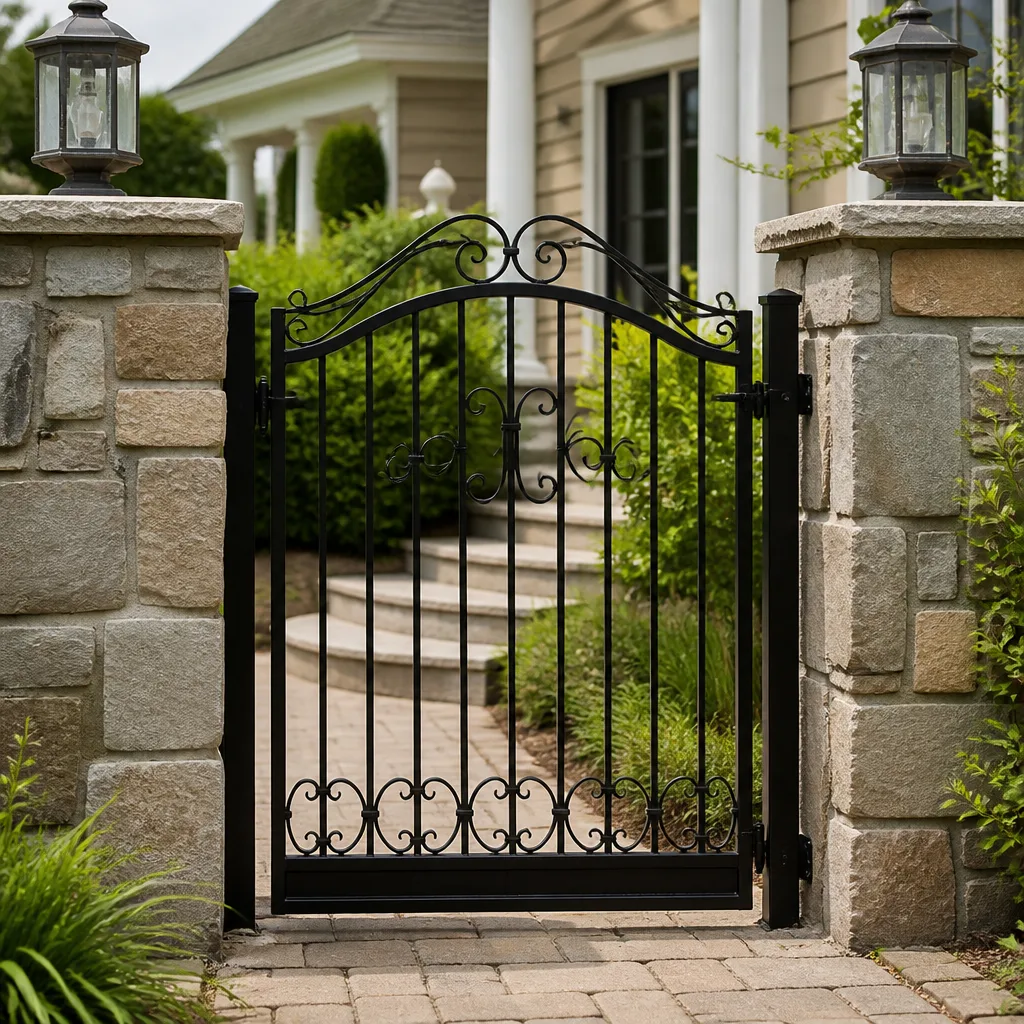 Wrought iron
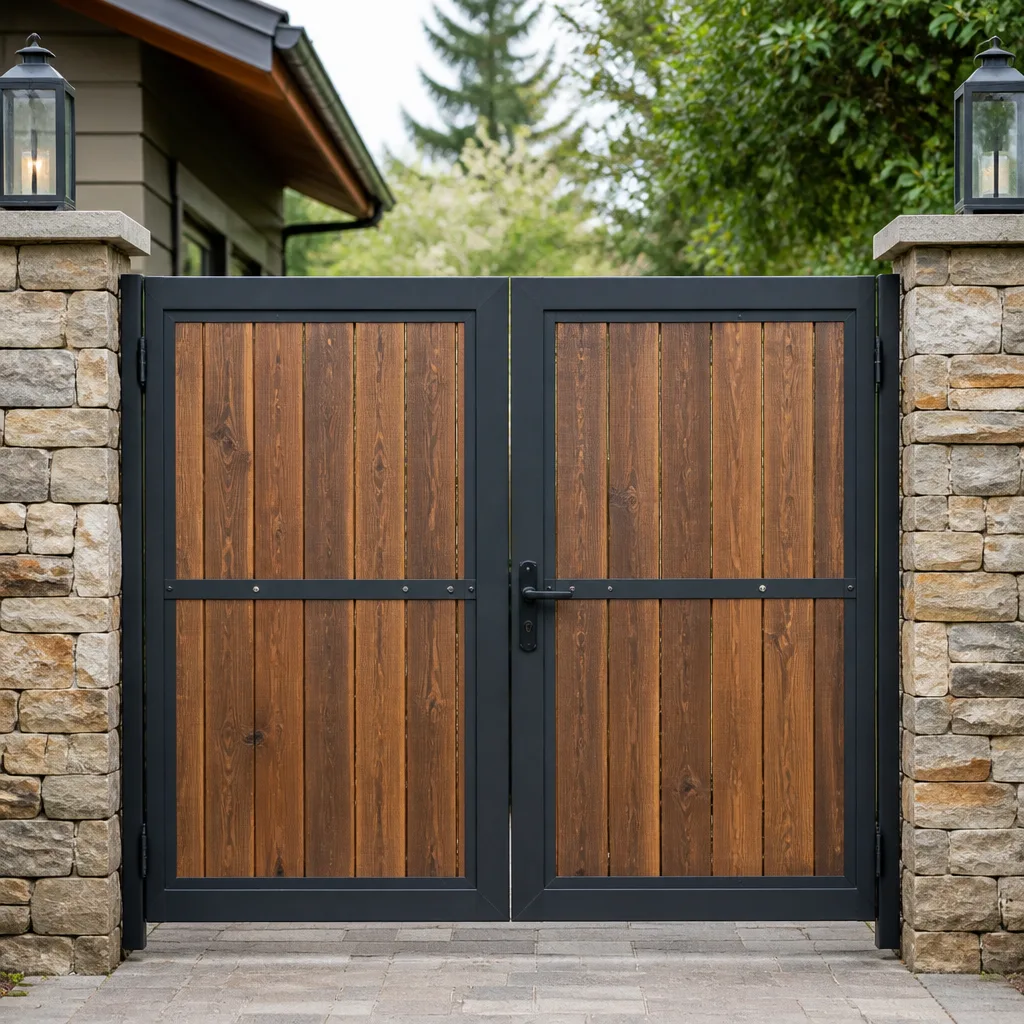 Wood & steel frame
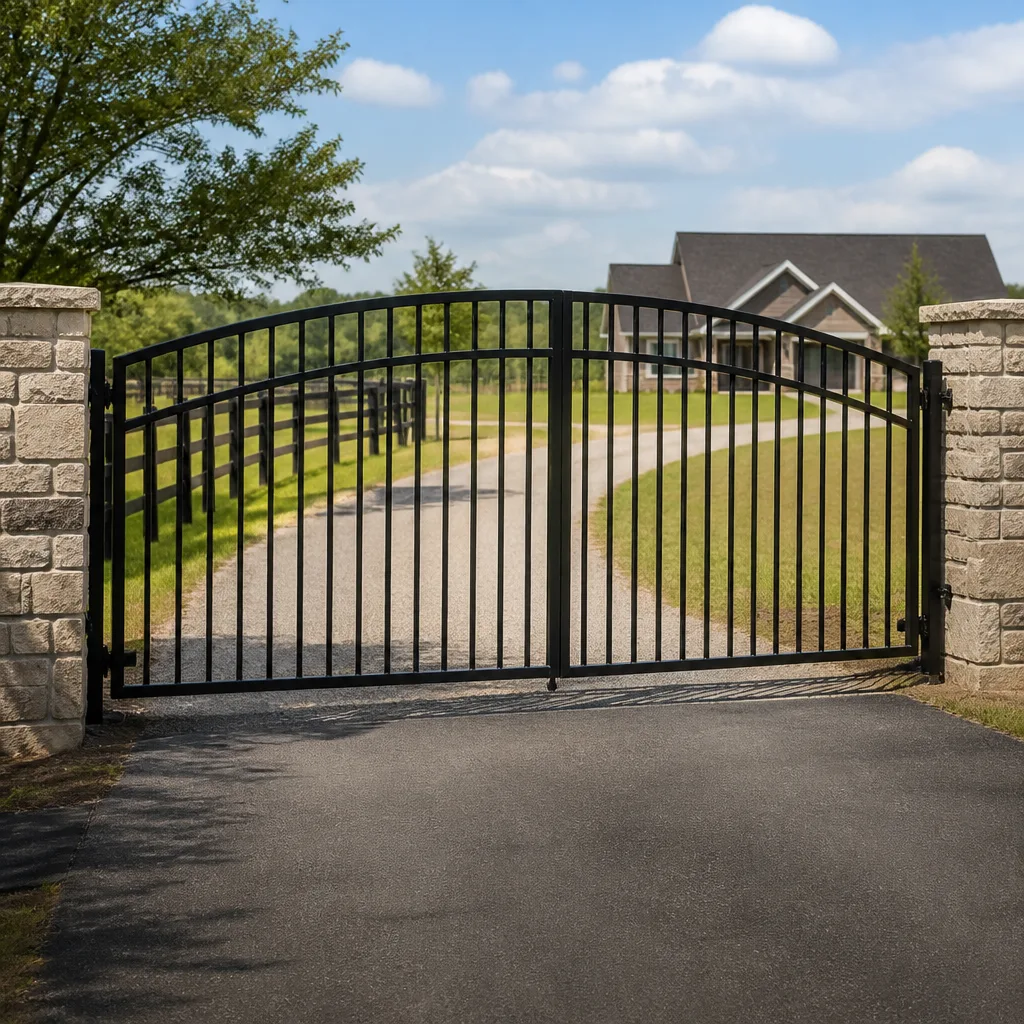 Farm & ranch
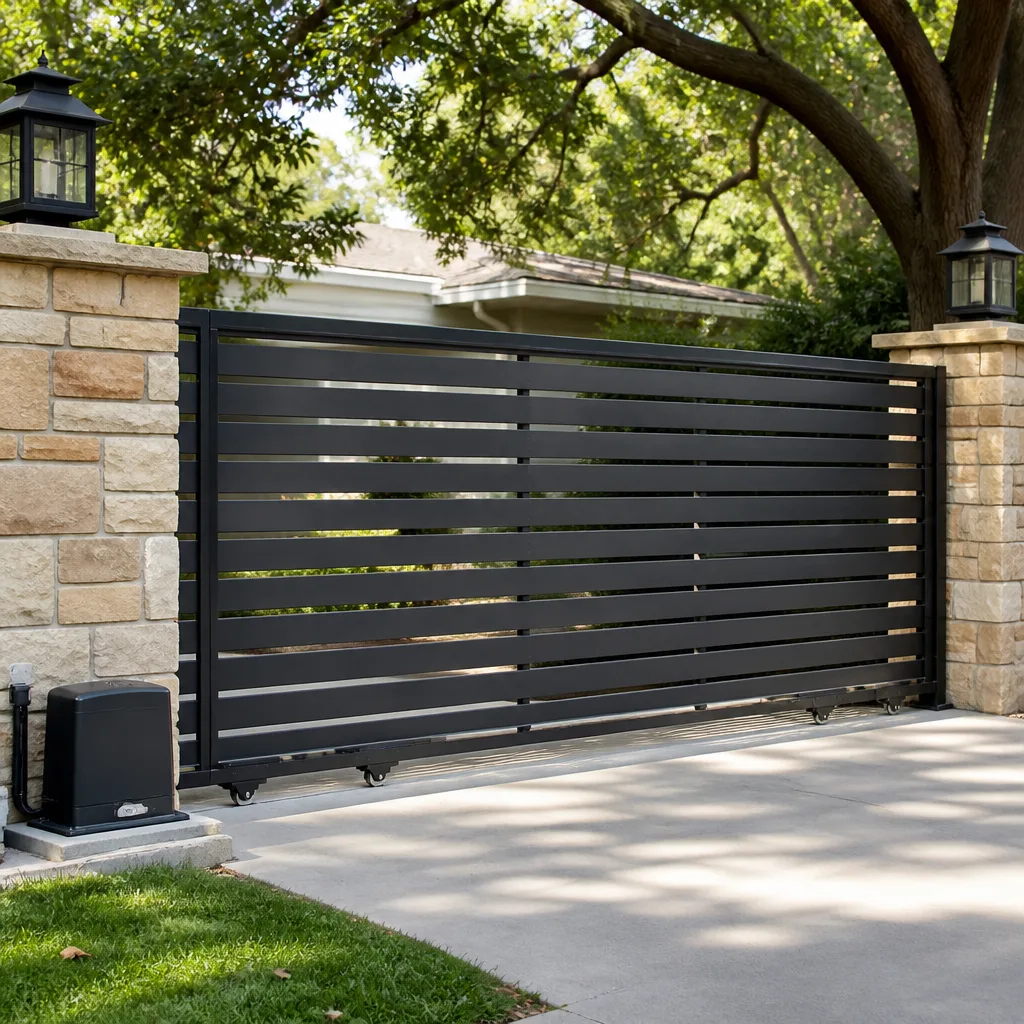 Sliding driveway gates
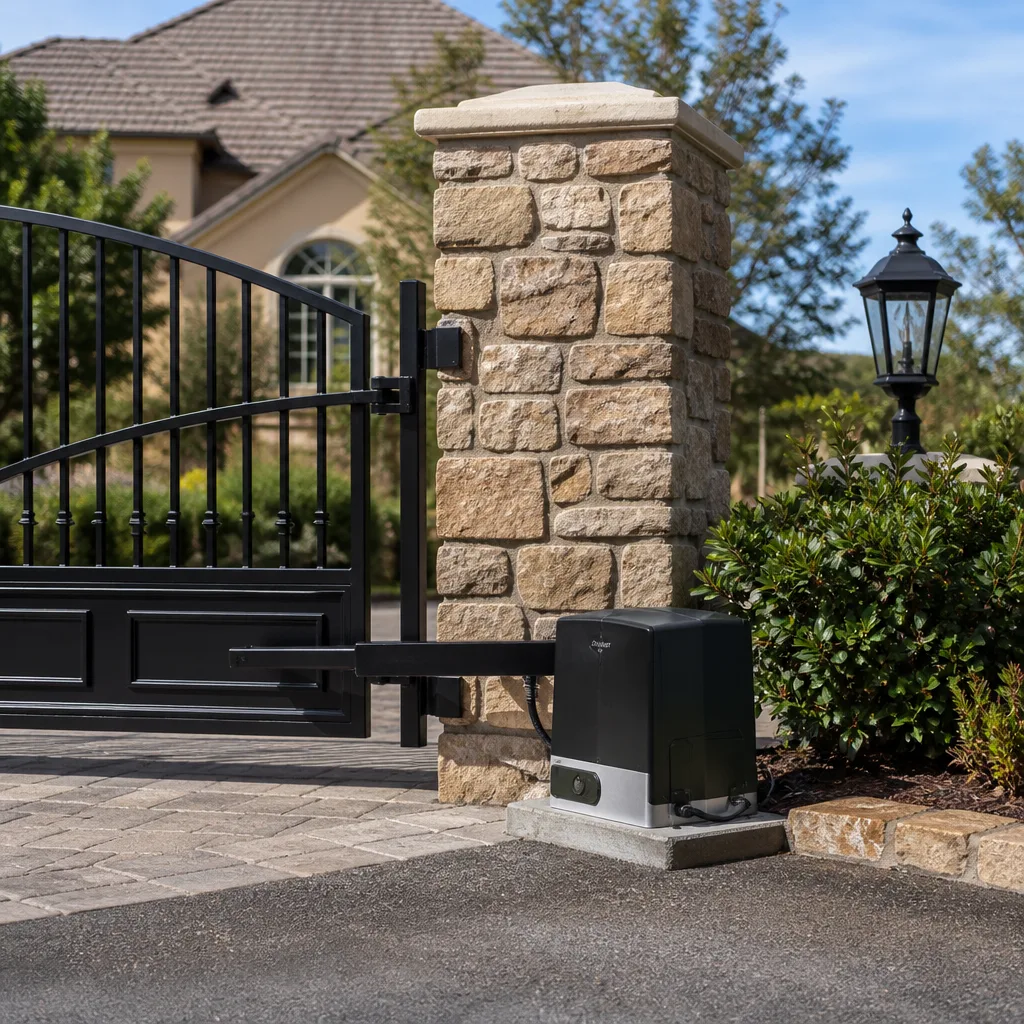 LiftMaster operators
Free on-site gate assessment - hinges, posts, and your LiftMaster or Nice gate operator checked before anything is quoted
The assessment is free and the quote is the invoice.
Get your free estimateThe Complete Guide to Gate Repair in San Diego
San Diego’s marine layer deposits salt aerosols on coastal gate hardware year-round, meaning a gate two miles from the ocean can corrode at rates homeowners assume only beachfront properties face. A gate in Point Loma may need hinge replacement twice as often as the identical model in El Cajon, purely because of what the air carries. This guide walks through the full repair ecosystem, mechanical, electrical, and structural, so you can stop treating symptoms and start fixing the actual problem—backed by our Gate Repair services. You’ll learn how San Diego microclimates create different failure patterns, when a partial fix makes sense versus a full replacement, and why brand-specific knowledge changes the diagnosis entirely.
Styles & brands we work with
Quick Answer
Gate repair in San Diego typically costs $150 to $450 for mechanical fixes like hinge and wheel replacement, $250 to $700 for electric gate operator repairs, and $800 to $2,500 for full operator replacement on a double swing gate. Most repairs are diagnosed in one visit and completed same-day when parts are in stock. The right fix depends on whether your gate is manual or automated, how close you are to the coast, and which brand of operator you have—details we break down further in our Gate Repair Cost Breakdown: The San Diego Homeowner’s Reference for 2026.
Table of Contents
- How San Diego’s Climate Affects Gate Failure
- Mechanical Gate Repair: The Foundation
- Electric and Automated Gate Repair
- Brand-Specific Repair Considerations
- The Repair vs. Replace Decision Matrix
- San Diego Permit Triggers Most Homeowners Miss
- Commercial and HOA Gate Repair in San Diego
- Common Mistakes to Avoid
- When to Call a Professional
- Frequently Asked Questions
- The Bottom Line
How San Diego’s Climate Affects Gate Failure
San Diego isn’t one climate. It’s a patchwork of microclimates, and each one attacks gate hardware differently. The marine layer that rolls in most evenings carries salt aerosol inland for two to five miles, depending on wind patterns. That salt settles on hinges, operator arms, circuit boards, and mounting bolts, then combines with morning condensation to create a corrosive film that never fully dries. We’ve seen gates in La Jolla and Del Mar with rusted hinge pins after four years, while the same hardware in Santee or Rancho Bernardo lasts a decade or more.
Inland zones have their own problem: heat cycling. El Cajon, Santee, and Escondido regularly hit 90-plus degrees in summer, and that thermal expansion stresses weld points and loosens mounting hardware over time. Gate rollers on tracked gates wear faster inland because the heat softens bearing grease and lets grit work its way in. Coastal gates corrode; inland gates fatigue. Understanding which failure mode applies to your property is the first step in a correct diagnosis.
What the marine layer actually does
- Salt aerosol deposition: Coastal fog carries dissolved sea salt that dries onto metal surfaces as a crystalline film, accelerating rust on steel and galvanic corrosion on aluminum.
- Persistent moisture: The marine layer keeps relative humidity above 70 percent overnight for much of the year, which means electrical connectors and control boards never fully dry.
- Condensation cycles: Daily wet-dry cycling causes micro-cracks in powder coating and zinc plating, giving corrosion a starting point.
If your gate is within three miles of the coast in San Diego, you should expect to replace zinc-plated hardware every three to five years, or upgrade to stainless or marine-grade components when the first failure occurs. The upgrade costs more at the time but saves repeated service calls.
Mechanical Gate Repair: The Foundation
Every gate, whether manual or automated, rests on mechanical components that carry its full weight and guide its movement. When those components fail, the gate drags, binds, or stops moving entirely. Mechanical repair is where we start on nearly every service call because an operator cannot be diagnosed accurately until the physical gate moves smoothly on its own, with the operator disconnected.
The most common mechanical failures in San Diego are hinge failures, wheel and roller failures, and post settlement. Hinge failures show up as a gate that sags at the latch side, scrapes the ground, or won’t close fully because the hinge pins have worn or the hinge leaves have pulled away from the post. Wheel failures produce a gate that’s hard to push or makes a grinding noise. Post settlement happens when the gate post, typically set in concrete, shifts over time due to soil movement, root pressure, or improper original setting.
Step-by-step: how a mechanical diagnosis works
- Disconnect the operator: Release the manual disconnect so the gate swings or slides freely.
- Check hinge play: Lift the gate at the latch end and watch for vertical movement at the hinge, indicating worn pins or loose fasteners.
- Test wheel load: Roll the gate through its full travel and listen for flat spots, grinding, or wobble in the wheels.
- Check post stability: Push laterally on each post; more than a quarter inch of movement means the post base is compromised.
- Measure gate alignment: Confirm the gate frame is square and the latch aligns with the receiver at the closed position.
Mechanical repairs in San Diego range from $150 for a simple hinge replacement to $900 or more for post resetting that requires concrete work. The price depends on gate weight, post condition, and whether the gate must be removed from its mountings. We quote every price before any work starts, so there are no surprises on the invoice.
Electric and Automated Gate Repair
Automated gates add a layer of complexity that separates true gate specialists from generalists. The operator, the control board, the safety devices, and the power supply all have to work together, and when one element fails, the symptoms often point at the wrong component. This is why electric gate repair in San Diego requires systematic diagnosis rather than part-swapping.
The most common failure we see on automated gates is not the motor itself but the control board. A power surge, a lightning strike, or moisture intrusion can fry a board in seconds, and the gate then behaves erratically: it opens but won’t close, reverses for no reason, or ignores the remote entirely. Motor failures happen too, but they’re usually preceded by warning signs like slower operation, grinding sounds, or a burning smell near the operator housing.
Typical electric gate repair costs in San Diego
- Control board replacement: $280 to $650 including parts and labor
- Remote and receiver programming: $75 to $180
- Safety sensor alignment or replacement: $120 to $300 per edge or photo eye
- Motor or gearbox replacement: $400 to $900 depending on operator type
- Full operator replacement (double swing): $1,600 to $2,800 installed
Automated or manual, we know how it works. When an electric gate acts up, our technicians check the mechanical gate first, then the power source, then the control board, then the motor, because that sequence eliminates the most common causes before touching the expensive components. It’s the same approach we use on every gate repair in San Diego, from simple residential swing gates to complex commercial slide gate systems.
Safety note: Automated gates carry serious crush and pinch hazards. Safety edges, photo eyes, and force settings exist to prevent injury, and they must be tested after any repair. Never bypass a safety device to get a gate working; the liability and risk aren’t acceptable.
Brand-Specific Repair Considerations
Not all gate operators are built the same way, and a repair approach that works for one brand can be exactly wrong for another. Our technicians at San Diego Gate Company train on nine major gate and access-control brands, including LiftMaster, FAAC, BFT, Linear, Viking, Ghost Controls, DoorKing, Elite, and Mighty Mule. That matters because each brand has its own failure patterns, parts ecosystem, and repair economics.
What we see from specific brands in San Diego
FAAC operators, common on higher-end residential and commercial gates in San Diego, are mechanically robust but sensitive to voltage fluctuations. A FAAC that appears to have a dead board often just needs a properly grounded power supply and a surge protector installed. Replacing the board without fixing the power issue simply sets up the next failure.
Viking operators are heavily represented in San Diego commercial properties and larger HOAs. Their gear-driven swing arms are workhorses, but the gearbox seals deteriorate faster in coastal environments, allowing moisture into the gear oil. A Viking arm that’s getting noisy is usually telling you the gearbox needs service before the gears themselves are damaged.
Linear and BFT operators appear frequently on San Diego residential gates. Linear systems tend to be straightforward and parts are widely available, which keeps repair costs reasonable. BFT systems are similarly approachable but their control board connectors can corrode quickly in coastal zones, so we recommend dielectric grease on all BFT board connections within two miles of the ocean.
The point isn’t to rank brands, it’s to say that diagnosis requires knowing the machine in front of you. A garage door company that occasionally fixes gates might recognize these names, but they rarely know the failure patterns specific to each one. We diagnose the real problem, no upselling you a new system when a repair will do.
The Repair vs. Replace Decision Matrix
Every gate eventually reaches a point where repairing it again is throwing money at a losing proposition, a choice we explore in DIY vs Professional Gate Repair: The San Diego Homeowner’s Decision Guide. But that point is different for every gate, and knowing where yours sits requires honest assessment. The decision comes down to four factors: the condition of the mechanical structure, the age and parts availability of the operator, the cost ratio of repair to replacement, and how long you plan to own the property.
When a partial fix extends gate life
- The gate frame and posts are sound: If the structure is solid and only a hinge or wheel failed, repair is almost always the right call.
- The operator is under 10 years old with available parts: Most operator failures are control boards or limit switches, not the motor itself, and those are economical fixes.
- Repair cost is under 50 percent of replacement cost: As a rule, if the fix costs less than half of what a new system would cost installed, repair makes sense.
When repair just delays the inevitable
- Structural rust or weld fatigue: If the gate frame itself is rusting through or welds are failing repeatedly, you’re paying to patch a structure that’s reached end of life.
- The operator is obsolete: Some older operators have no remaining parts supply, and every repair becomes a custom fabrication job.
- Repair estimate exceeds 60 percent of replacement: At that ratio, you’re better off putting the money toward a new system with warranty coverage.
If replacement is the answer, gate installation in San Diego is the other half of what we do. A new gate and operator, properly specified for your location and use pattern, will outlast a patched-together old system and cost less over five years.
San Diego Permit Triggers Most Homeowners Miss
San Diego’s permit requirements for gate work are less straightforward than most homeowners assume. The general rule: repairing an existing gate or operator does not require a permit, but replacing a gate operator with a different type, or modifying the gate’s structure, may trigger one. This catches people off guard when a simple operator replacement becomes a paperwork issue.
- Like-for-like operator replacement: No permit typically required when installing a new operator of the same type in the same location.
- Changing operator type: Swapping a swing arm operator for an underground operator, or a slide operator for a swing system, may require a permit because the foundation and electrical work change.
- New electrical runs: Any new conduit or wiring from the panel to the gate location is electrical work and falls under San Diego’s electrical permit requirements.
- Structural gate modifications: Widening a gate opening, adding a pedestrian gate, or changing the gate’s height or weight class can trigger building permit review.
- HOA and community restrictions: Many San Diego HOAs have their own approval processes for gate changes, independent of city permits, and skipping that step can create disputes.
The practical takeaway: if your repair involves only replacing or fixing existing components, you’re almost always clear. If it involves new electrical work or changing how the gate operates, check with the city before starting. We handle these conversations routinely for our clients and can advise on what applies to your specific situation.
Commercial and HOA Gate Repair in San Diego
Commercial and HOA gates in San Diego fail differently than residential gates because they cycle hundreds of times per day instead of dozens. A gate at a Mission Valley apartment complex might open and close 800 times daily, and that duty cycle changes the math on every component. What lasts 10 years on a single-family home in Carlsbad might last 18 months on an apartment gate in Chula Vista.
High-cycle gates need more than repairs; they need scheduled maintenance that replaces wear items before they fail. Hinge bushings, wheel bearings, limit switches, and safety edges all have predictable service lives under heavy use, and a maintenance calendar built around those intervals prevents the 2 a.m. emergency calls that always cost more.
We work with HOAs and property managers across San Diego on everything from emergency repair response to planned operator upgrades. The key to commercial work is minimizing downtime: a broken gate means residents can’t get in, deliveries back up, and security suffers. Our commercial clients value the fact that we’re San Diego Gate Company home based and can respond without routing through a national dispatch center.
Common Mistakes to Avoid
- Lubricating a gate to fix a mechanical problem: Spraying lubricant on a gate with worn hinges or failing wheels masks the symptom for a few days while the underlying wear continues. By the time the noise returns, the damage is worse.
- Ignoring slow operation as a quirk: A gate that’s gradually slowing down is telling you something, usually a failing capacitor, low fluid in a hydraulic operator, or binding in the mechanical system. Early intervention costs a fraction of a full failure repair.
- Replacing the operator before checking the gate: A heavy gate that binds puts strain on any operator, and installing a new operator without fixing the mechanical issue just destroys the new equipment faster.
- Using non-marine hardware near the coast: Standard zinc-plated hinges and fasteners fail within a few years in San Diego’s coastal zones. Marine-grade stainless costs more upfront and eliminates repeat failures.
- Skipping the safety device check after a repair: An automated gate that reverses properly on the safety edge is non-negotiable. A repaired gate without verified safety devices is a liability, not a completed job.
- Hiring a generalist for automated gate work: The control systems on modern gate operators are specialized, and diagnosing them correctly requires working knowledge of the specific brand. A misdiagnosis from a generalist often results in replacing parts that weren’t the problem.
When to Call a Professional
You should call a gate specialist when the gate makes new noises during operation, when it moves slower than it used to, when it reverses unexpectedly, or when it simply stops responding to commands. These are all signs that a component is failing, and the earlier it’s addressed, the less the repair costs; find more guides & resources on our blog. If your gate is automated, any electrical symptom, including intermittent operation, flickering indicator lights, or a remote that works only at close range, deserves a professional look. If the gate is physically damaged, sagging, or binding, don’t force it open or closed; you’ll do more damage. San Diego Gate Company offers free estimates in San Diego – call (877) 517-5469 and we’ll send a technician who diagnoses the actual problem, not a salesperson trying to sell you a system you don’t need.
Frequently Asked Questions
Gate repair in San Diego typically costs $150 to $450 for mechanical repairs and $250 to $700 for electric operator repairs, with full operator replacement running $800 to $2,800 depending on gate type and operator brand. The specific cost depends on what failed and whether parts are in stock. Call (877) 517-5469 for an exact quote, estimates are free and the price is agreed before any work begins.
Yes, we service essentially every major gate brand found in San Diego, including LiftMaster, FAAC, BFT, Linear, Viking, Ghost Controls, DoorKing, Elite, and Mighty Mule, plus most older or less common systems still in service. Our technicians are trained on these brands and diagnose each system on its own terms rather than pushing a brand swap. We work on virtually every major gate brand, including yours.
Most mechanical gate repairs and many electric gate repairs can be completed the same day we arrive, assuming the required parts are on the truck or available locally in San Diego. For less common operator parts, we may need to source the component, which typically adds one or two business days. Call (877) 517-5469 and we’ll give you a realistic timeline based on your specific gate.
A full gate installation includes the gate structure, posts, hinges, operator, control board, safety devices, power connection, and programming, all specified for your gate’s size, weight, and location. We handle the entire scope from demolition of the old gate through final testing so you never need a second vendor. Call (877) 517-5469 for a free measure and written price.
Yes, our technicians handle the low-voltage and line-voltage electrical work required for automated gate operation, including conduit runs, transformer installation, and control board wiring, working in compliance with San Diego electrical codes. We coordinate any required permitting with the city and with your HOA where applicable. Automated or manual, we know how it works.
Coastal San Diego neighborhoods like Point Loma, Ocean Beach, and La Jolla experience salt aerosol deposition from the marine layer, which accelerates rust on steel components and corrosion on electrical connections far faster than inland areas. Gates within three miles of the coast should use marine-grade stainless hardware and receive corrosion-focused inspections at least annually. If your gate is already showing rust, call (877) 517-5469 to assess whether localized repair or full hardware replacement is the right call.
The Bottom Line
San Diego gate failures follow predictable patterns tied to location, usage, and brand. Coastal gates corrode, inland gates fatigue from heat cycling, and automated gates fail most often in the control board rather than the motor, which means accurate diagnosis is the difference between a $300 fix and a $2,500 replacement. Knowing your gate’s mechanical condition, operator brand, and permit status lets you make repair decisions from a position of understanding rather than desperation. When you need a specialist who works on gates all day, every day, San Diego Gate Company is one call away. Phone: (877) 517-5469.
Written by the team at San Diego Gate Company, serving San Diego since 2018.
See the difference
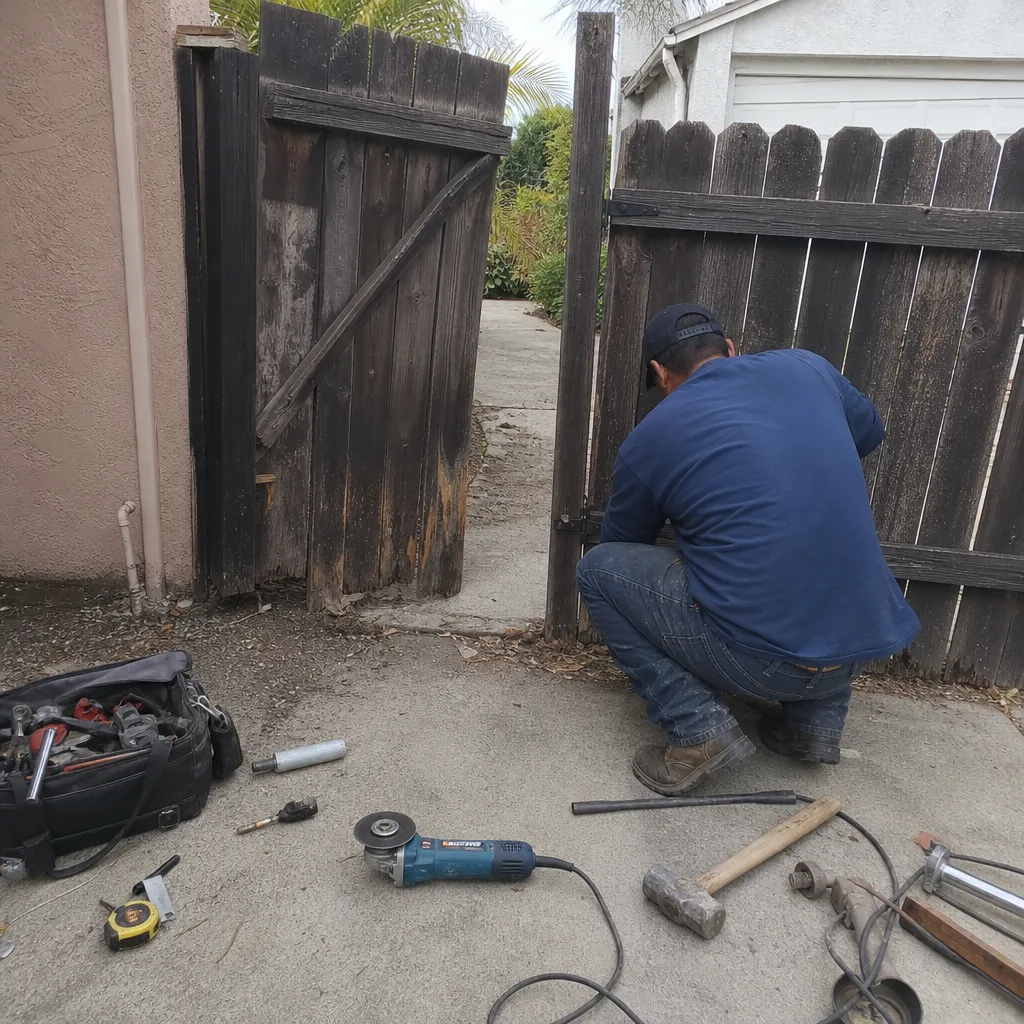 Before
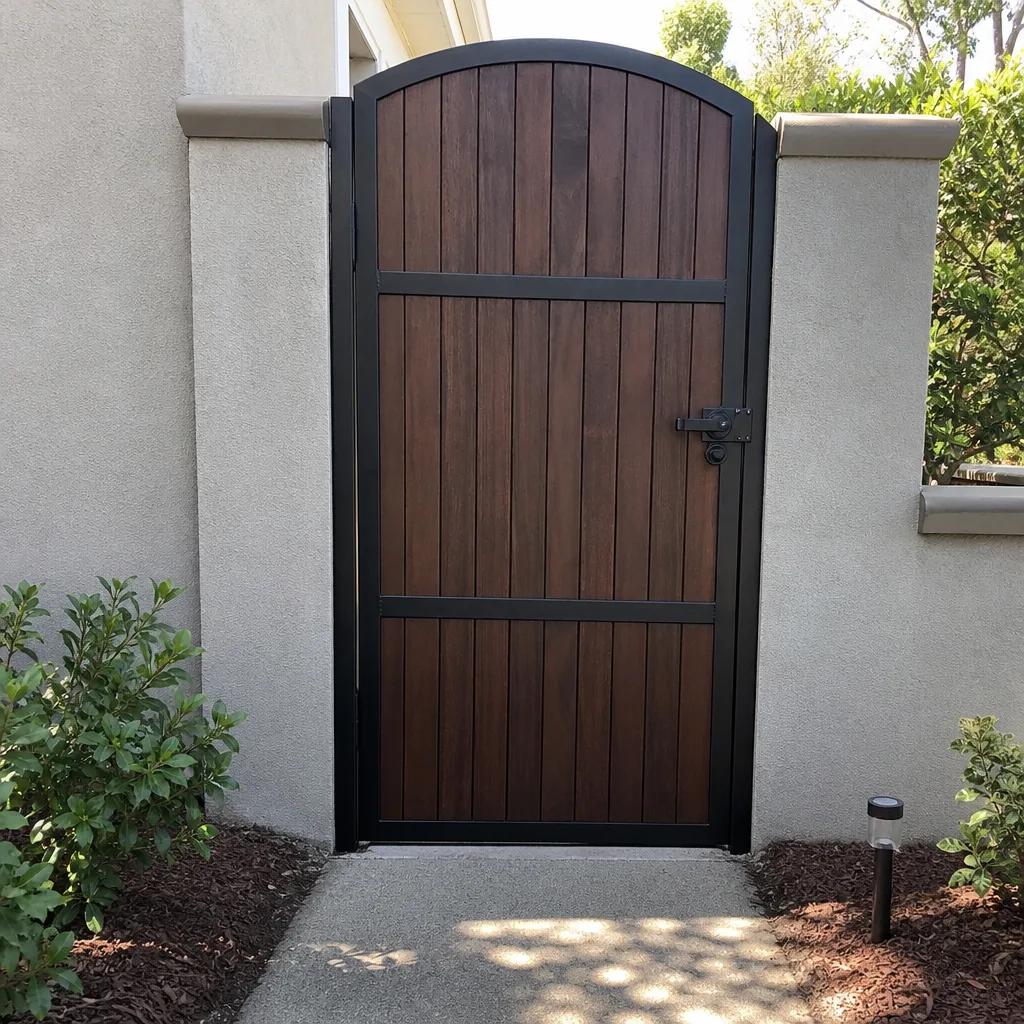 After
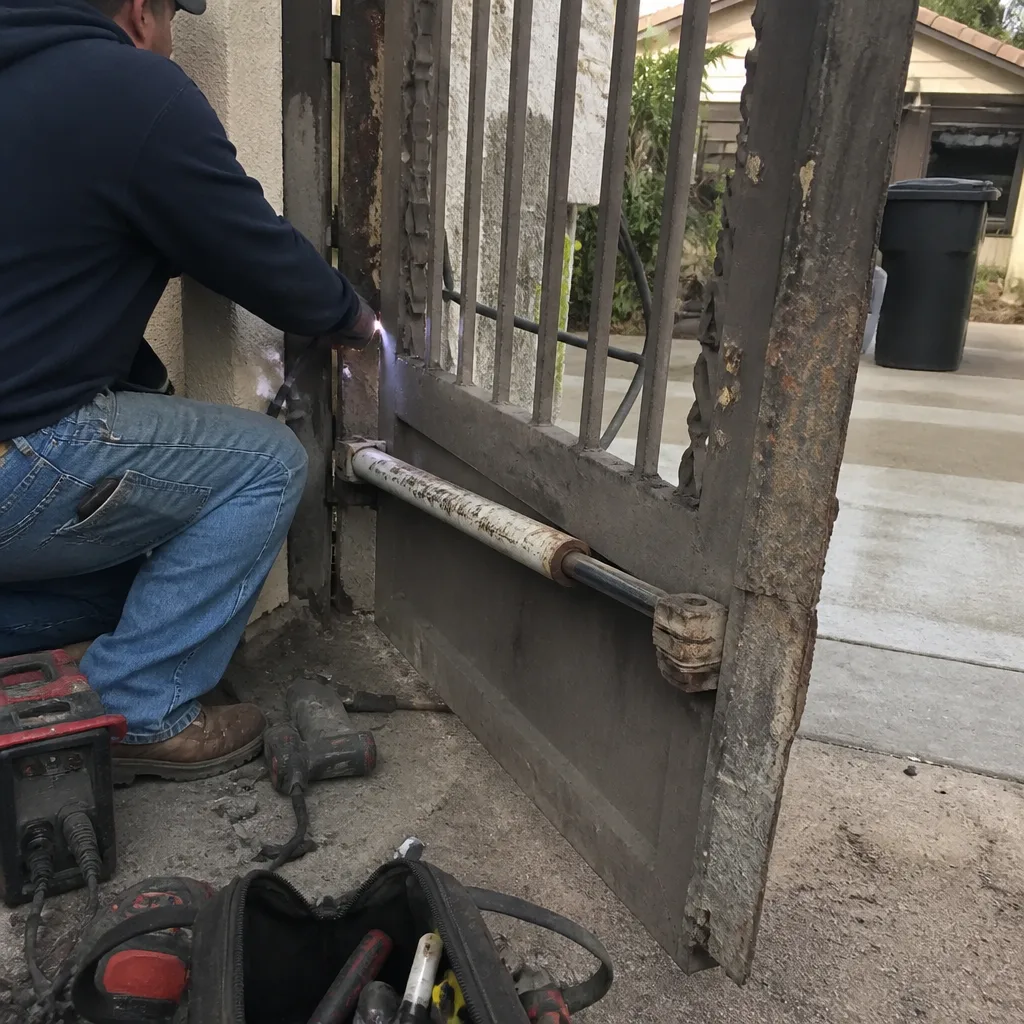 Before
 After
 Before
 After