

Last updated October 31, 2026
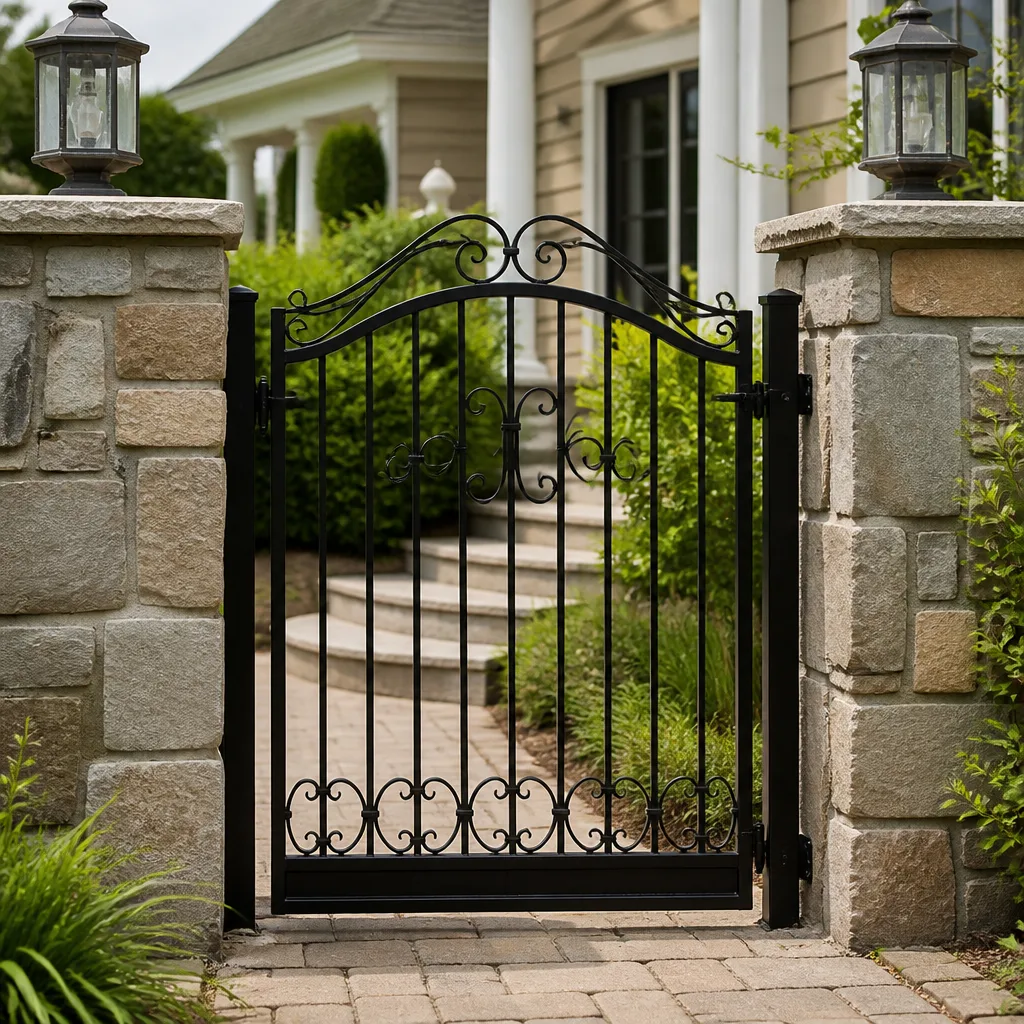 Wrought iron
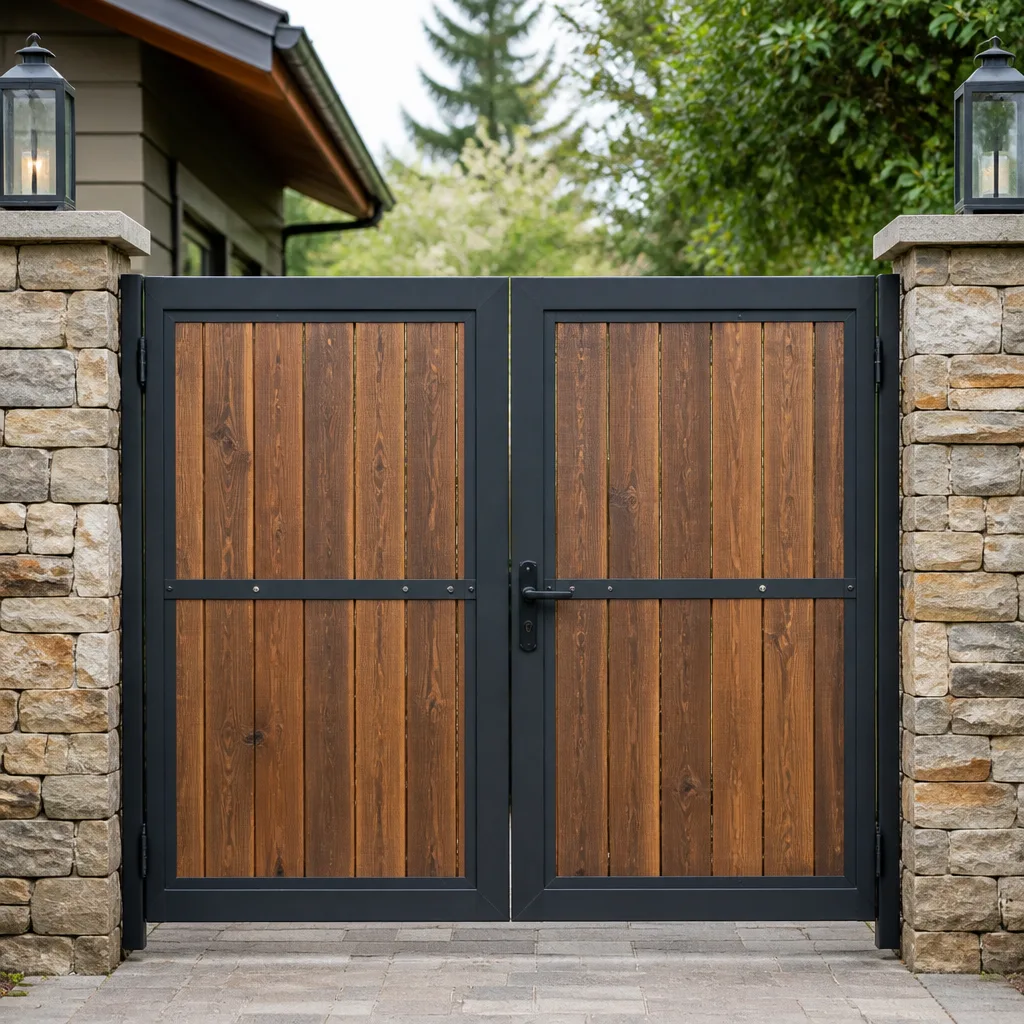 Wood & steel frame
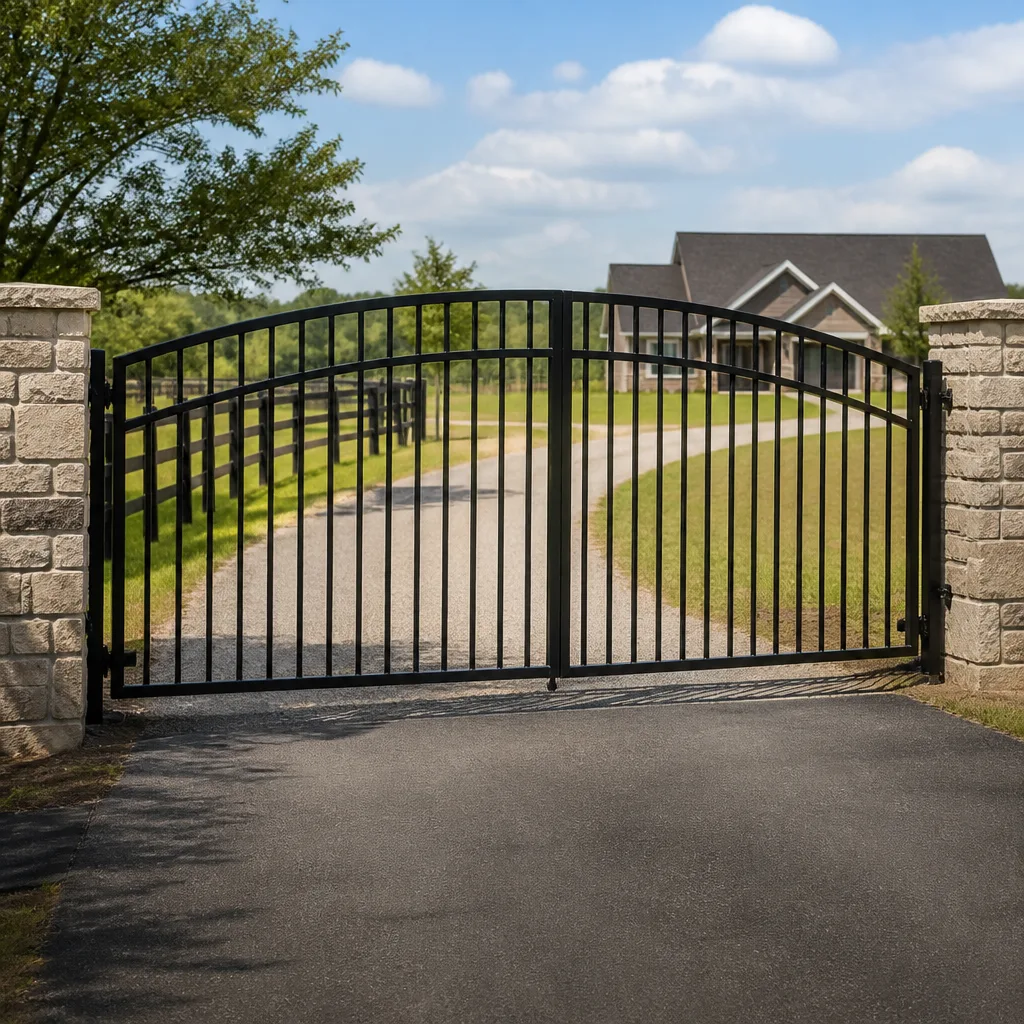 Farm & ranch
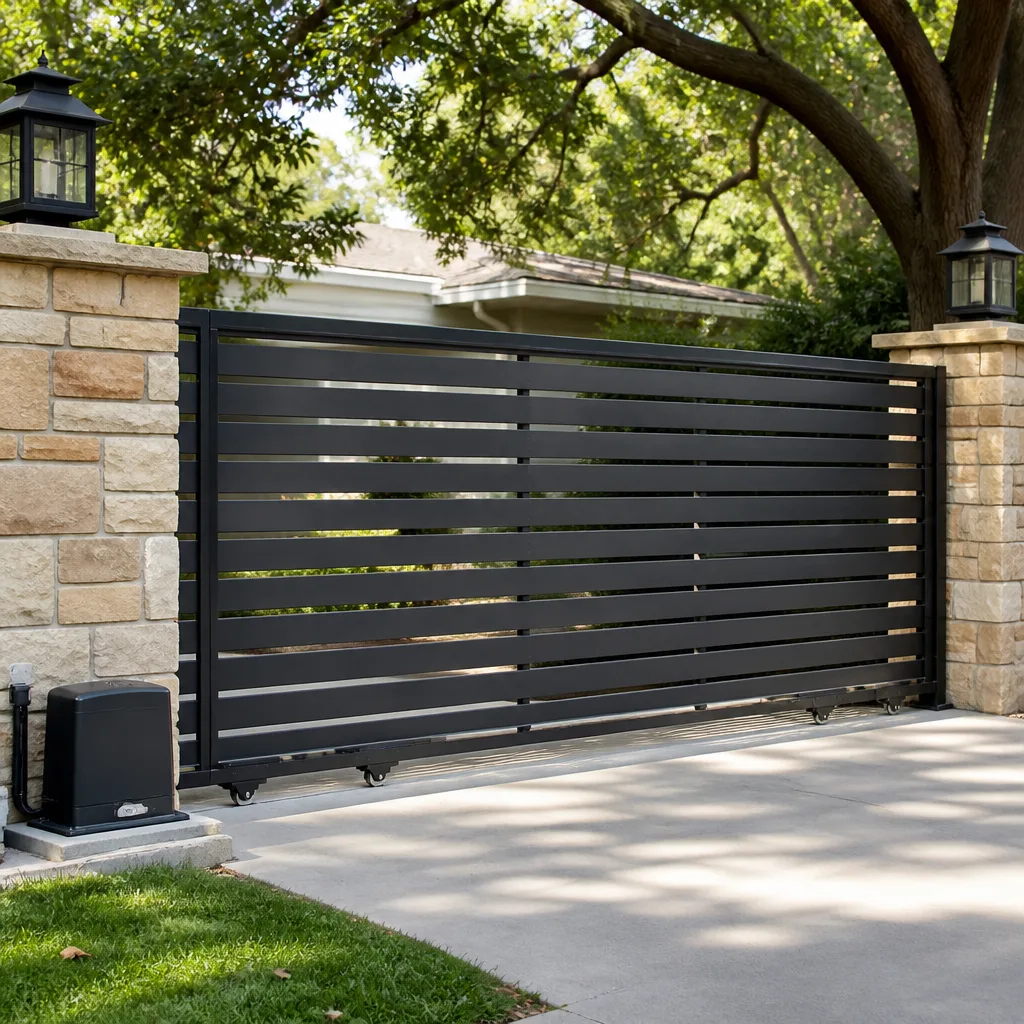 Sliding driveway gates
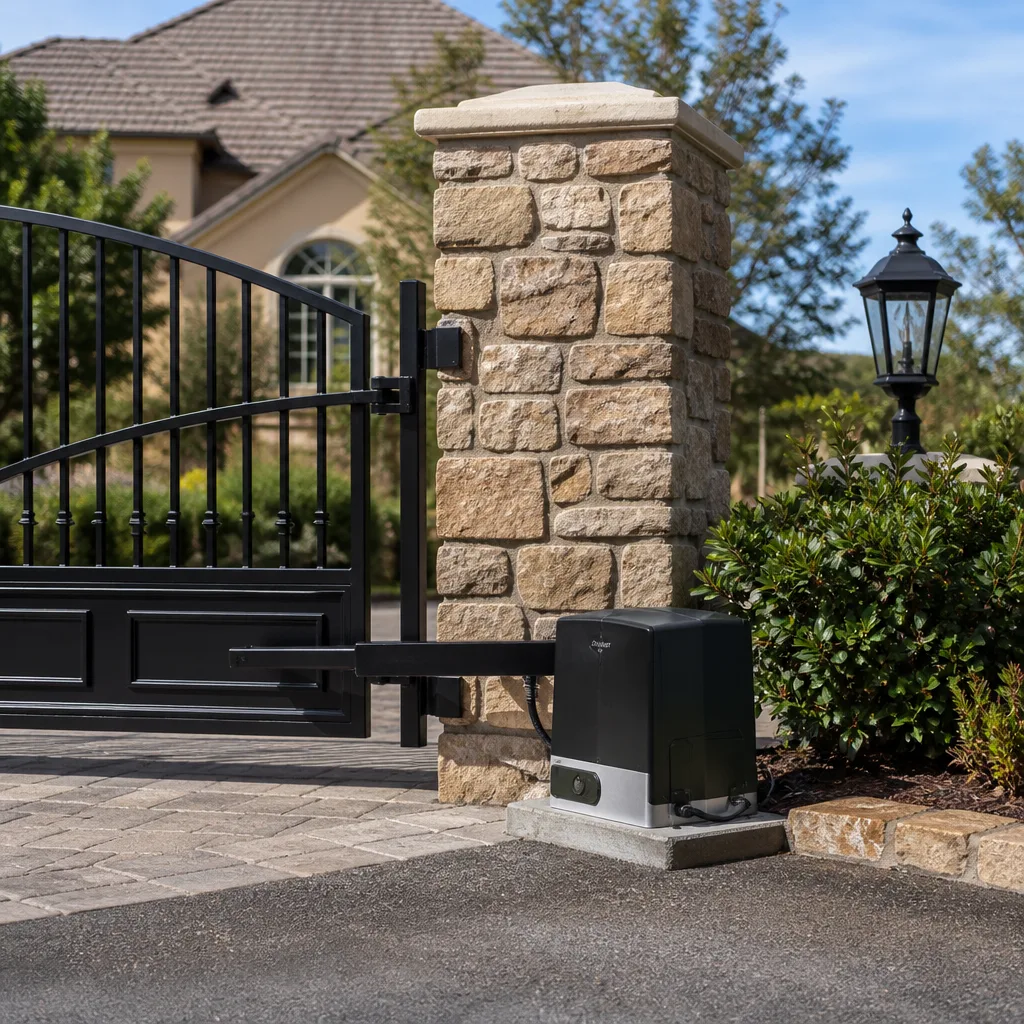 LiftMaster operators
Free on-site gate assessment - hinges, posts, and your LiftMaster or Nice gate operator checked before anything is quoted
The assessment is free and the quote is the invoice.
Get your free estimateGate Repair Emergency Preparedness Guide for San Diego Homes
During the 2007 Witch Creek Fire, multiple San Diego residents reported being trapped or delayed leaving their properties because automatic gates lost power and no one in the household knew how to manually release the operator. It’s a 30-second task they had never practiced, and in an evacuation order, 30 seconds is the difference between a calm exit and a crisis. This guide walks you through the practical steps to make sure your gate never strands you during a wildfire, power outage, or medical emergency. You’ll learn manual release procedures for the most common San Diego gate operators, how battery backup actually fails, what to check before fire season, and exactly what to tell a gate repair technician when you call at 2 a.m. Consider this a preparedness plan for the one mechanical system on your property that controls both your security and your escape route.
Quick Answer
A gate emergency preparedness plan means three things: knowing how to manually release your electric gate operator when power fails, confirming your battery backup actually holds a charge, and having a written protocol for who can access the gate and how during an evacuation. In San Diego, the most common emergencies involve gates stuck open during wildfire evacuations or stuck closed when first responders need access. Spend 20 minutes testing your manual release now, and document the procedure where everyone in the household can find it. For repairs before or after an emergency, our Gate Repair services include free estimates at (877) 517-5469.
Styles & brands we work with
Table of Contents
- Manual Release Procedures: What Every San Diego Homeowner Should Practice
- Battery Backup Systems: What San Diego Power Outages Actually Demand
- Creating a Gate Emergency Contact Protocol
- Pre-Wildfire Season Gate Checklist for San Diego Homes
- What to Tell a Gate Repair Technician During an After-Hours Emergency
- Common Mistakes to Avoid
- When to Call a Professional
- Frequently Asked Questions
Manual Release Procedures: What Every San Diego Homeowner Should Practice
Every electric gate operator has a manual release mechanism that disconnects the motor from the gate leaf so you can push or pull the gate by hand. The mechanism varies by brand, and in our experience serving San Diego homes, most residents have never located theirs. That’s the single biggest failure point in an emergency. If you own a LiftMaster, FAAC, or DoorKing operator, here is what you need to know.
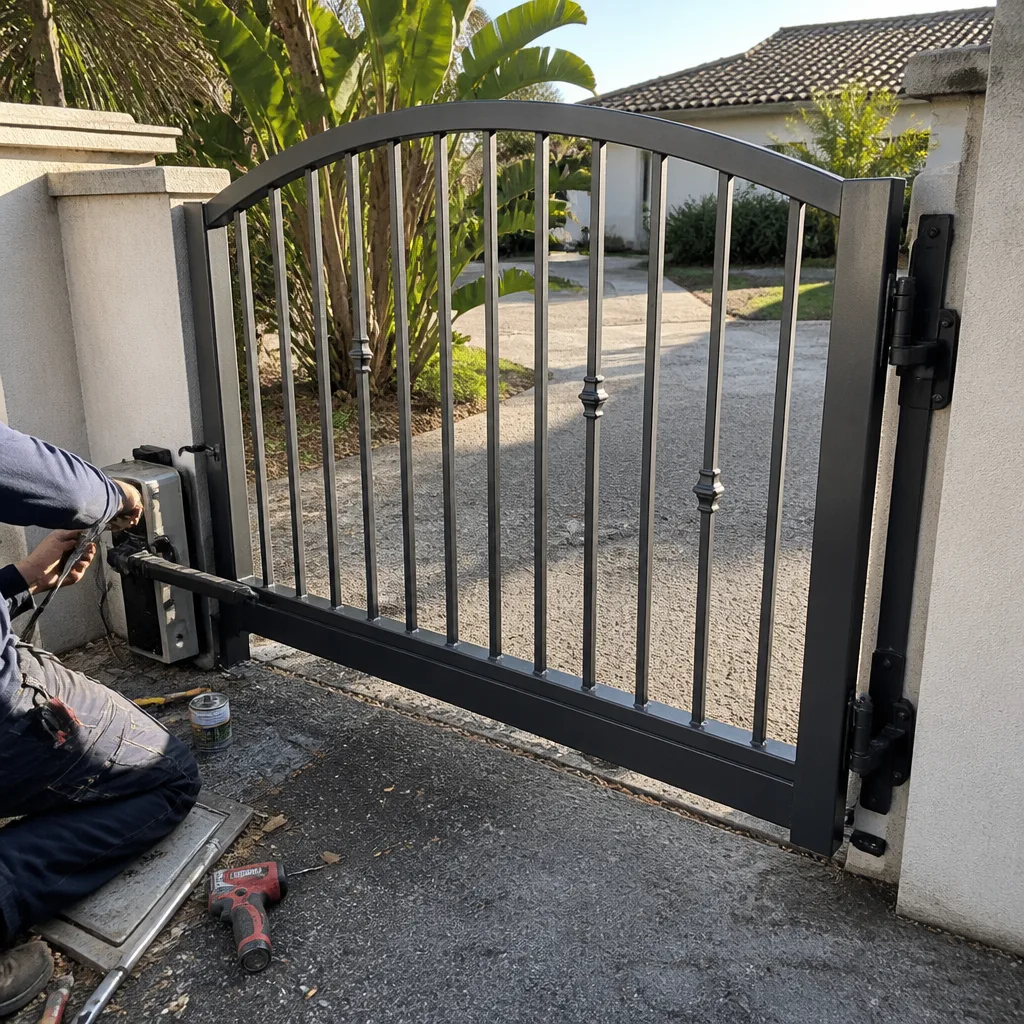
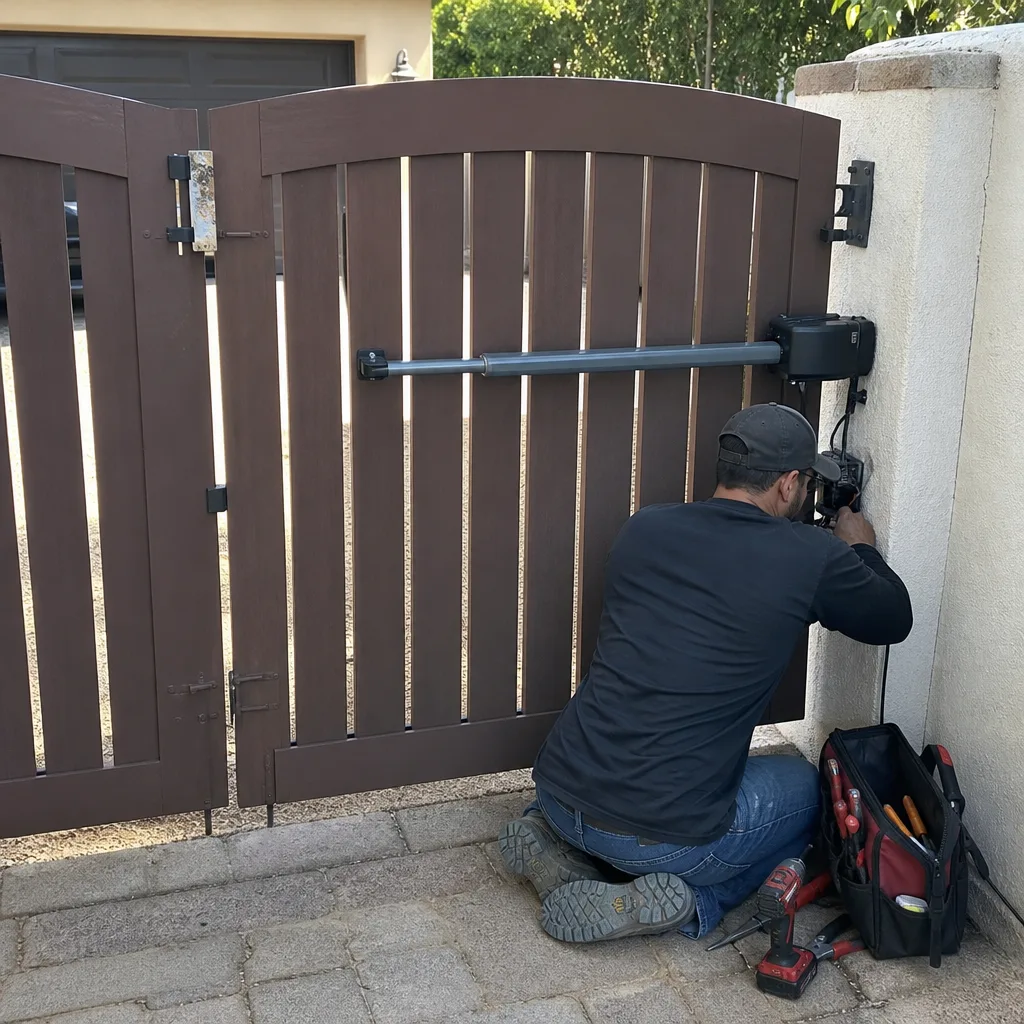
For LiftMaster swing gate operators, the manual release is typically a red or yellow handle located on the side of the operator arm or the gear box. Pulling it disengages the motor, allowing the gate to swing freely. LiftMaster instructions specify that you should turn off the main power switch before engaging the manual release to avoid the motor re-engaging unexpectedly.
FAAC operators, common in many San Diego hillside communities like Rancho Bernardo and Scripps Ranch, use a keyed release mechanism on the gate leaf itself. You insert the release key, turn it a quarter turn, and the piston detaches from the gate. The key is usually shipped with the operator, but if you bought the home with the gate already installed, that key may be long gone. Check your garage or the lockbox on your property.
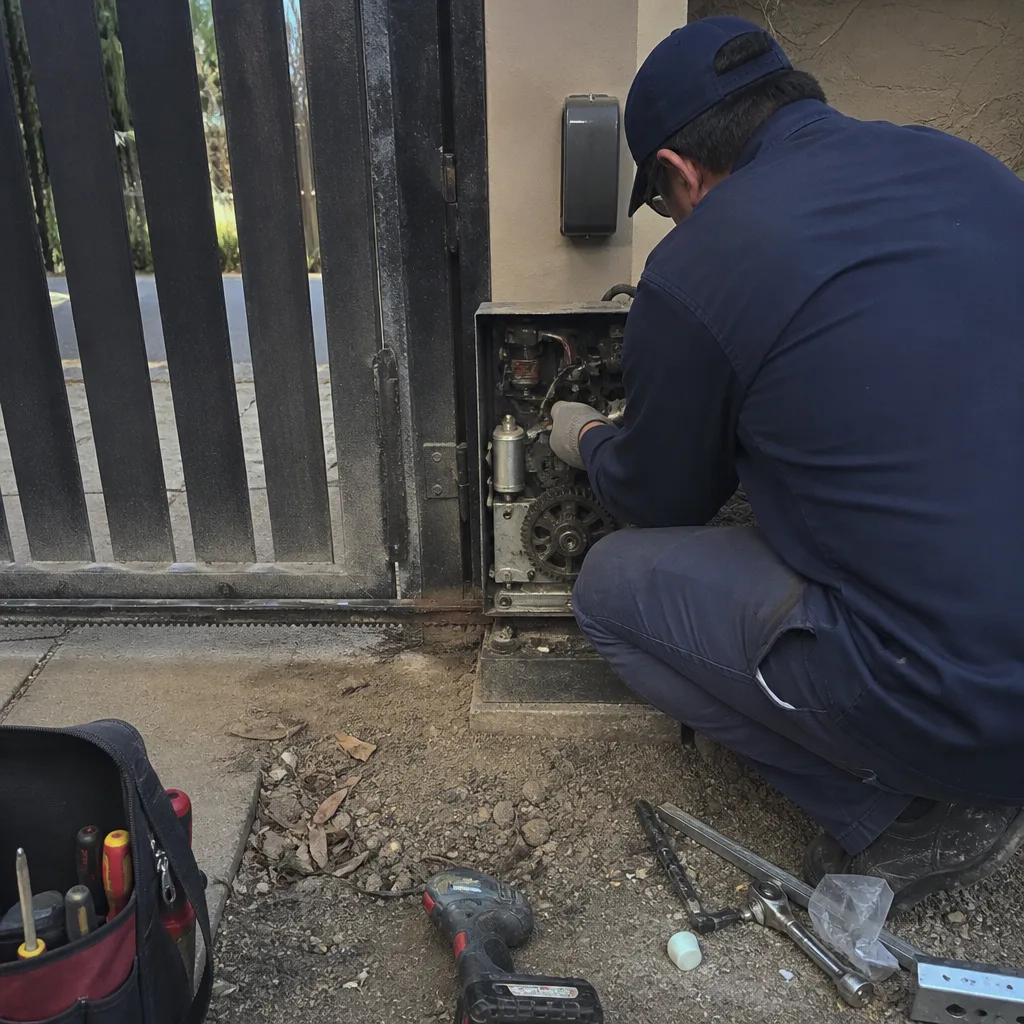
DoorKing operators have a manual release lever on the operator housing, often near the bottom of the unit. DoorKing documentation recommends disengaging the lever from inside the housing cover. If your operator is mounted close to the ground and covered in landscaping, you’ll want to clear access to it now, not during an emergency.
Here is a step-by-step process to prepare:
- Locate your operator unit and confirm the brand name on the housing or control board.
- Find the manual release mechanism: a handle, lever, or keyed release.
- Test the release once. Turn off power first, disengage the mechanism, and push the gate by hand.
- Photograph the release mechanism with your phone and mark its location on a printed map of your property.
- Store the release key, if applicable, in a labeled location that everyone in the household knows.
Keep the manufacturer’s manual in a weatherproof pouch attached to the operator housing or in a known drawer inside the house. When the power is out and the gate will not move, you do not want to be searching through files. San Diego’s wildfire season and Santa Ana wind events knock out power with little warning, and the gate is often the first thing people check when they realize the garage door will not open either.
Battery Backup Systems: What San Diego Power Outages Actually Demand
Battery backup on an electric gate is not a luxury in San Diego. It is the difference between a gate that works when SDG&E shuts off power during high fire danger and a gate that becomes a dead weight. But here is what most homeowners miss: battery backup systems fail silently. The battery degrades over two to four years, and the system gives you no warning until an actual outage happens and the gate does not respond.
Our technicians at San Diego Gate Company regularly test backup batteries in Rancho Santa Fe, Del Cerro, and Poway and find batteries that test fine on a trickle charge but collapse under the load of moving a 400-pound gate. A backup battery that cannot hold voltage under load is useless. You need to test it the way a real outage would: cut the main power to the operator and attempt to cycle the gate using the battery alone.
Here is what San Diego power outage patterns actually demand:
- Runtime expectation: A healthy battery backup should cycle a single swing gate at least 15 to 20 times on a full charge. For slide gates, which draw more current, expect closer to 10 cycles.
- Degradation window: Most sealed lead-acid backup batteries last 2 to 3 years in San Diego’s heat. Lithium options last longer but are less common in residential operators.
- Heat exposure: Backup batteries mounted inside metal operator housings in direct sun bake in east county summers. The heat shortens battery life measurably. Shade the operator if possible.
- Silent failure mode: A battery that charges but cannot deliver sufficient amperage under load will pass a visual inspection and still fail when you need it.
- Who has the gate remote, a key, or a code? List every person by name.
- Where are the physical keys or backup remotes stored?
- What is the manual release procedure for this specific gate operator brand?
- Who is the emergency contact for gate repair in San Diego? Write the phone number down. Do not rely on a saved contact in a phone that might be dead.
- If the property has a fire access driveway or a Knox box, where is it located and what does the fire department need to know?
- Test the manual release. Disengage the operator and push the gate by hand. Re-engage it and confirm the gate cycles normally. If the release is stiff or the gate does not move freely, address it before fire season.
- Check auto-close settings. Most San Diego homeowners set their gate to auto-close after 10 to 15 seconds. During an evacuation, that auto-close can trap vehicles if someone pauses at the end of the driveway. We recommend disabling auto-close during high fire danger periods. You can re-enable it later.
- Verify battery backup under load. Kill the main power and cycle the gate. Note whether it opens at full speed or labors.
- Update the emergency contact list. Phone numbers change. Houseguests change. The property manager changes. Update the protocol sheet once a year.
- Clear debris from the gate track and hinges. Wind-driven eucalyptus bark and palm fronds wedge into slide gate tracks and swing gate hinges across San Diego neighborhoods every fall.
- Confirm first-responder access. If your gate is locked and you are incapacitated, can paramedics get in? Many San Diego driveways have a manual key release on the outside. Test it.
- The brand name on the operator. Look at the housing, the control board cover, or the remote. LiftMaster, FAAC, BFT, Linear, Viking, DoorKing, Elite, and Mighty Mule each use different parts and diagnostic approaches.
- What the gate is doing, precisely. Does it hum but not move? Open halfway and stop? Open but not close? Not respond at all? Make a grinding sound? Each symptom points to a different failure.
- When the problem started. After a power outage? During rain? Suddenly? After a vehicle hit the gate?
- Whether the gate is manual or automated. A manual gate with a broken hinge is a different repair than an electric operator that will not engage.
- Whether the gate is stuck open or stuck closed. This matters more than you think. Stuck closed is a security issue. Stuck open is a liability issue. The technician prioritizes differently.
- Any unusual sounds or smells. Burning smell points to a failed capacitor or control board. Grinding points to a gearbox. Clicking points to a relay or limit switch.
- Never testing the manual release until an emergency happens. The mechanism seizes, rusts, or gets painted over. In an evacuation, a seized manual release means you’re climbing over the gate or cutting through a fence. Test it twice a year.
- Assuming the battery backup works because the gate opens when plugged in. Backup batteries fail silently. The only valid test is running the gate on battery power alone with the main power disconnected.
- Storing the only gate remote in a car parked outside the gate. If the car is outside and the gate is closed, and the remote is in the car, you cannot open the gate. Keep one remote inside the house and one keyed release outside the gate.
- Allowing auto-close to remain active during evacuation conditions. Auto-close is convenient for daily security but dangerous when multiple cars are moving through quickly. Disable it during high fire danger periods in San Diego.
- Not telling houseguests or renters about the gate system. A neighbor’s dog gets out, a guest’s car gets blocked, or worse. A 15-second explanation when someone arrives prevents a 2 a.m. problem.
- Ignoring slow or noisy gate operation. A gate that opens slower than it used to or makes a new noise is telling you something. By the time it fails completely, you are paying for a bigger repair than early intervention would have cost.
- Calling a general handyman for electric gate problems. Gate operators involve low-voltage wiring, limits, safety sensors, and brand-specific control boards. A handyman without gate-specific training often replaces parts indiscriminately and leaves the underlying issue unresolved.
Test your backup battery twice a year, once before wildfire season in spring and once before the fall Santa Ana season. Set a calendar reminder. If the gate struggles, opens slowly, or stops midway on battery power, the battery is failing. A Electric Gate Repair in San Diego visit is a fraction of the cost of replacing an operator that fails at the worst possible time.
Creating a Gate Emergency Contact Protocol
Every household with an electric gate needs a written emergency protocol. It does not need to be formal. A single page taped inside a kitchen cabinet works. What matters is that it exists and that everyone in the home, plus any regular houseguests or property managers, knows where it is. During an emergency, memory fails. Written instructions do not.
A complete gate emergency contact protocol answers five questions:
For HOA-managed communities in San Diego, the protocol should live with the property manager and with the security committee. Every board member should know the manual release location for the main entry gate. In our experience, the most common scenario we see after a San Diego power outage is a neighborhood entry gate that will not open, with no one on site who knows where the release is. Someone always has to call us to walk them through it over the phone. That works, but it costs time that an evacuation does not allow.
Communicate the protocol to houseguests. A short note near the front door: “If the gate will not open, the manual release is located at [location].” That sentence alone has helped people get out of driveways during blackouts in La Jolla and Point Loma when the homeowner was not home.
Pre-Wildfire Season Gate Checklist for San Diego Homes
San Diego’s wildfire season now runs essentially year-round, but the highest-risk window starts in late summer and extends through the fall Santa Ana months. Run through our Gate Repair Maintenance Checklist for San Diego Homeowners every August, before the winds pick up:
None of this requires a technician. It requires 20 minutes and a flashlight. But if any step reveals a problem, a Gate Repair in San Diego visit before fire season beats an emergency call during it.
What to Tell a Gate Repair Technician During an After-Hours Emergency
When you call a San Diego gate repair company at midnight because your gate is stuck, the faster you can describe the problem, the faster a technician can diagnose it and bring the right parts—see our Gate Repair Permits, Codes & Inspections in CA: What You Need to Know for context on compliance. Most first-time emergency calls follow the same pattern: the caller knows the gate is broken but cannot describe what it is doing. That costs a return trip for parts, and return trips cost you time.
Here is what to have ready when you call:
We ask the same set of questions on every emergency call in San Diego, from Chula Vista to Oceanside. When a caller has the brand name and the symptom ready, our technician often knows the likely fault before leaving the shop. That means fewer trips and a faster fix.
Common Mistakes to Avoid
When to Call a Professional
Some gate problems are homeowner-level maintenance. A broken hinge bolt, a dead remote battery, a misaligned sensor: these are manageable with basic tools and a little patience. But anything involving the operator gearbox, the control board, the motor, or the low-voltage wiring deserves a specialist. Electric gate systems carry substantial voltage on the motor side, and the moving gate itself weighs hundreds of pounds. A misdiagnosed operator can crush a vehicle or injure a person if the safety sensors are not working correctly. If your gate opens on battery but not on main power, make the call. If it blows a fuse repeatedly, make the call. If the manual release works but the gate still will not move, make the call. For repair before or after an emergency, San Diego Gate Company home offers free estimates in San Diego, call (877) 517-5469.
Frequently Asked Questions
Emergency gate repair in San Diego typically ranges from $150 to $400 depending on the fault, the time of day, and the parts needed. Simple fixes like a stripped limit switch or a blown capacitor fall at the lower end. A failed control board or gearbox runs higher, especially on gates from brands like LiftMaster, FAAC, or Linear that use non-universal parts. We quote the price and get your agreement before any work starts. Call (877) 517-5469 for an exact quote, estimates are free.
Yes, for emergency calls we dispatch same-day across San Diego, including after-hours service when a gate is stuck open or stuck closed and compromising security. Emergency calls are prioritized based on urgency: a gate stuck open is often treated as urgently as one stuck closed, because it removes the security barrier. Call (877) 517-5469 and describe what the gate is doing, and we will tell you when a technician can arrive.
We repair LiftMaster, FAAC, BFT, Linear, Viking, Ghost Controls, DoorKing, Elite, and Mighty Mule operators, covering virtually every major residential and commercial gate brand installed in San Diego. This includes older discontinued models where parts are harder to source. Our technicians are trained across all nine brands, and we never recommend replacing a system when a repair will restore it. If you know your operator brand, mention it when you call (877) 517-5469 so we arrive with likely parts.
Yes, we install both manual and electric gates, including full operator systems and access control. Whether you need a new electric gate operator installed on an existing gate or a complete Gate Installation in San Diego, the same specialist team handles the job. We do not split our attention across unrelated trades, which means no subcontractors and no second vendor. Call (877) 517-5469 to schedule a free measure and written price.
Disengage the manual release on the operator and push the gate by hand. The manual release is a handle, lever, or keyed mechanism located on or near the operator housing. If you have never located it, now is the time to find it and practice once. If the manual release will not disengage or the gate will not move freely even after disengaging, the problem is mechanical, and you should call (877) 517-5469 for emergency gate repair in San Diego.
Yes, we service residential, HOA, and commercial gate systems throughout San Diego. Community entry gates, apartment complex gates, and business driveway gates all fall within our specialty. HOA managers reach us at (877) 517-5469, and we can coordinate directly with your property manager if you need us to. The same brand-agnostic diagnostic approach applies: we fix what is broken, not what is easiest to replace.
The Bottom Line
A gate emergency preparation plan is not complicated. Locate your manual release and practice it once. Test your battery backup by cutting main power twice a year. Write down who has access and where the keys and remotes live. Disable auto-close during fire season. Know the brand on your operator and be ready to describe what the gate is doing when you call. Twenty minutes of preparation now prevents a stuck gate from becoming a genuine crisis in San Diego, whether the cause is a wildfire evacuation, a blackout, or a medical emergency. For more guides & resources, visit our blog. And when a repair is needed, gate specialists, not generalists, are the difference between a fix that lasts and a problem that returns. From a broken hinge to a full electric gate installation, one call covers it: (877) 517-5469.
Written by the team at San Diego Gate Company, serving San Diego since 2018.
See the difference
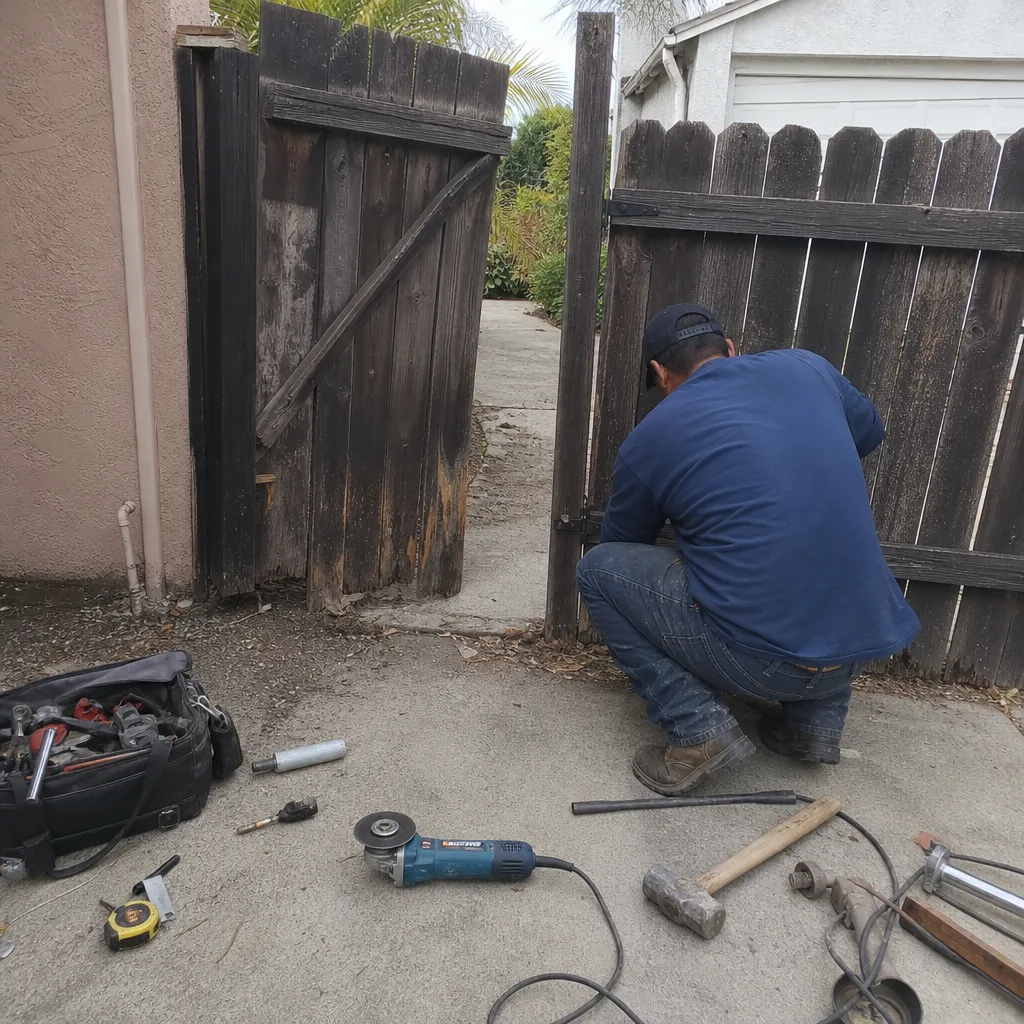 Before
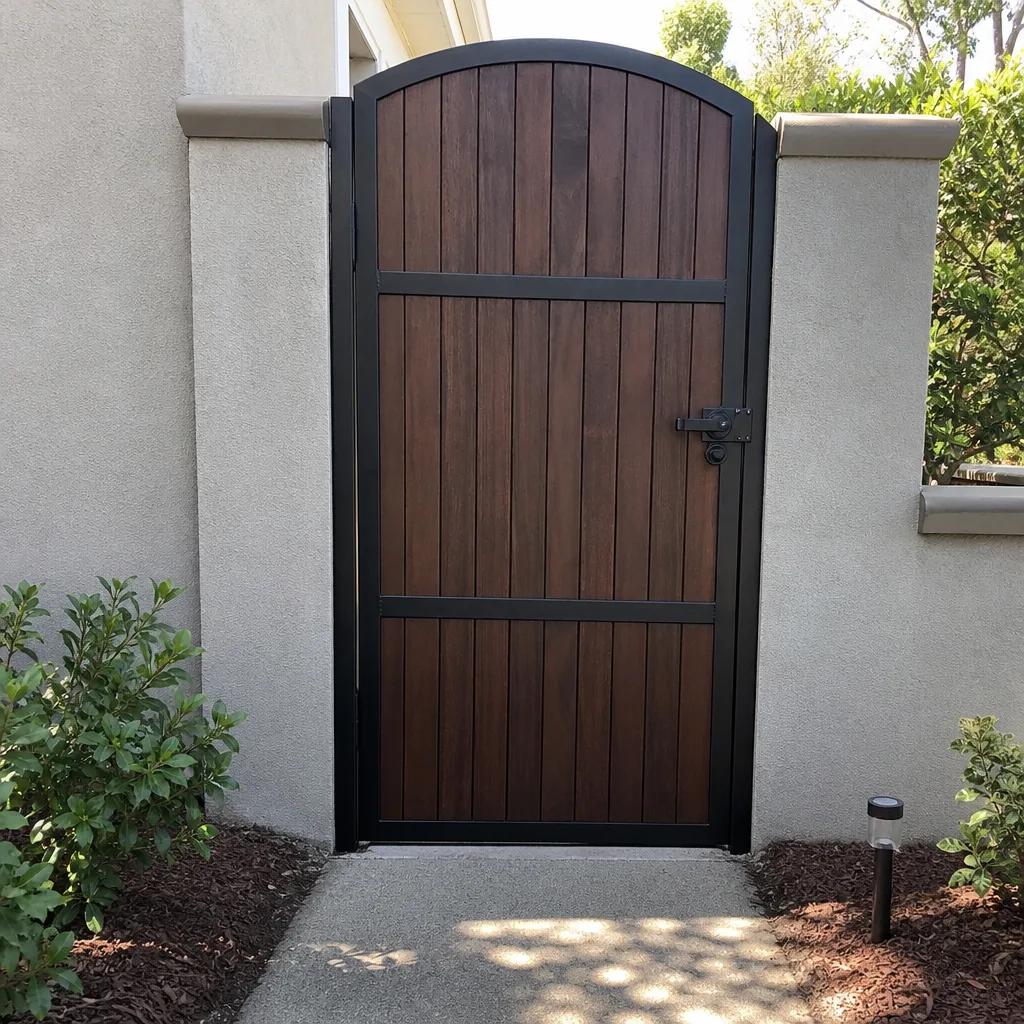 After
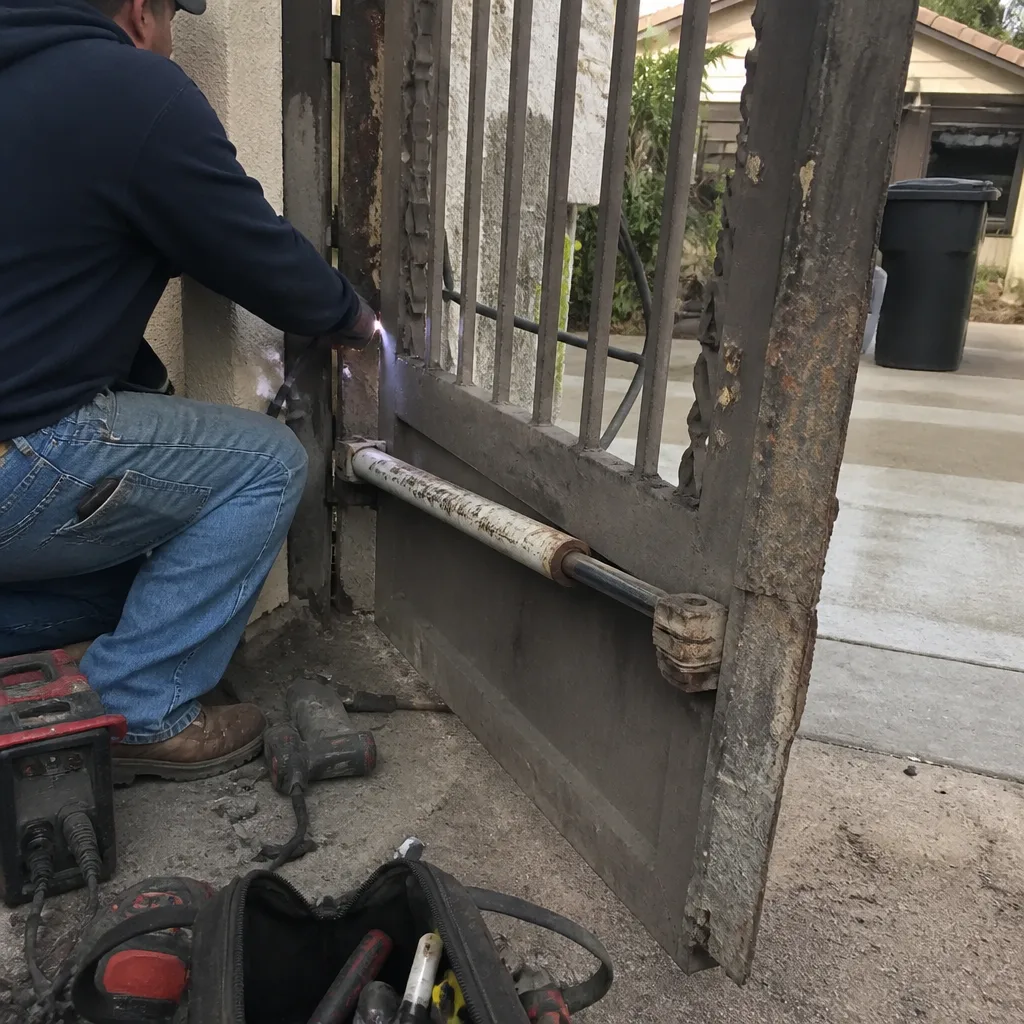 Before
 After
 Before
 After