

Last updated October 31, 2026
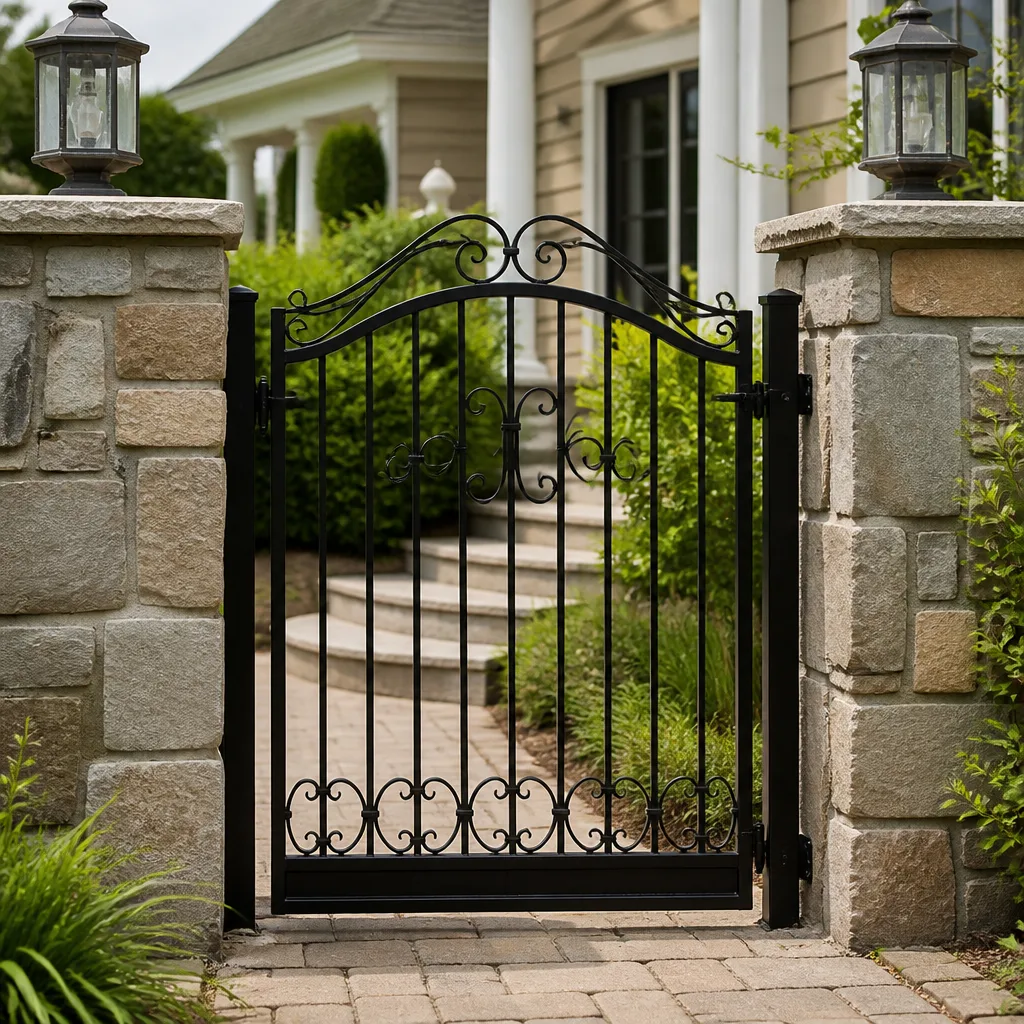 Wrought iron
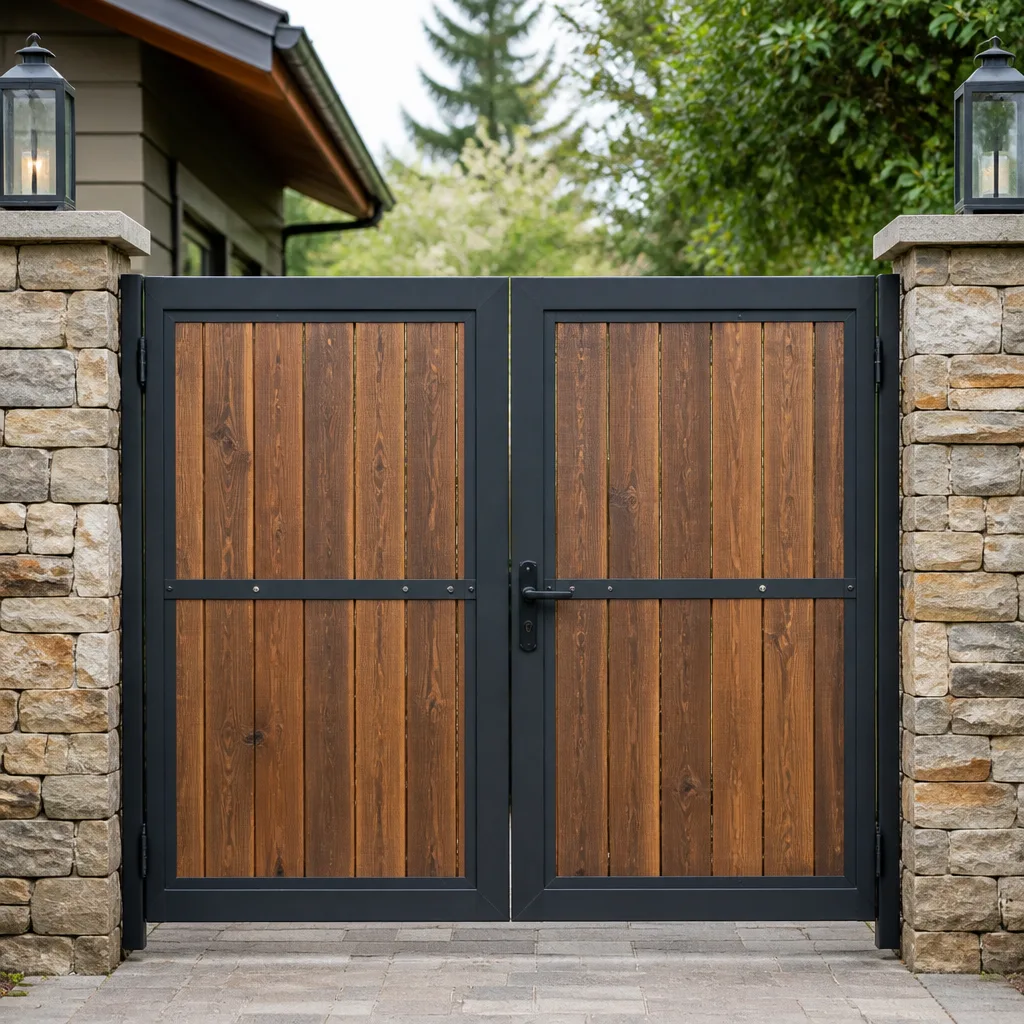 Wood & steel frame
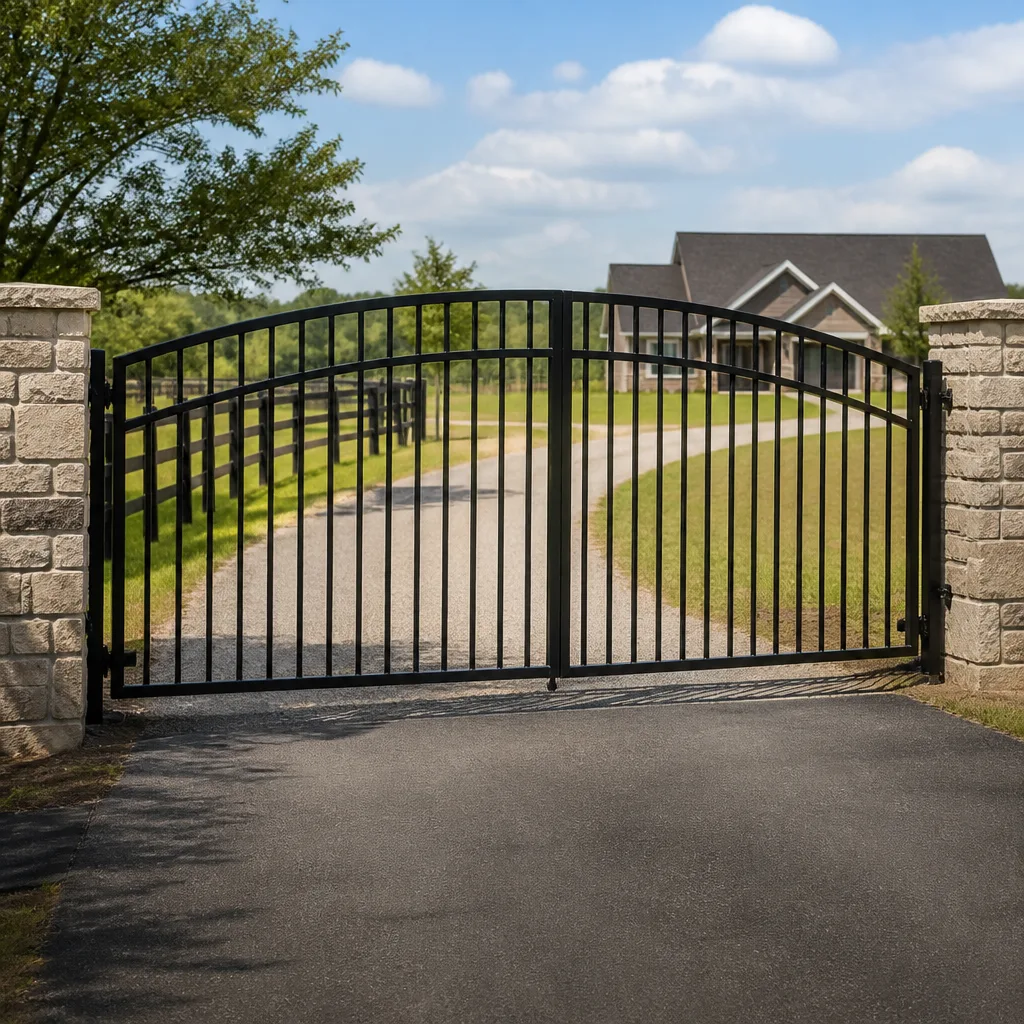 Farm & ranch
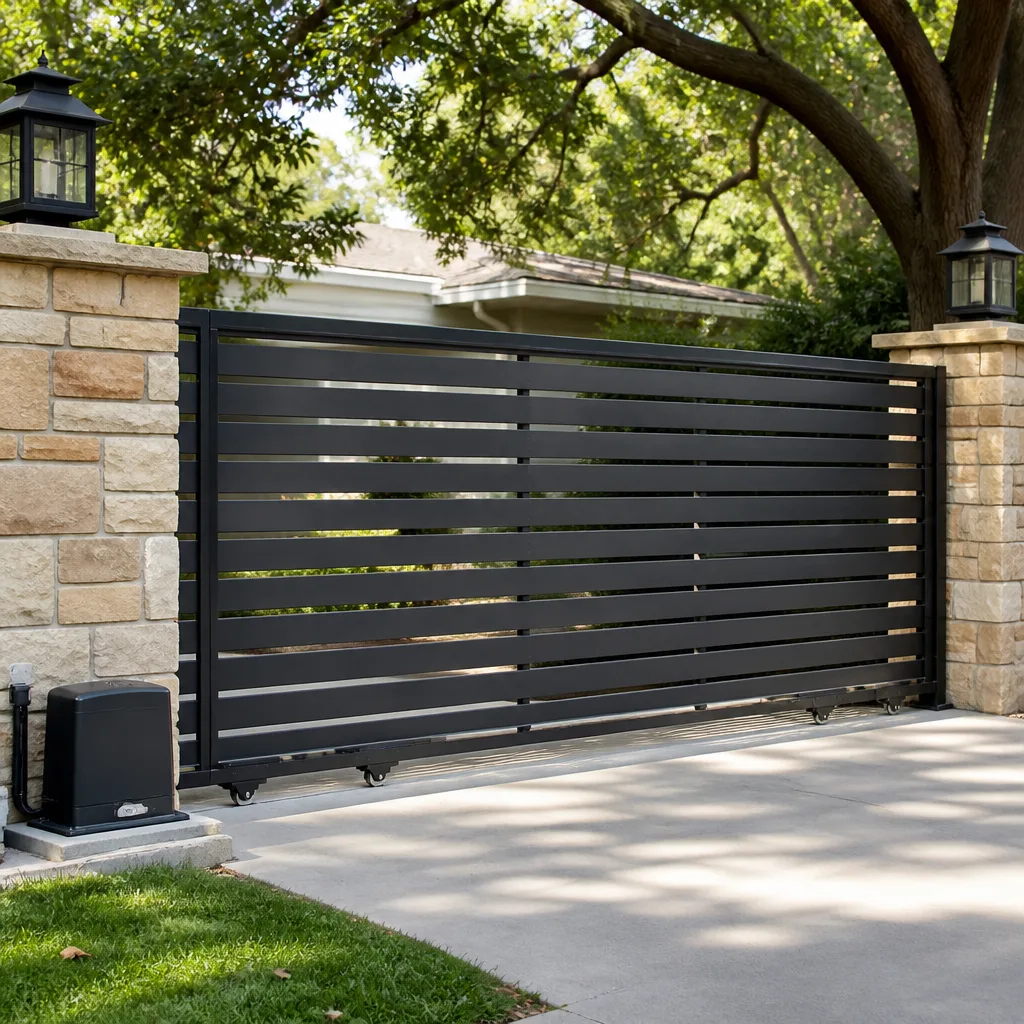 Sliding driveway gates
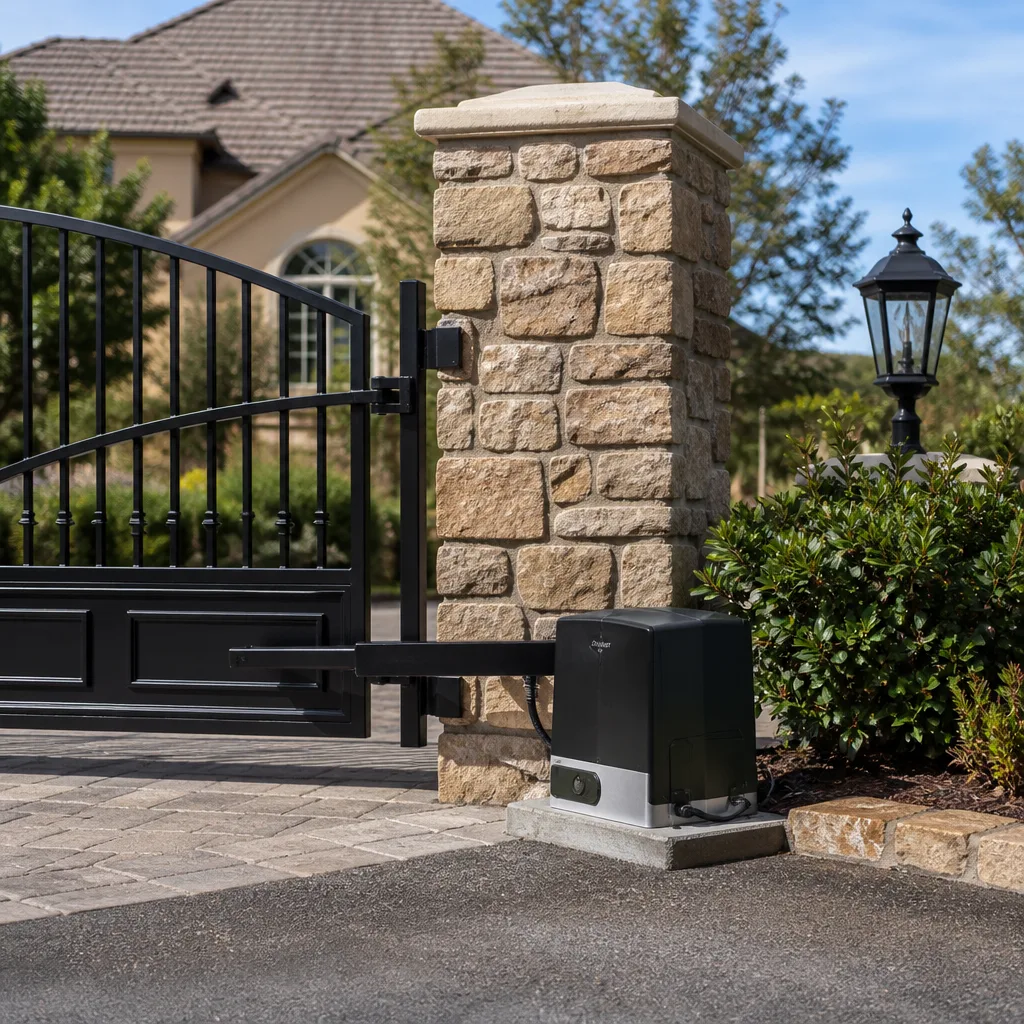 LiftMaster operators
Free on-site gate assessment - hinges, posts, and your LiftMaster or Nice gate operator checked before anything is quoted
The assessment is free and the quote is the invoice.
Get your free estimateSeasonal Gate Repair Care for San Diego: Year-Round Homeowner’s Guide
The worst month for San Diego gate electrical failures isn’t summer. It’s October. By then, inland heat has spent four months cooking control board capacitors inside metal enclosures that regularly hit 140°F, and the first real temperature swings of fall push aging solder joints past their breaking point. In our experience, the calls spike right around Halloween. This guide walks through the four real stress cycles San Diego gates face each year, what to check before each one arrives, and when a repair beats a replacement. If you own an automated gate in San Diego Gate Company home territory, this is the maintenance calendar that actually matches our climate, not a midwest template.
Styles & brands we work with
Quick Answer
Seasonal gate care in San Diego comes down to four windows: May Gray/June Gloom condensation checks, inland summer heat preparation, Santa Ana wind season adjustments, and post-rain drainage inspection. Most gate damage here isn’t from one dramatic event. It’s from months of slow environmental stress that goes unnoticed until a capacitor fails or a gear strips. Addressing each stress cycle before it peaks prevents roughly 70% of the emergency repairs we see.
Table of Contents
- San Diego Gate Stress Cycles: The Climate Reality
- May Gray & June Gloom: The Coastal Corrosion Window
- Summer Heat Protocol for Inland San Diego Gates
- Santa Ana Wind Season: Pre-Event Gate Preparation
- Winter Rain Response: Drainage & Underground Operator Checks
- Year-Round UV Damage to Gate Wiring & Components
- The San Diego Seasonal Gate Maintenance Schedule
- Common Mistakes to Avoid
- When to Call a Professional
- Frequently Asked Questions
- The Bottom Line
San Diego Gate Stress Cycles: The Climate Reality
San Diego doesn’t have winter, spring, summer, and fall in any traditional sense. What it has is four distinct environmental stress cycles that map to specific months, and each one attacks gate systems differently. A homeowner who follows a generic maintenance calendar from a national website is checking the wrong things at the wrong time.
The reality of San Diego gate ownership is that the climate is mild enough to lull you into complacency, but harsh enough in specific, localized ways to destroy components slowly. UV radiation is relentless year-round. Coastal marine layer condensation is seasonal but aggressive. Inland heat is intense for four to five months. And the Santa Ana winds arrive every fall with enough force to physically beat on gate hardware.
We think of it as four windows, and the important part is acting before each window, not after. Here’s what the calendar actually looks like:
- May – June: Marine layer condensation at the coast, accelerated corrosion inside control enclosures
- July – October: Sustained inland heat in El Cajon, Lakeside, Santee, and Ramona, degrading hydraulic fluid, capacitors, and plastic components
- September – November: Santa Ana wind events, stressing hinges, auto-reverse sensors, and travel limits
- December – March: Infrequent but intense rain, pooling around underground operators and footings
Each of these deserves its own protocol. A gate that survives all four cycles without attention is lucky, not well-maintained. The sections below cover exactly what to check, when to check it, and what failure looks like if you don’t.
May Gray & June Gloom: The Coastal Corrosion Window
From late May through early July, the marine layer settles over coastal San Diego neighborhoods like Point Loma, Ocean Beach, Pacific Beach, La Jolla, and Coronado. The air stays damp for hours every morning, and that moisture finds its way into places you wouldn’t expect. Metal control board enclosures, especially older ones with worn gaskets, end up with condensation on the inside.
What we see most often during this window is corrosion on control board terminals and edge connectors. A LiftMaster or FAAC board that works fine all winter suddenly starts throwing error codes in June, and the homeowner assumes something broke. In many cases, nothing actually broke yet. The board is just wet. The problem is that if you ignore it, the corrosion becomes permanent, and then the board does fail.
Here’s the step-by-step protocol for coastal homeowners and property managers:
- Inspect the control enclosure gasket. On a dry morning, open the enclosure and look for white or green corrosion on terminals. If you see any, don’t spray anything on it. Call someone who can clean it properly or replace the board before it fails.
- Check for moisture inside the keypad or intercom. The morning marine layer gets into external keypads, especially older DoorKing or Linear models. Fog inside the keypad window is a warning sign.
- Wipe down exposed metal components. Hinges, latch posts, and actuator arms at the coast need periodic wiping and, if applicable, a light lubricant. But don’t lubricate anything with a dry-film product unless you know the manufacturer’s guidance for that component.
- Test auto-reverse and sensor alignment. Condensation on photo eye lenses can cause false obstruction signals. A gate that reverses for no reason in June is often just a fogged sensor.
- Look for rust forming on hardware. Coastal salt air accelerates rust on any uncoated steel. Catch it early and it’s a surface issue. Let it go and hinges bind, threads strip, and the gate starts sagging.
We’ve walked up to control enclosures in La Jolla where the board was dripping wet from condensation while the homeowner insisted the gate “never got rained on.” The marine layer is rain. It’s just slow rain. For automated systems, this is the window when a corrosion-induced board failure is most likely to show up, and the repair is far cheaper if caught before the board shorts out.
Summer Heat Protocol for Inland San Diego Gates
When coastal San Diego is enjoying 72°F, inland communities like El Cajon, Lakeside, Santee, Ramona, Poway, and Escondido are hitting 90°F and above, often for weeks at a time. That heat does two things to gate systems: it degrades hydraulic fluid in underground operators, and it cooks electronic components inside enclosures that trap heat.
Underground hydraulic gate operators, the kind common in many inland San Diego neighborhoods, rely on fluid viscosity to operate smoothly. Sustained heat thins the fluid, which changes gate speed and puts extra strain on the pump. When the temperature swings back down in October, the fluid has lost some of its performance properties, and that’s when we see the calls. The gate was fine all summer, then suddenly it’s slow and groaning in the fall.
Control board capacitors are the other casualty. A capacitor is basically a cheap electronic component that smooths out voltage fluctuations. Inside a metal enclosure sitting in direct sun, the ambient temperature can exceed 140°F. Capacitors have a rated lifespan at a given temperature, and every degree above that rating shortens their life. Four months of inland heat is enough to push an older capacitor past its limit.
What to do before and during the summer heat cycle:
- Check gate speed in early July. If the gate is noticeably slower than it was in spring, the hydraulic fluid may already be degraded. That’s a call worth making.
- Provide shade for control enclosures if possible. Not everyone can relocate an enclosure, but even a small awning or shade screen reduces internal temperature dramatically.
- Listen for changes in motor sound. A motor that’s working harder makes a different noise. Higher pitch, more vibration, or a grinding undertone are all signs of heat stress.
- Test the gate during the hottest part of the day. If it stutters, hesitates, or trips a breaker at 3 PM but works fine at 9 AM, the problem is thermal. That won’t fix itself.
- Don’t ignore a gate that “sometimes” doesn’t respond. Intermittent heat-related failures become permanent failures. The component is already damaged; the question is whether it gets replaced now or at 2 AM on a Sunday.
For inland homeowners, the smart move is a pre-summer inspection in late May or early June. Electric gate repair in San Diego is far less expensive when it’s preventative. A technician can check fluid levels and viscosity, inspect capacitor condition, and catch heat-related wear before the temperature peaks.
Santa Ana Wind Season: Pre-Event Gate Preparation
The Santa Ana winds arrive in San Diego every fall, usually between September and November, and they’re the single most physically violent thing most gate systems experience all year. Gusts of 40 to 60 mph are common in wind-prone corridors like Mission Valley, the canyons east of the 5, and east county. For a gate, that’s a series of impact loads on every hinge, every weld, and every fastening point.
The critical mistake homeowners make is assuming that because the gate survived last year’s Santa Anas, it’ll survive this year’s. But hinges wear, fasteners loosen, and weld fatigue accumulates. The gate that held up fine in October 2024 may be one gust away from a failure in October 2025.
Here’s the pre-Santa Ana checklist:
- Check every hinge and fastener for play. Grasp the gate and try to wiggle it. Any movement at the hinge point is a problem. A gate that shifts in the wind puts strain on the operator, and eventually something gives.
- Adjust auto-reverse sensitivity. If the gate reverses too easily, it may stop closing in high winds, leaving your property open. If it doesn’t reverse easily enough, it could crush against debris blown into the gate path. Both are problems. This is a setting that should be checked by someone who understands the system, not adjusted on a guess.
- Clear the gate path of movable objects. Potted plants, trash cans, kids’ toys, patio furniture. If the wind can move it, it can block the gate path and trigger repeated auto-reverse cycles, which strains the operator.
- Inspect the gate track or arch for debris accumulation. After the first Santa Ana event, check for leaves, branches, and other debris in the path. A gate that repeatedly stalls on debris is a gate that’s wearing out its operator prematurely.
- Listen for creaking or groaning during wind events. That’s the sound of metal flexing under load. It’s not normal, and it’s not “just the wind.” It’s your gate telling you something is about to fail.
For automated gates, the travel limit settings matter more during Santa Ana season than any other time. If the gate travels too far and slams into the stop, the repeated impact stress adds up fast. If it doesn’t travel far enough, the latch may not engage properly, and a gust can push the gate open. Both scenarios are correctable with a simple adjustment, but that adjustment needs to be precise. This is a case where gate repair in San Diego is best left to a specialist who can set the limits and sensitivity correctly.
We also tell people to think about the auto-reverse sensor. During Santa Ana events, dust and sand get kicked up, and those sensors can get coated. A dirty sensor may fail to detect an obstruction, which is a safety issue. A quick wipe with a dry cloth before and during the wind season is a cheap, effective step.
Winter Rain Response: Drainage & Underground Operator Checks
San Diego gets most of its rainfall between December and March, and while the total amounts are modest compared to, say, Seattle, the way it falls is the problem. We get heavy downpours in short bursts, and the ground, which has been baked hard all summer, doesn’t absorb water quickly. The result is pooling and runoff that finds its way into places it shouldn’t.
Underground gate operators are the highest-risk component during this window. These are motors installed below grade, often in a metal or polymer vault with a lid. If the drainage around the vault isn’t functioning, water pools, and the operator sits in water. That’s a fast track to motor failure, electrical shorts, and corrosion.
After any significant rain event, here’s what to do:
- Walk around the gate and driveway area. Look for standing water. If water is pooling near the gate or operator vault, that’s the first warning sign.
- Inspect the vault lid and seal. Many underground operators fail because the lid gasket has degraded and water gets in from the top. A cracked or missing lid gasket is a cheap fix compared to replacing a flooded motor.
- Check the drainage path. Sand, leaves, and silt get washed into drainage channels during downpours. If the channel is blocked, water redirects toward the gate area.
- Test the operator. If it sounds sluggish, trips a breaker, or moves erratically after rain, call a specialist immediately. Water ingress is progressive; it doesn’t dry out and heal.
- Look at the gate footings and posts. Heavy rain can soften soil around posts, especially on sloped properties in areas like Mount Helix or La Mesa. A gate that starts sagging after rain may have a footing issue.
For anyone with an underground operator, the smartest move is to have the vault inspected in November, before the rain starts. A technician can check the lid seal, confirm the drain is clear, and make sure the operator isn’t already showing signs of moisture damage from previous years. By the time water is visible inside the vault, the damage is already underway.
If you do experience any gate malfunction during the rainy season, electric gate repair in San Diego is available. But the honest advice from our experience is that the pre-rain inspection prevents the mid-rain emergency.
Year-Round UV Damage to Gate Wiring & Components
There’s no season for UV damage in San Diego. It’s constant. The sun here degrades wire insulation, plastic enclosures, keypad membranes, and powder-coat finishes year-round, and it’s the slowest, most overlooked threat to gate systems.
Wire insulation is a particular concern for automated gates. Over time, UV radiation makes PVC insulation brittle. It cracks, falls away, and exposes the conductor. When that happens, you get short circuits, intermittent operation, and in some cases, electrical fires. The worst spots are anywhere wiring is exposed to direct sun, which in San Diego means most places.
A Sun-exposure inspection looks like this:
- Visually inspect all visible wiring. Look for insulation that’s cracked, chalky, or peeling. Press gently on the insulation with a screwdriver handle; if it crumbles, it’s already failed.
- Check plastic enclosures and junction boxes. UV makes ABS and PVC enclosures fade and become brittle. A box that cracks when you open it is a water ingress waiting to happen.
- Examine keypad and intercom faces. The buttons and display windows on external keypads degrade under constant sun. Faded, cracked, or unresponsive buttons are a sign the entire weather seal may be compromised.
- Look at powder-coat and paint on the gate itself. Chalking, fading, and peeling are cosmetic at first, but exposed metal in coastal San Diego then starts corroding. That corrosion spreads to hinges and joints.
- Check the gate wheels or rollers. UV affects tires too. Cracked or dry-rotted gate rollers will fail eventually, and the gate will bind or derail.
UV damage is cumulative and irreversible. There’s no coating that stops it forever. The good news is that replacing UV-damaged wiring, enclosures, and keypads when problems are first spotted is far cheaper than waiting for a short circuit or a water-damaged board. We recommend making this part of the annual inspection, regardless of season.
The San Diego Seasonal Gate Maintenance Schedule
Here’s the condensed version of everything above, organized into a month-by-month action plan. This is the schedule we recommend for San Diego homeowners and property managers who want to avoid emergency repairs and extend the life of their gate system.
February – March: Post-Rain Inspection
After the rainy season, inspect for water damage. Check underground operators for moisture, look for soil erosion around footings, and inspect for rust or corrosion on hardware. This is also a good time for a full gate repair assessment of anything that happened over the winter.
April – May: Pre-Summer Tune-Up
Before the heat hits, have the operator inspected. Check hydraulic fluid condition for underground operators, test capacitor health in control boards, and verify that all cooling vents are clear. In coastal areas, this is the time to address any corrosion from the previous year’s marine layer before the next one arrives.
June – July: Marine Layer Alert
Coastal homeowners should check control enclosures monthly for condensation during May Gray and June Gloom. Wipe down photo eye sensors. Look for new corrosion on terminals. If the gate starts behaving erratically during this window, moisture is the primary suspect.
August – September: Pre-Santa Ana Check
Before the winds arrive, inspect hinges, fasteners, and welds for play. Clear the gate path of potential debris. Have travel limits and auto-reverse sensitivity checked by a specialist. Test the gate during the heat of the day to catch thermal issues before they become permanent.
October – November: Santa Ana and Heat Recovery
During wind events, listen for unusual noise and check for debris accumulation. After the first Santa Ana, re-inspect hinges and welds. This is also when heat-stressed capacitors often fail, so watch for signs of electrical trouble: flickering, intermittent operation, or breaker trips.
December – January: Pre-Rain Drainage Check
Clear drainage channels around the gate and operator vault. Check lid seals on underground operators. Inspect wiring insulation for UV damage. This is the last window to address water-related vulnerabilities before the winter rains start.
This schedule takes maybe an hour of attention every few months, and it catches most problems before they become failures. The alternative is waiting for something to break, and in San Diego, that something usually breaks at the worst possible time.
Common Mistakes to Avoid
- Using a generic seasonal maintenance checklist from a national website. San Diego gates don’t need “winterizing” the way Minnesota gates do. They need marine layer inspections in June and heat stress checks in August. Following the wrong calendar means checking the wrong things.
- Ignoring a slow or sluggish gate in July, assuming it’s “just the heat.” Heat doesn’t make a healthy gate slow. If the gate is noticeably slower in summer, the fluid is degraded or the motor is struggling. It won’t fix itself when the temperature drops.
- Lubricating everything without knowing what each component needs. Some gate components should never be lubricated, and the wrong lubricant can attract dust and sand that accelerates wear. When in doubt, don’t guess.
- Assuming the gate survived last year’s Santa Anas so it’ll survive this year’s. Hinge and weld wear is cumulative. Every wind event takes a little more out of the hardware. The failure threshold gets closer every year.
- Ignoring condensation in the control enclosure because “it’s just water.” Water inside a control board enclosure is corrosion under the influence of electricity. It’s not benign. It’s the precursor to a board failure that costs hundreds to replace.
- Putting off a post-rain check because the gate “seems fine.” Water damage is often invisible from the outside of the system. A flooded underground operator may run for weeks before it fails completely. Inspect after every significant rain.
- Adjusting auto-reverse sensitivity or travel limits without understanding the system. These settings affect safety. A gate that doesn’t reverse properly is a serious hazard, especially for a household with children or pets.
When to Call a Professional
Some seasonal maintenance steps are DIY-appropriate: clearing debris, wiping sensors, checking for visible rust, observing gate speed and sound. But a lot of the meaningful preventative work requires access to the operator, an understanding of the electronics, and the right tools. If you notice a gate that’s sluggish in summer heat, a control board with visible corrosion, an underground operator that’s been sitting in water, a gate that bangs or slams when it opens or closes, or any sign of electrical trouble like flickering or breaker trips, that’s a specialist call. The same goes for auto-reverse sensitivity adjustments and travel limit settings, both of which are safety-critical and not something to guess on. San Diego Gate Company offers free estimates in San Diego. Call (877) 517-5469 and we’ll tell you what’s wrong and what it costs to fix, before any work begins.
Frequently Asked Questions
We recommend a professional inspection twice a year, ideally in late spring before summer heat and in late fall before Santa Ana winds and winter rain. Between those inspections, the seasonal checks outlined in this guide are enough for most homeowners to catch developing problems early.
Condensation from the marine layer gets inside control board enclosures and causes corrosion on terminals and connectors. That moisture on the board causes intermittent faults that often disappear once the enclosure dries out, which makes the problem easy to ignore until the board fails permanently.
Yes, especially inland. Sustained 90°F+ temperatures in places like El Cajon and Santee degrade hydraulic fluid in underground operators and shorten the life of control board capacitors. A gate that runs fine in the morning but stutters at 3 PM is showing heat stress.
Check hinges and fasteners for play, clear the gate path of movable objects, and have travel limits and auto-reverse sensitivity checked by a specialist. A gate that’s loose at the hinges or misaligned in its travel path takes a beating during high-wind events.
Signs include sluggish operation, a different motor sound, intermittent failure, or a breaker that trips after rain. If water has been pooling around the operator vault or the lid seal is cracked, assume water is getting in and have it inspected.
We’re trained on nine major gate and access-control brands, including LiftMaster, FAAC, BFT, and Linear. If you own a gate from any of those manufacturers, or virtually any other major system, we can diagnose and repair it without forcing you into a brand switch.
The Bottom Line
San Diego gate care isn’t about four seasons. It’s about four stress cycles: marine layer condensation in May and June, inland heat from July through October, Santa Ana winds in fall, and rain in winter. Each one attacks gate systems differently, and each one has a clear set of preventative steps. The homeowners who follow this calendar catch problems early, when a repair costs a fraction of a replacement. The ones who wait until the gate stops working are the ones who call us in the middle of a Santa Ana event with a gate that won’t close. For a full gate installation in San Diego or any seasonal repair, call (877) 517-5469. We’ll diagnose the real problem and give you an honest quote before any work starts.
Written by the team at San Diego Gate Company, serving San Diego since 2018.
See the difference
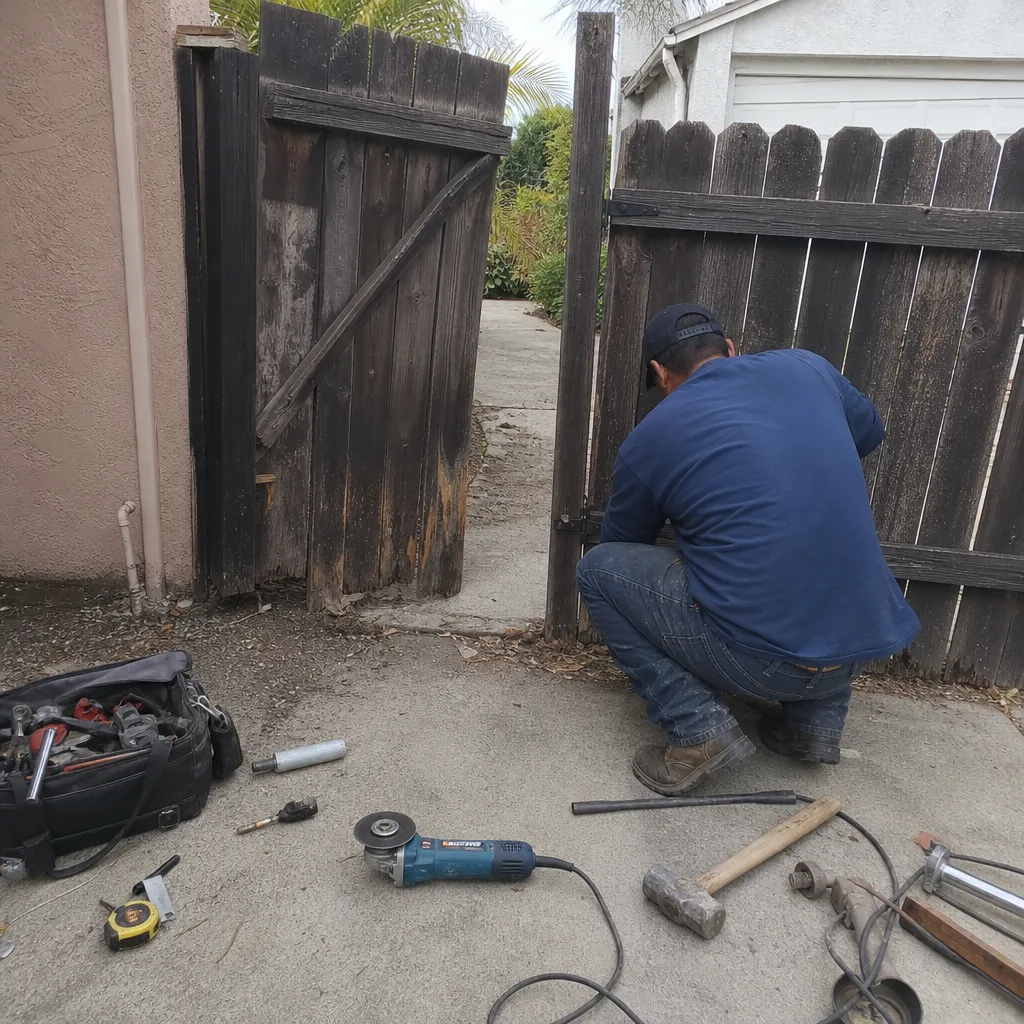 Before
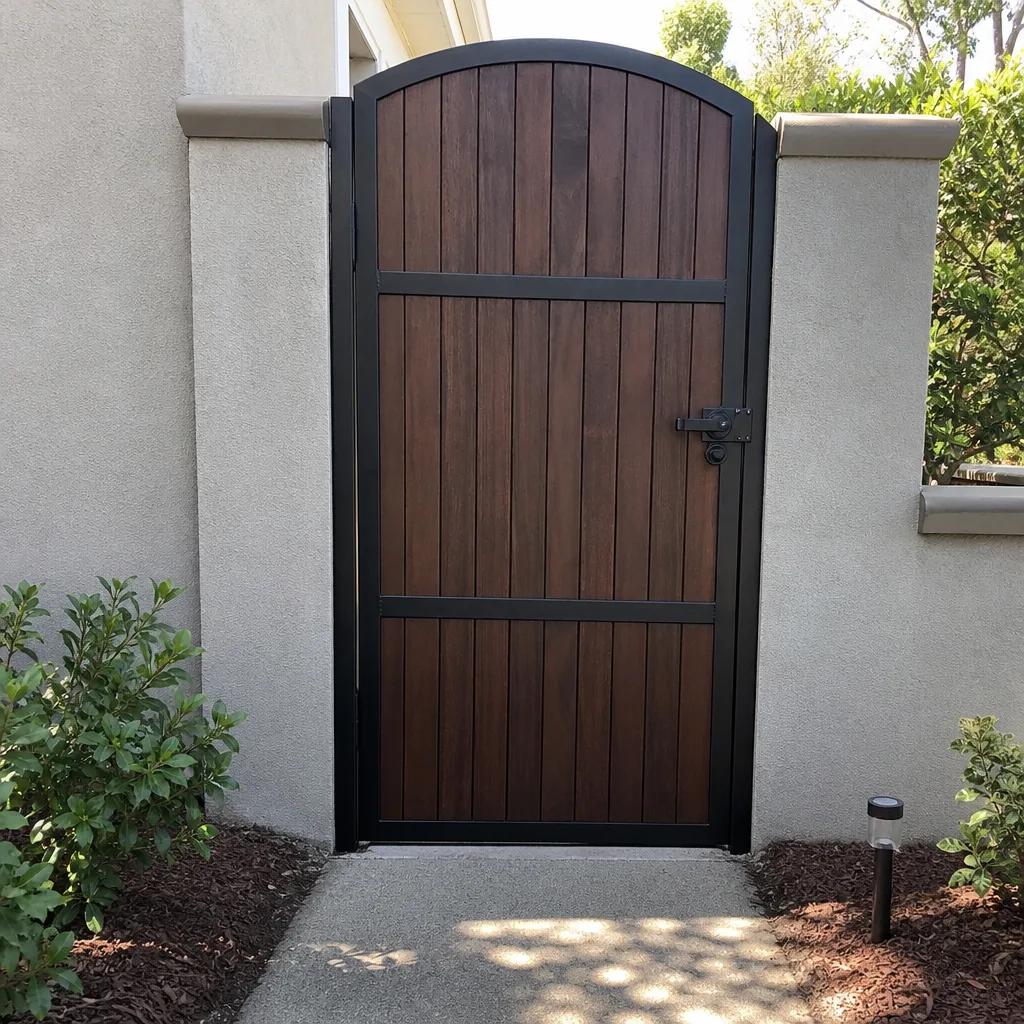 After
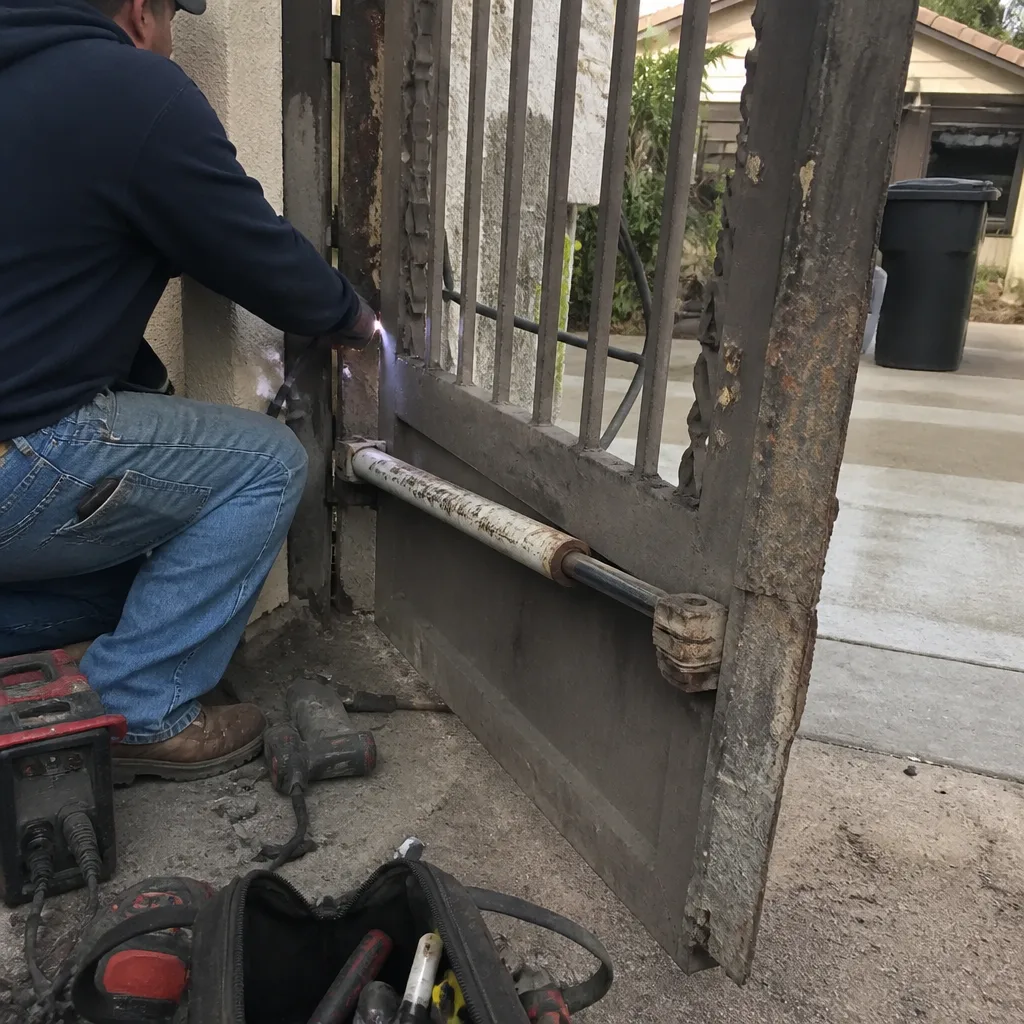 Before
 After
 Before
 After