

Last updated October 31, 2026
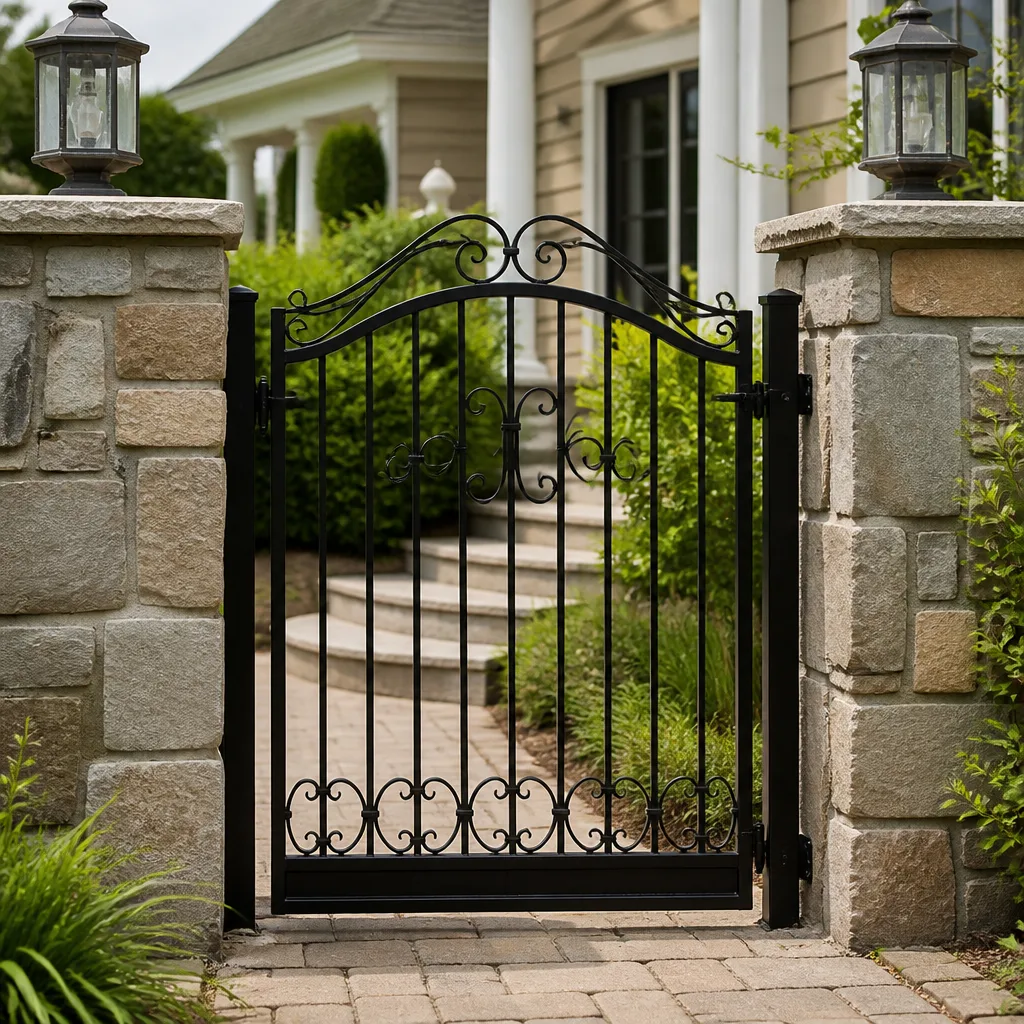 Wrought iron
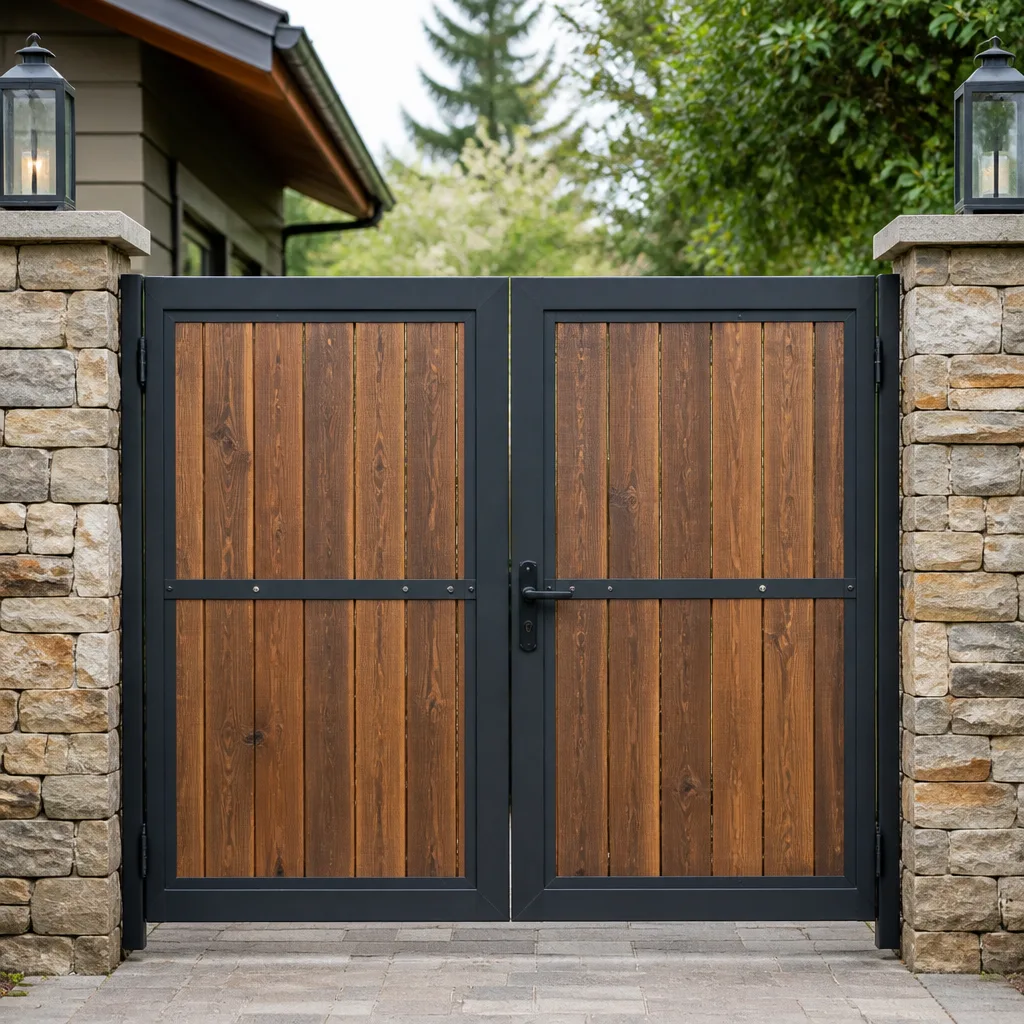 Wood & steel frame
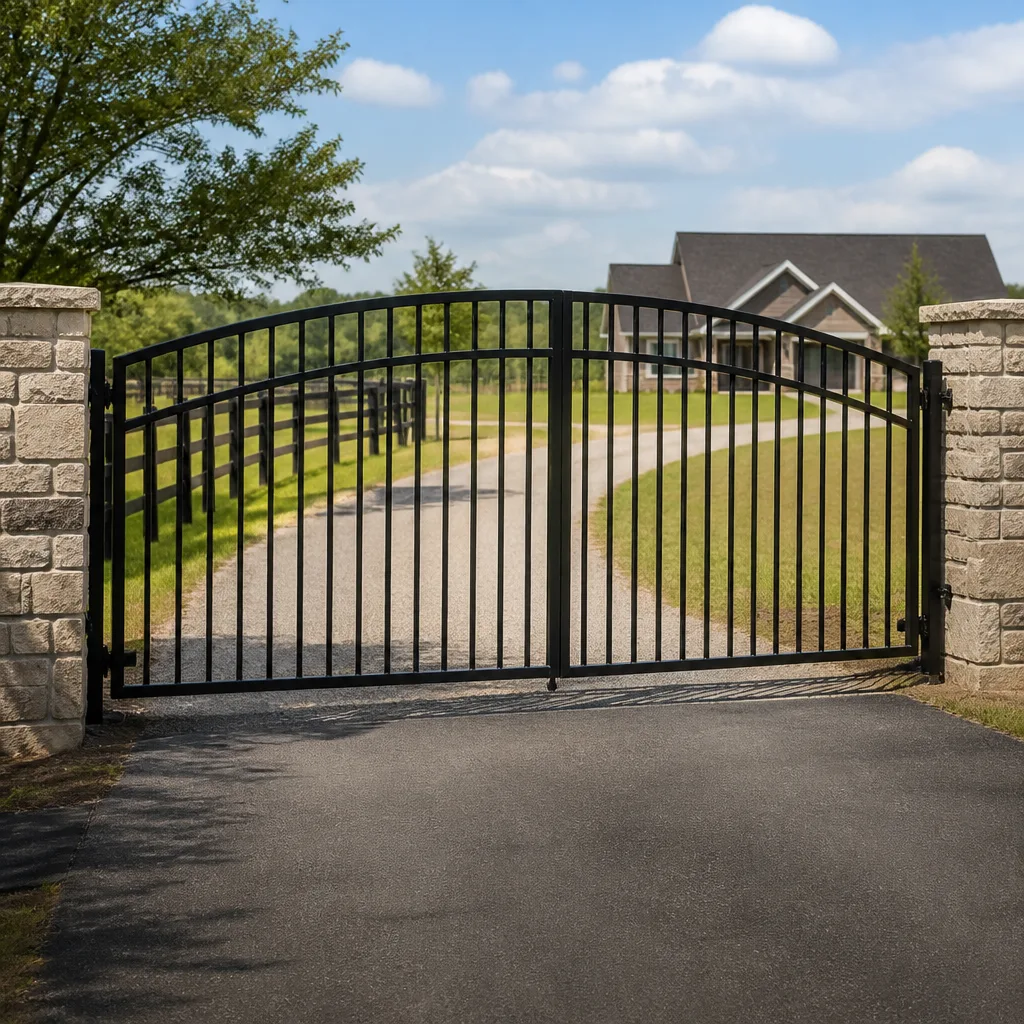 Farm & ranch
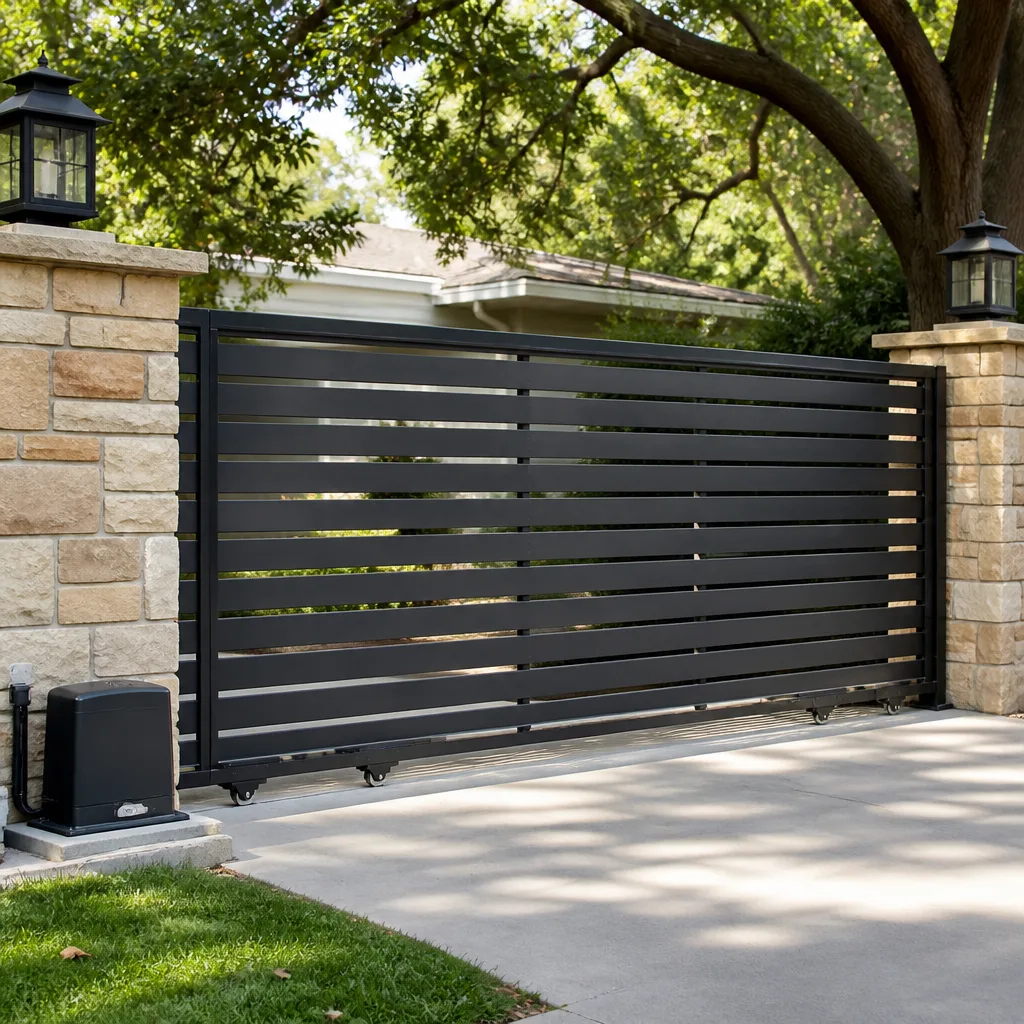 Sliding driveway gates
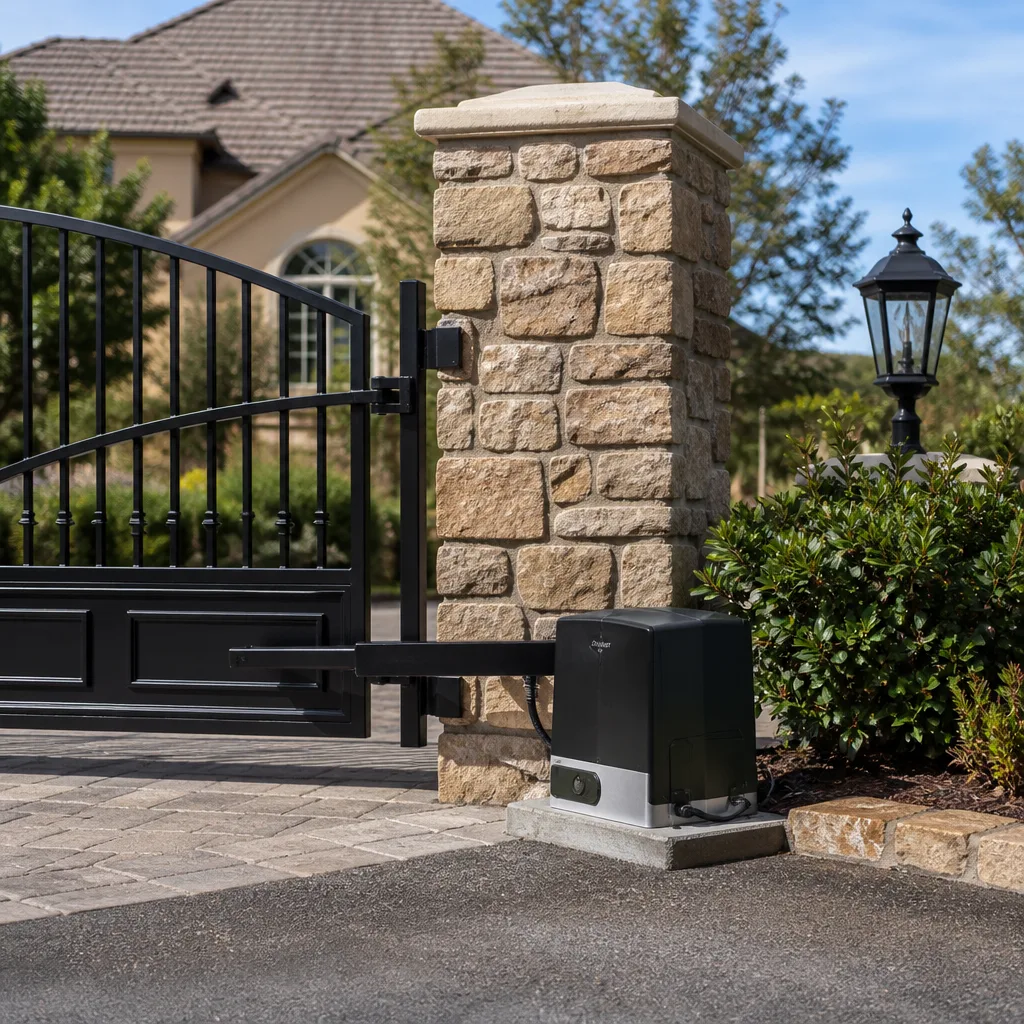 LiftMaster operators
Free on-site gate assessment - hinges, posts, and your LiftMaster or Nice gate operator checked before anything is quoted
The assessment is free and the quote is the invoice.
Get your free estimateGate Repair Warning Signs: A San Diego Homeowner’s Reference Guide
Most gate failures give 30 to 90 days of warning before they become emergency repairs. The problem is that homeowners misread the signals because they don’t know what normal gate behavior looks like. A gate that hesitates for two seconds before moving isn’t “slow” – it’s drawing excess current while the operator fights a binding hinge, and that pattern predicts motor failure within weeks, not months. This guide gives San Diego homeowners a reference-grade symptom index: observable behavior mapped to specific underlying failures, with the auditory, electrical, and visual cues that other resources skip.
Styles & brands we work with
Quick Answer
Gate repair warning signs in San Diego fall into four categories: unusual noises (grinding, squealing, popping), erratic movement (hesitation, slowing, reversing unexpectedly), visible structural changes (sagging, scraping, new rust patterns), and electrical quirks (intermittent remote range, flickering keypad lights, error codes). Any one of these symptoms means the gate needs professional diagnosis within 30 days – and most repairs cost significantly less when caught before the failure cascades into the operator motor or a bent frame.
Table of Contents
- The Sounds a Failing Gate Makes and What Each One Means
- Electrical Warning Signs Homeowners Overlook
- Visual Indicators on the Gate Structure Itself
- How San Diego Soil Movement Causes Gate Misalignment
- Failing vs. Improperly Programmed: Symptoms That Look the Same
- What Gate Repairs Typically Cost in San Diego
- What You Can Check Yourself Before Calling
- Common Mistakes to Avoid
- When to Call a Professional
- Frequently Asked Questions
- The Bottom Line
The Sounds a Failing Gate Makes and What Each One Means
Your gate talks to you every time it opens. Most San Diego homeowners hear these sounds daily but have never been told what they mean. After years of diagnosing gates across the county, we’ve learned to map specific sounds to specific failures with surprising accuracy. Here’s what to listen for.
A High-Pitched Squeal When the Gate Moves
A squeal that rises in pitch as the gate moves usually points to dry or worn hinge bearings. On swing gates, the load-bearing hinges at the top and bottom absorb the gate’s full weight every cycle. When the internal bearing surfaces lose lubrication or begin to gall, metal rubs against metal and produces a high-frequency squeal. Left untreated, the hinge pin wears into an oval shape, the gate drops a quarter inch, and the operator motor starts working against added friction. We’ve replaced operator motors that died young for exactly this reason – the motor wasn’t defective, the hinge was screaming for help for two months first.
A Rhythmic Clicking or Ticking During Operation
Clicking sounds almost always come from the drive mechanism. On chain-drive slide gates, a rhythmic click as the gate travels means the chain has stretched beyond its tensioner’s adjustment range and is skipping slightly on the drive sprocket. On gear-driven operators such as those from Viking or DoorKing, a clicking sound can mean a chipped tooth on the drive gear or debris lodged between gear faces. The click repeats at the same point in the gate’s travel because that’s where the damaged tooth engages. This is one of the few gate repair warning signs in San Diego that actually worsens faster than most homeowners expect – a chipped gear tooth will fracture completely within weeks, leaving the gate stuck mid-travel.
A Groaning Sound When the Gate First Starts Moving
A low groan at startup, especially on a cool San Diego morning, typically means the hydraulic fluid in a hydraulic operator has thickened or the reservoir level has dropped. Hydraulic operators from brands like Elite rely on fluid pressure to move the gate, and when fluid is low or contaminated with moisture, the pump strains audibly. The groan is the sound of a pump cavitating – creating tiny vacuum pockets in the fluid – which damages internal pump components over time. In coastal San Diego neighborhoods like Point Loma or Pacific Beach, salt-laden air accelerates moisture intrusion into hydraulic systems, making this symptom more common near the water than inland.
A Sharp Pop or Snap When the Gate Reverses Direction
A single sharp pop when the gate changes direction is often the sound of a loose mounting bolt shifting under load. The operator’s base plate, the gate’s hinge brackets, or the track wheels on a slide gate all depend on bolts that stay tight. When they loosen, the components shift slightly and release stored energy as a pop. This sound matters because the loose bolt is now allowing movement that accelerates wear on every other component in the system. Tighten the bolt and the pop disappears. Ignore it and the hole its in elongates, making future repair more involved.
If your gate is making any of these noises, the specific diagnosis matters more than the fix. A gate repair in San Diego call is the fastest way to identify which component is talking to you before the problem migrates into something more expensive.
Electrical Warning Signs Homeowners Overlook
Electrical failures are the sneakiest category of gate problems because they often present as mechanical symptoms. A homeowner in Rancho Bernardo told us her gate was “getting weak” and would need to be pushed. The actual problem was a failing capacitor in the operator’s circuit board that wasn’t delivering enough starting current to the motor. The gate itself was fine. Here are the electrical signs that most often get misread.
Remote Range That Shrinks Over Time
Your remote worked from the end of the block when the gate was installed. Six months later, you have to be in the driveway before it responds. Shrinking range rarely means the remote battery is dying – that’s the first thing everyone checks, and it’s usually not the culprit. More often, the receiver antenna inside the control box has been damaged, the control board’s receiver module is degrading, or a new source of radio interference has appeared near the gate. In San Diego, common interference sources include new LED landscape lighting transformers, wireless security cameras, and even some solar panel inverters installed on nearby homes. Interference patterns shift with new equipment, so a gate that worked perfectly for years can suddenly develop range issues without any change to the gate itself.
Intermittent Operation That Follows No Pattern
A gate that sometimes refuses to open and then works fine an hour later is displaying one of the most commonly ignored warning signs in the book. Intermittent faults rarely fix themselves permanently – they usually indicate a solder joint on the control board that’s cracking with thermal expansion, a relay that’s sticking, or a limit switch that’s drifting out of alignment. The reason the gate works “sometimes” is that temperature changes cause the failing component to make or break contact. Ghost Controls and LiftMaster operators have particular failure points that we see repeatedly, but the brand matters less than the pattern: intermittent today means permanent within a few months, and the failure usually happens at the worst possible time.
Error Codes on Keypad or Control Board Displays
Modern gate operators, including those from DoorKing and Viking, display numeric error codes that correspond to specific fault conditions. Homeowners often clear these codes without noting them, which erases the only diagnostic record the system keeps. If your keypad shows a number or letter code you don’t recognize, write it down before you clear it. Common codes indicate things like “photo eye obstruction detected,” “motor overcurrent condition,” or “safety edge triggered.” Each one maps to a specific subsystem, and knowing which code appeared saves a technician diagnostic time – which saves you money. Related: electric gate repair in San Diego calls are faster and cheaper when the homeowner can report the exact error code they saw.
Flickering Keypad Backlight or Dim Display
A keypad that flickers or dims when the gate operates is telling you about a voltage drop in the low-voltage circuit. This can mean a failing transformer, a battery backup system that’s no longer holding charge, or a corroded connection anywhere in the 24-volt loop. In San Diego’s coastal zones, corrosion on low-voltage terminals is extremely common – the combination of salt air and mild temperatures creates persistent condensation inside control boxes that were never sealed properly. A dimming display is the early warning; the eventual symptom is a keypad that stops responding entirely, often at night when you’re outside the gate with no other way in.
Visual Indicators on the Gate Structure Itself
You don’t have to be a gate technician to read the visual evidence. A gate’s structural problems announce themselves through geometry and wear patterns that are visible to anyone who knows what to look for. In our experience, most San Diego homeowners notice these signs but don’t connect them to imminent gate failure. Here’s how to read what your gate is showing you.
Sagging on One Side
A swing gate should hang perfectly level. Check the gap between the bottom of the gate and the ground along its entire length – if the gap narrows on one end, the gate is sagging. Sometimes the sag means the hinge is worn, sometimes it means the post itself is tilting, and sometimes it means the gate’s internal frame has twisted. Each cause has a different repair path and a different price point. A worn hinge is a direct replacement. A tilting post usually requires excavation, re-setting the post in concrete, and allowing cure time before re-hanging the gate. A twisted frame often can’t be fixed and signals that replacement might be the honest recommendation. The sooner you catch the sag, the more likely it’s a hinge-level problem rather than a foundation-level problem.
Ground Scrape Marks
Look at the path the gate travels. Arcing scrape marks in the concrete or pavers, or bare dirt showing through grass where the gate swings, means the gate has been dragging for a while. Dragging creates additional load on the operator with every cycle, and it’s a cycle of escalating damage: the scrape wears the bottom rail, which lets the gate sag more, which worsens the scrape. On slide gates, ground scrape marks near the track indicate that the gate’s support wheels have worn down or the track has shifted. This is a classic example of a $200 repair becoming an $800 repair because the symptom was ignored for six months.
Rust in Specific Patterns
Not all rust means the same thing. Surface rust that spreads evenly across a steel gate is usually cosmetic and can be refinished. But rust that concentrates at specific points – at the hinge welds, at the base of the vertical frame members, at bolt heads – indicates a stress concentration point. Those are the locations where the gate flexes under load, cracking the paint or protective coating and exposing raw steel. Focused rust at a structural connection is telling you that the connection is working harder than it should, and that the flexing will eventually become a crack. In San Diego, the marine layer that rolls through neighborhoods like Scripps Ranch and Tierrasanta several mornings a week increases condensation, and condensation accelerates rust at precisely those exposed points.
Concrete Cracking Around Gate Posts
Gate posts are buried in concrete footings, and when the gate’s weight or repeated operator force overloads that footing, the concrete shows hairline cracks radiating outward from the post base. Cracks wider than a dime at the post are a structural concern. This symptom ties directly into San Diego’s unique soil behavior, which the next section covers in detail.
How San Diego Soil Movement Causes Gate Misalignment
San Diego County contains some of the most geologically varied terrain in California, and the soil directly underneath your gate affects how it operates. This is a factor that generic gate repair guides never address, because most of them are written for a national audience by people who have never dug a post hole in East County clay. Here’s what the soil is doing to your gate.
Expansive Clay in La Mesa and Spring Valley
La Mesa, Spring Valley, Lemon Grove, and parts of El Cajon sit on the Mount Soledad formation – a soil layer with a high percentage of expansive clay minerals. Clay expands dramatically when wet and shrinks when dry, and San Diego’s winter wet season and summer drought cycle produces exactly the kind of moisture fluctuation that activates this behavior. The result: your gate posts are sitting in soil that moves several inches vertically and laterally over the course of a year. A gate that operated perfectly in August can bind, scrape, or fail to latch by February, with no mechanical fault whatsoever. The soil moved. The fix is re-setting the posts with deeper concrete footings and, in severe cases, adding gravel drainage around the footing to moderate moisture swings.
Coastal Sand and Salt in Mission Bay Area Neighborhoods
Properties near Mission Bay, Pacific Beach, and Ocean Beach sit on sandy, well-drained soil that doesn’t heave like clay. But these locations bring a different problem: salt. Airborne salt penetrates control boxes, corrodes limit switches, and accelerates rust on exposed metal components. Gates in coastal San Diego typically need hinge replacement and limit switch service more frequently than equivalent gates in Poway or Scripps Ranch, even when both are the same brand and model. Salt corrosion also produces electrical resistance at terminal connections, which mimics the symptoms of a failing control board when the actual problem is a crusty wire connection.
Sandy Loam in North County Inland
Inland North County – Escondido, San Marcos, Vista, and Fallbrook – tends toward sandy loam that drains well and creates relatively stable post footings. Gates in these areas experience fewer soil-related alignment problems but more issues from decomposed granite dust. Wind-blown granite dust works its way into chain drives, roller bearings, and operator gearboxes, creating a fine abrasive paste that accelerates mechanical wear. We see more chain stretch and gear wear in North County inland gates than anywhere else in the county, and it’s almost always traceable to the local soil particle profile.
What Misalignment From Soil Movement Feels Like
Soil-induced misalignment usually shows up gradually as the gate starts to bind at a specific point in its travel, usually near the fully closed position. The operator strains audibly, the gate moves slightly slower through one portion of its swing, and the safety edge or photo eye may trigger falsely because the gate’s frame geometry has changed. Homeowners often adjust the limit switches to “fix” this, which masks the symptom while the underlying alignment problem continues to worsen. If your gate has needed limit switch adjustments more than once, something structural is moving. In our experience, it’s the soil in most East County locations. A gate installation in San Diego with properly engineered footings accounts for local soil conditions – which is exactly why any new gate or post replacement should consider what’s underground, not just what’s visible at the surface.
Failing vs. Improperly Programmed: Symptoms That Look the Same
This is the section that separates a true gate specialist from a generalist. Two gates can display identical symptoms for completely opposite reasons, and the wrong diagnosis leads to the wrong fix – sometimes a very expensive one. Here are the symptom pairs that San Diego homeowners most often misdiagnose.
Gate Reverses Before Fully Closed
Failing gate: The safety edge sensor is degraded and sending false obstruction signals. Or the photo eye lenses are dirty or misaligned. The gate reverses because it believes something is in the way.
Improperly programmed: The close force setting is set too high, so the gate touches the ground or the mechanical stop and the force sensor interprets that normal contact as resistance, triggering a reverse. The gate is functioning correctly – it’s just configured wrong.
These two fail in the same visible way but the fixes are a $150 sensor replacement versus a five-minute programming adjustment. A brand-agnostic technician who knows the programming interfaces for DoorKing, Ghost Controls, and Viking can tell the difference in a single visit. The lesson: don’t assume the gate needs parts when it might just need a settings change.
Gate Opens Then Immediately Closes
Failing gate: A limit switch is stuck or broken, so the operator never receives the “fully open” signal and defaults to a close command after a timeout.
Improperly programmed: The auto-close timer is set to zero seconds, or the “close immediately after open” function was accidentally enabled. This setting exists on several gate operators and is easy to trigger accidentally through the keypad menu.
We’ve been called to Carlsbad and Del Mar properties where the homeowner was certain the control board was dead, and the entire problem was an auto-close timer that had been changed during a power surge event. Gate control boards store settings in non-volatile memory, but voltage spikes can corrupt bits of that memory without fully damaging the board.
Remote Works Sometimes but Not Others
Failing gate: The receiver module in the control board is degrading and losing sensitivity.
Improperly programmed: Two remote transmitters are programmed to overlapping frequency codes, creating intermittent interference with each other. This is surprisingly common in San Diego neighborhoods with many automated gates close together, like some HOA communities in Chula Vista and National City where adjacent homes share similar gate models.
The fix for the first is replacing the receiver or the board. The fix for the second is reprogramming the remotes to distinct channels. One costs hundreds, the other costs a service call.
Why the Distinction Matters
An improper diagnosis in either direction wastes your money. Recommending a new control board when a programming fix would work is wasteful upselling, which is exactly what we’ve built our reputation against. Recommending a programming change when the hardware is actually failing means you’ll be calling again in two weeks when the gate fails completely. The way to get this right the first time is to work with a company that has trained, certified knowledge across the specific gate brands in question – not a general handyman who’s “willing to take a look.” Our team works across LiftMaster, FAAC, BFT, Linear, Viking, Ghost Controls, DoorKing, Elite, and Mighty Mule precisely because this diagnostic precision only comes from brand-specific experience.
What Gate Repairs Typically Cost in San Diego
Transparent pricing matters. While every gate is different and exact quotes require an on-site inspection, here are realistic ranges for the most common repair types in San Diego County as of 2025. These reflect what our team and others in the market typically charge for repair work – not new installations.
Typical Repair Cost Ranges
Hinge replacement (swing gate): $180 – $420 per hinge, depending on gate weight, hinge size, and whether the post needs re-drilling. Most single swing gates have 2 – 3 hinge sets. Total cost for a complete hinge job on a standard 12-foot residential swing gate typically runs $400 – $1,000.
Chain replacement and tensioning (slide gate): $220 – $520, including parts and labor. Chain stretch that is caught early can sometimes be corrected with tensioning alone for under $150.
Operator motor replacement: $650 – $1,800 depending on the brand and model. Viking and DoorKing residential operators fall in the $700 – $1,200 range for motor and gearbox replacement; hydraulic Elite operators trend toward the upper end.
Control board replacement: $350 – $900 parts and labor, depending on the operator brand and whether programming must be re-entered from scratch.
Photo eye or safety edge replacement: $120 – $350 per component. Photo eyes are the most commonly replaced safety component because they sit at bumper height and get knocked around regularly.
Limit switch replacement: $150 – $300 per switch, including alignment and re-testing of travel limits.
Post re-setting (concrete footing replacement): $800 – $2,500 per post depending on depth, soil conditions, and whether the gate must be uninstalled during cure time. East County clay soil typically requires deeper footings and adds cost compared to North County sandy loam.
Full diagnostic service call: $89 – $150 in most of San Diego County, typically waived if the repair is performed during the same visit. San Diego Gate Company provides free estimates in San Diego – call (877) 517-5469 to schedule a diagnostic.
Key Takeaways
- Prices reflect San Diego market rates as of 2025 and vary by gate weight, brand, and site conditions.
- The price is always quoted and agreed upon before any work starts – never an open-ended estimate.
- Early intervention typically takes a $300 – $500 problem and prevents it from becoming a $1,500 – $2,500 problem.
- Coastal corrosion and East County soil movement tend to increase repair costs compared to inland North County locations.
What You Can Check Yourself Before Calling
Some diagnostics are safe for homeowners and save time when you do call. Here’s a short pre-call inspection list that requires no specialized tools and no risk of injury. Note: this list is for observation and light maintenance only. Do not attempt to adjust high-tension springs, open the operator’s gearbox, or modify electrical wiring – those tasks involve stored mechanical energy and live voltage that can cause serious injury. Leave them to a trained professional.
- Listen to the full open-close cycle. Stand near the gate and note where in the travel any unusual sound occurs. The location of the sound is a diagnostic clue the technician can use. Write down: does the sound happen at startup, mid-travel, or near the closed position?
- Check for visible sag. Stand back 20 feet and sight along the top rail of the gate. If the line isn’t level, measure the difference with a tape measure at both ends. Tell the technician the exact measurement.
- Look for scrape marks. Inspect the ground along the gate’s travel path for arcing scratches, bare dirt, or worn concrete. Note where the marks start and end.
- Test remote range from a consistent distance. Park at the same spot you’ve always parked and test the remote. If the range is shorter than it was a month ago, report it. Intermittent range loss is diagnostically significant.
- Note any error codes. If your keypad or control board shows a code, photograph it before clearing it. The photo gives the technician an exact record.
- Check for loose bolts. With the gate stopped and secured, gently try to wiggle the operator mounting bracket, hinge brackets, and any visible bolts with a wrench. If anything moves, report it. Do not attempt to tighten components under tension.
- Inspect rust at connection points. Look closely at welds, hinge pins, and bolt heads. Rust that appears crusty and flaking at a structural joint is different from surface rust and should be mentioned.
Running through this list before you call for gate repair in San Diego will make the service call faster and help the technician arrive with the right parts on the first trip.
Common Mistakes to Avoid
- Lubricating without cleaning first. Spraying fresh lubricant over existing grime creates an abrasive paste that accelerates hinge wear. Clean the hinge surfaces with a dry cloth before applying any lubricant, and use a product designed for gate hardware, not WD-40 for long-term lubrication.
- Adjusting limit switches to fix binding. If the gate binds, adjusting the limits just moves the problem to a different position in the travel. Limit adjustments mask structural issues rather than fixing them. If you find yourself adjusting limits more than once every couple years, the problem is mechanical, not electronic.
- Clearing error codes without recording them. The code is the single most useful piece of diagnostic information your operator can provide. Photograph it before clearing it. A technician who arrives after the code has been cleared loses their fastest diagnostic lead.
- Replacing the remote battery as a first step for every problem. A remote that works sometimes is rarely a battery issue. Battery failure tends to produce consistent, progressive weakness, not intermittent operation. Intermittent behavior points to the receiver, the board, or interference – not the battery.
- Ignoring a new sound because “the gate still opens.” This is the most expensive mistake in the book. Every new sound represents wear that is progressing. The cost curve is exponential: a squealing hinge costs a few hundred dollars today and a burned-out operator motor in six months can cost $1,500.
- Assuming the gate brand determines the technician you should call. San Diego homeowners sometimes assume that if they have a DoorKing gate, they need a DoorKing dealer. Our brand-agnostic service model means we service Viking, Ghost Controls, DoorKing, Elite, and the other major brands without pushing customers toward replacement systems they don’t need.
When to Call a Professional
Any of the symptoms in this guide warrants a professional look, but some situations justify immediate action. If your gate makes a loud snapping sound and then sags visibly, stop using it and call for service – the structural failure has already occurred and continued cycling will cause secondary damage. If you smell burning plastic near the operator, cut power to the gate at the breaker and call immediately. If the gate reverses unpredictably or the safety devices have been triggering falsely, you have a liability exposure – a gate that closes on a person or vehicle is a serious safety hazard that no homeowner should tolerate for even a day. And if you’ve already had two or more repair attempts on the same component within a year, the diagnostic picture is incomplete and the problem needs a fresh set of eyes.
San Diego Gate Company offers free estimates in San Diego – call (877) 517-5469 to schedule a diagnostic visit. We work on virtually every major gate brand, including yours.
Frequently Asked Questions
Gate repair in San Diego typically costs $150 to $1,800 depending on the component; hinge replacements run $180 – $420 per hinge, control board replacements run $350 – $900, and operator motor replacements run $650 – $1,800. The exact price depends on the gate’s weight, brand, and the specific failure. Call (877) 517-5469 for an exact quote – estimates are free.
Many gate repairs can be completed the same day, especially hinge replacements, sensor alignments, and control board swaps where parts are commonly stocked. More involved repairs – post re-setting, custom gate fabrication, or hydraulic system rebuilds – are scheduled. Call (877) 517-5469 to describe the symptom and we can advise on timing.
San Diego Gate Company technicians are trained on nine major gate brands including Viking, Ghost Controls, DoorKing, Elite, LiftMaster, FAAC, BFT, Linear, and Mighty Mule. We service virtually every major gate system a homeowner or property manager is likely to own, and we recommend repairs to your existing system rather than pushing unnecessary replacements.
The simplest test is to listen and watch carefully: mechanical problems produce sounds (squealing, groaning, clicking) and visible symptoms (sagging, scraping, rust at stress points), while electrical problems produce behavioral symptoms (intermittent operation, shrinking remote range, error codes, dimming displays). Some failures present both ways, which is why a professional diagnostic is worth the service call.
Yes. Expansive clay soils in La Mesa, Spring Valley, and Lemon Grove expand and shrink with seasonal moisture changes, shifting gate posts and causing misalignment that binds the gate. Coastal neighborhoods like Pacific Beach deal with salt-driven corrosion instead. The solution for soil movement is deeper concrete footings and proper drainage.
Light observation and basic maintenance – cleaning hinges, noting error codes, checking bolts – are safe for homeowners. But high-tension springs, operator gearboxes, and electrical wiring involve stored energy and live voltage that can cause serious injury. For those components, call a trained professional rather than attempting a DIY repair. Estimates are free at (877) 517-5469.
The Bottom Line
Your gate tells you what’s wrong with it long before it stops working. The squeal that you’ve been hearing for six weeks is a hinge bearing failing. The slow start is a hydraulic pump straining. The intermittent remote is a receiver module degrading. The scrape marks on the concrete are a gate structure sagging. San Diego’s specific conditions – clay soil in East County, salt air along the coast, granite dust in North County inland – each produce their own characteristic failure patterns. Reading these signs correctly is the difference between a $200 hinge replacement and an $1,800 operator replacement. If you’re seeing or hearing any of the symptoms in this guide, call (877) 517-5469 for a free estimate and a straight answer.
Written by the team at San Diego Gate Company, serving San Diego since 2018.
Learn more on our San Diego Gate Company home page, or explore our electric gate repair in San Diego and gate installation in San Diego services. From a broken hinge to a full electric gate installation, one call covers it.
See the difference
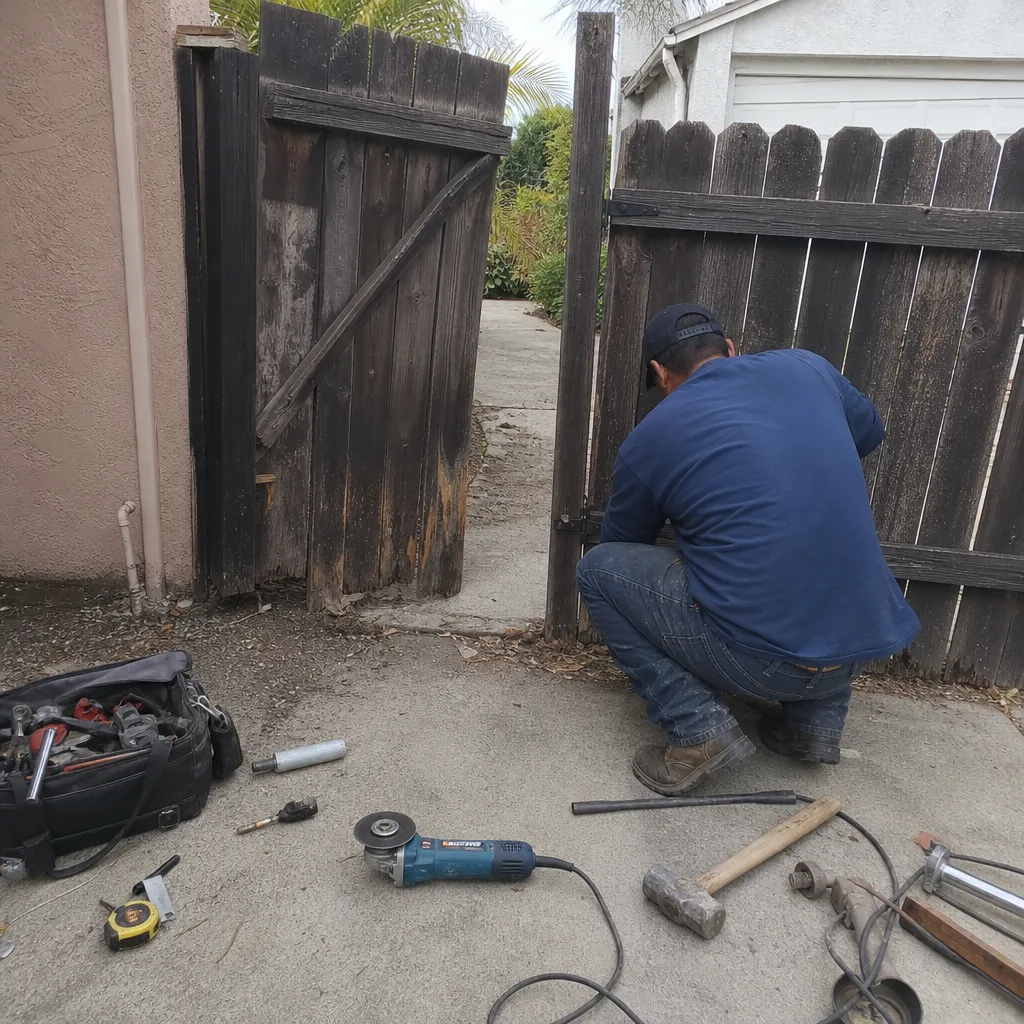 Before
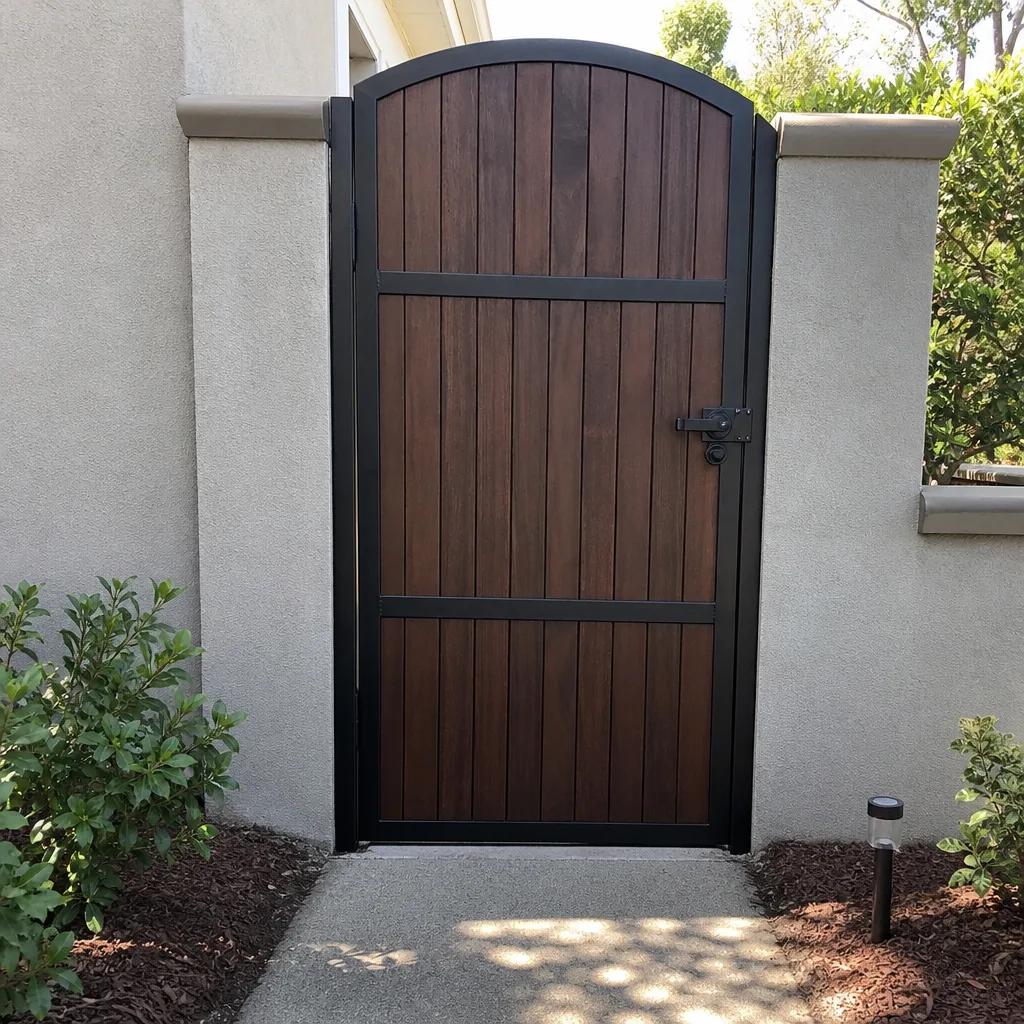 After
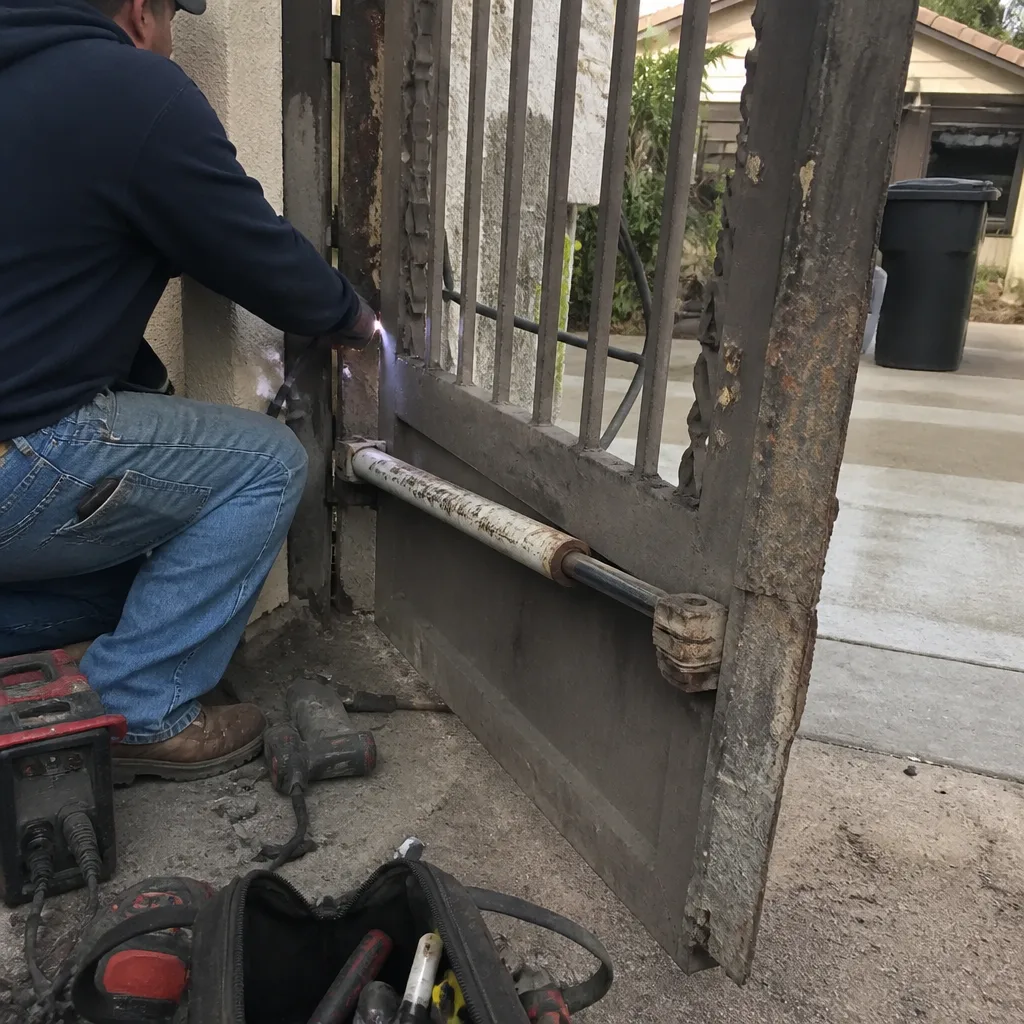 Before
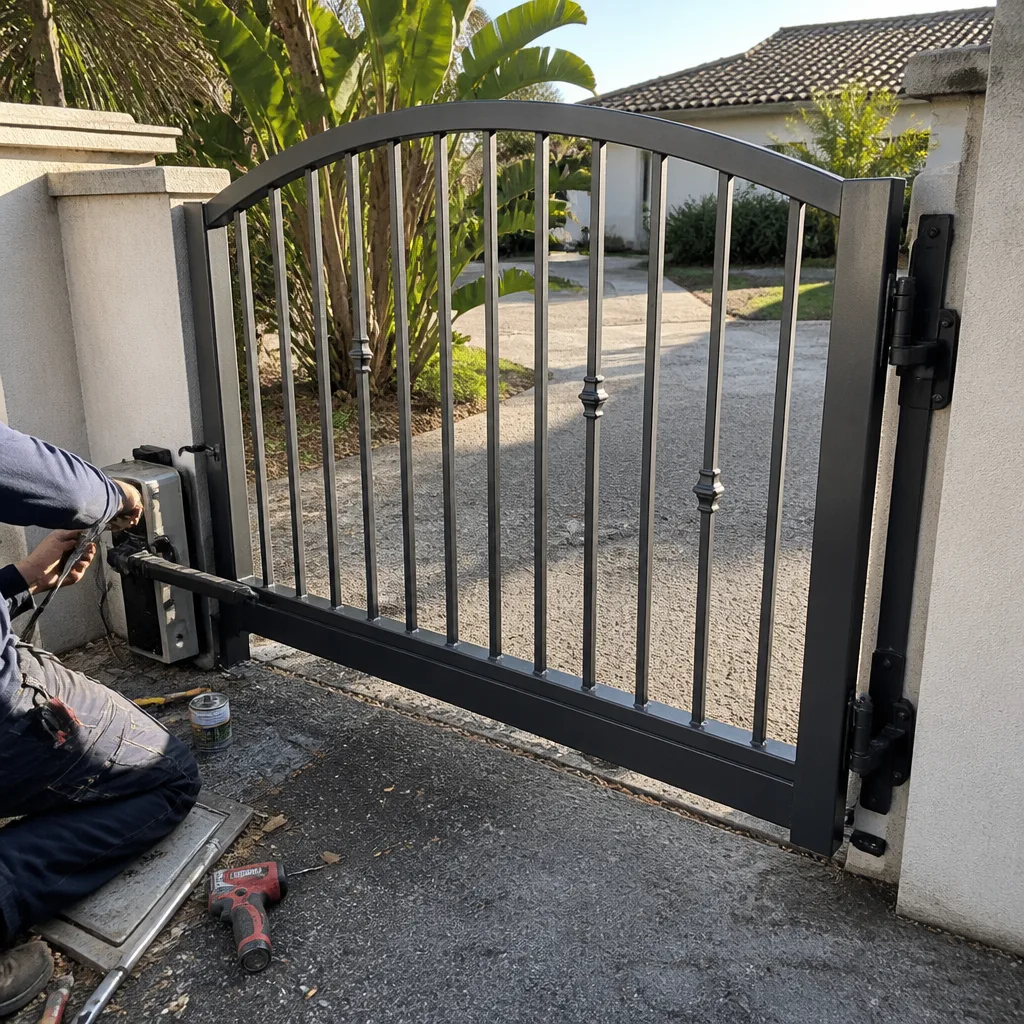 After
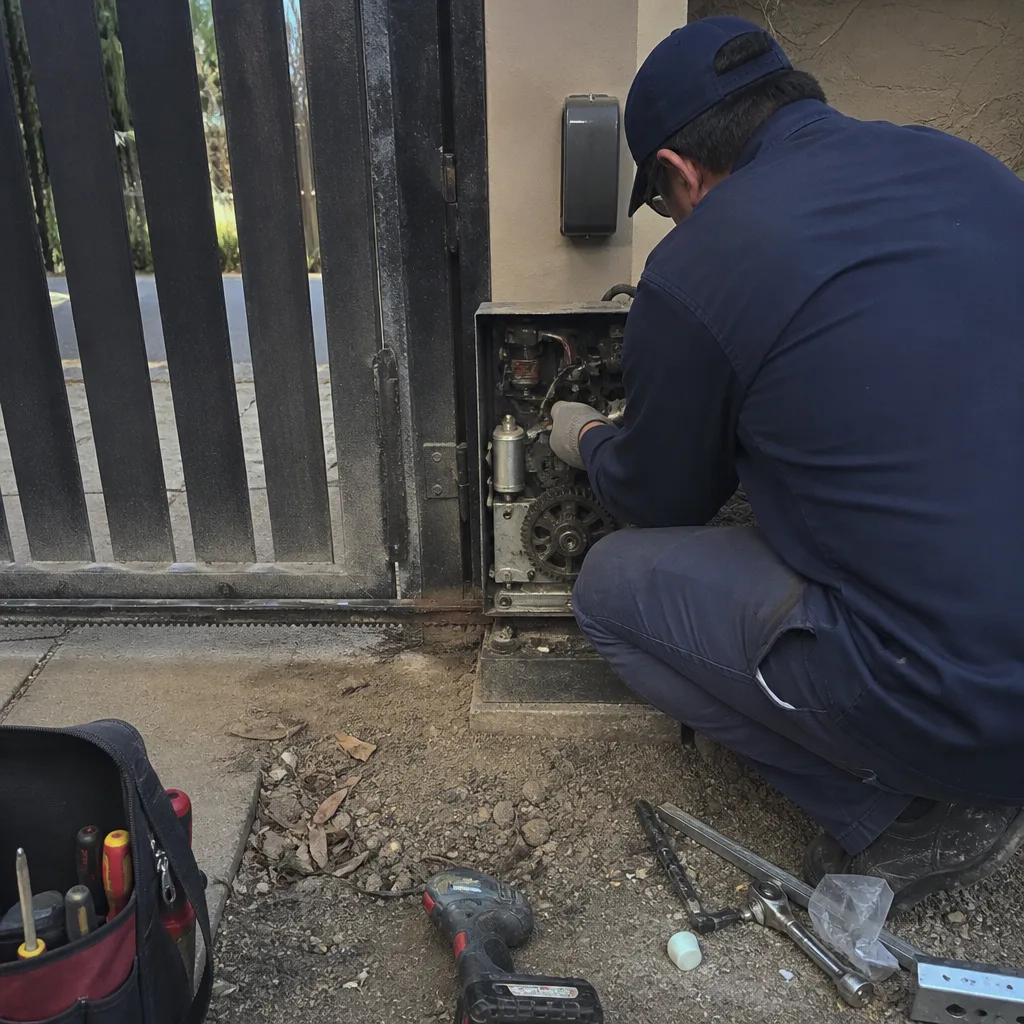 Before
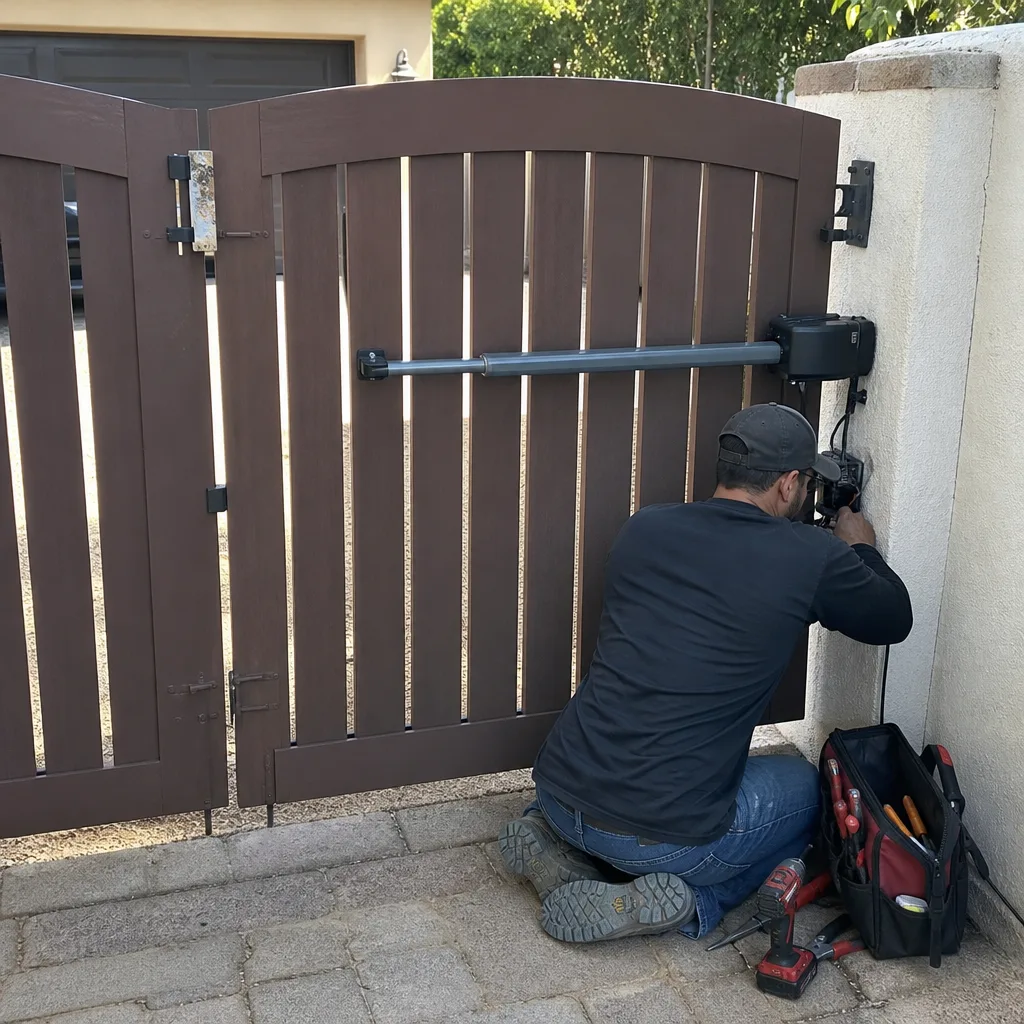 After