

Last updated October 31, 2026
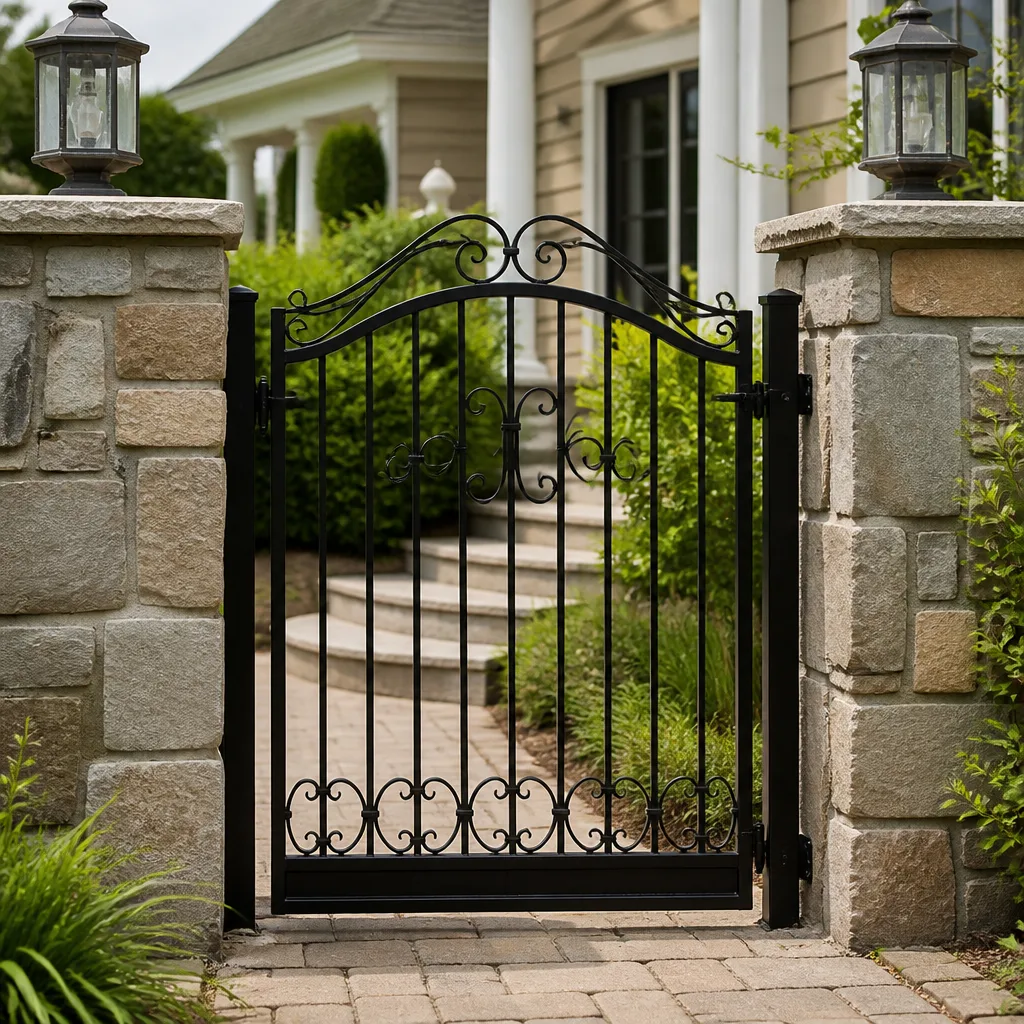 Wrought iron
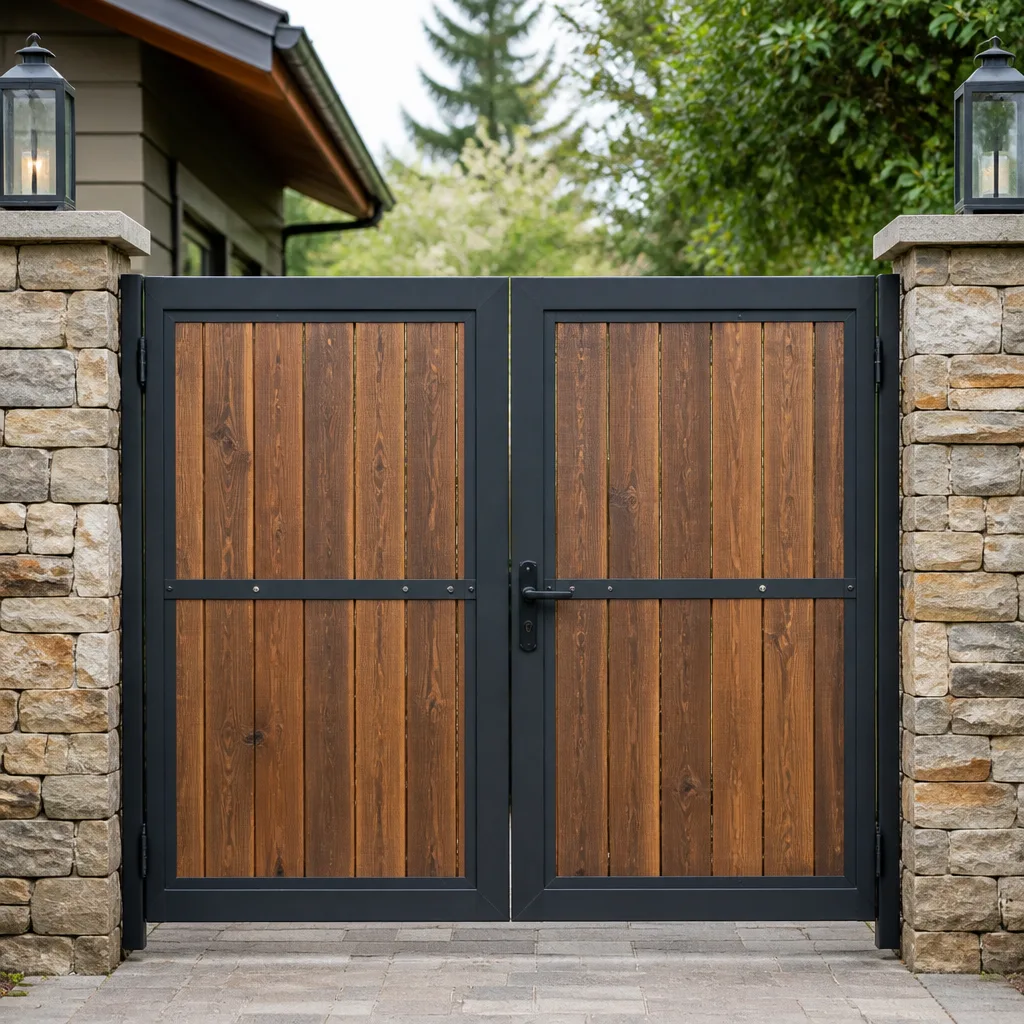 Wood & steel frame
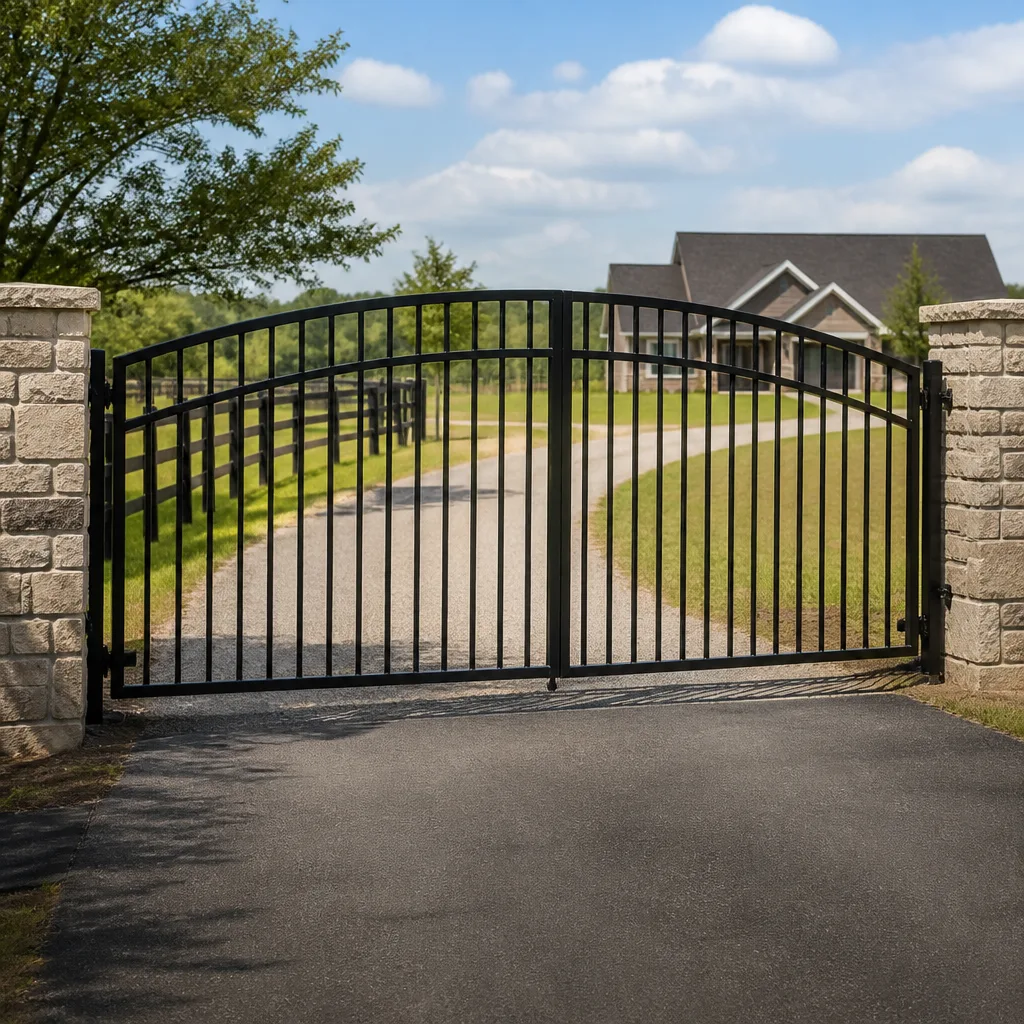 Farm & ranch
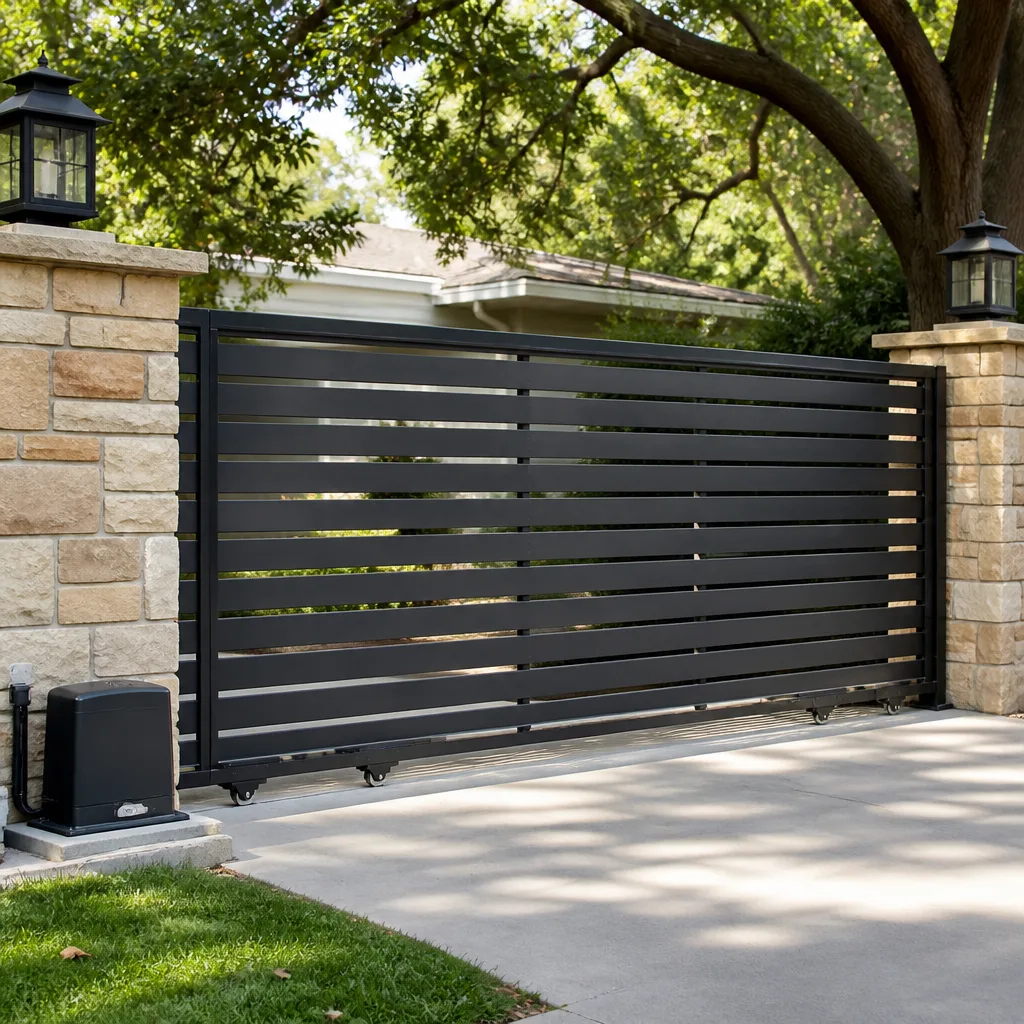 Sliding driveway gates
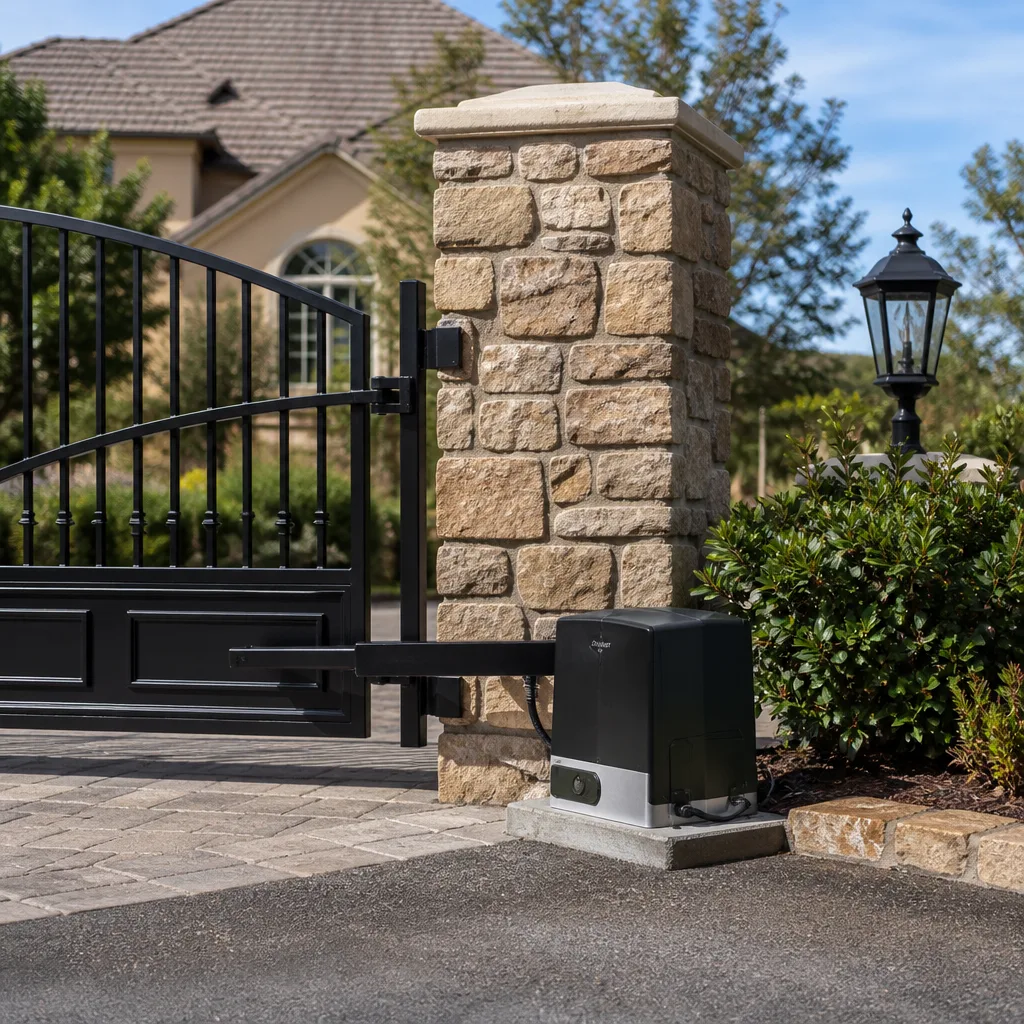 LiftMaster operators
Free on-site gate assessment - hinges, posts, and your LiftMaster or Nice gate operator checked before anything is quoted
The assessment is free and the quote is the invoice.
Get your free estimateHow to Hire a Gate Repair Contractor in San Diego: A Step-by-Step Guide
Here’s a number that should make every San Diego homeowner pause: roughly 40% of the gate repair calls we walk into are second opinions on work another contractor botched or misdiagnosed. That’s not a knock on the trades. It’s what happens in a market where gates are treated as a side hustle by fence companies, garage door shops, and general handymen. This guide gives you a concrete hiring framework, built from years of field experience in San Diego, so you can filter out the generalists before they touch your property.
Styles & brands we work with
Quick Answer
To hire a gate repair contractor in San Diego, verify the CSLB license classification C-61/D28 (not just a general building license), ask brand-specific diagnostic questions before booking, require a written line-item proposal after a site visit, and confirm the contractor stocks parts locally for your operator brand. A specialist who hesitates on basic gate terminology or offers a flat-rate quote without inspecting your site should be disqualified immediately.
Table of Contents
- Step 1: Verify the License Classification Before Anything Else
- Step 2: Ask the Question That Separates Specialists From Generalists
- Step 3: Understand San Diego’s Gate Failure Patterns
- Step 4: Read a Gate Repair Proposal Like a Specialist
- Step 5: Check Parts Availability and Local Stock
- Step 6: Verify Manufacturer Knowledge for Warranty Protection
- Step 7: Get the Scope in Writing and the Price Upfront
- Common Mistakes to Avoid
- When to Call a Professional
- Frequently Asked Questions
- The Bottom Line
Step 1: Verify the License Classification Before Anything Else
California’s Contractors State License Board (CSLB) doesn’t have a generic “gate repair” license. What you’re looking for on the contractor’s credential is the C-61 classification with the D28 subcategory, which covers doors, gates, and activating devices. A C-10 electrical license is also relevant when the job involves significant low-voltage or line-voltage wiring for access control, but the D28 is the one that tells you this contractor is tested and bonded specifically for gate work.
Many San Diego property owners hire a general contractor with a B license because the bid was competitive. A B license means the contractor is qualified to build structures, not necessarily to diagnose a Viking swing operator that trips its limit switch every third cycle or a LiftMaster slide gate that binds on the rail after rain. We’ve been called to repair gates in Rancho Bernardo and Chula Vista where a generalist spent hours replacing hardware that was never the problem, because they didn’t recognize the failure mode of the operator board.
Before you book a single appointment, pull the contractor’s license number from their website or truck and verify it on the CSLB website. Confirm the classification. Confirm there are no active suspensions. Confirm the workers’ compensation coverage is in place. This takes five minutes and eliminates the riskiest tier of the market.
What to verify:
- License classification: C-61/D28 (or C-10 for electrical work on operators and access control)
- License status: Active, with no pending disciplinary actions
- Insurance: General liability and workers’ comp carried by the contractor, not just subcontractors
- Bonding: The CSLB-required contractor bond should be current
If a contractor hesitates to provide a license number, that’s the end of the conversation. There are enough competent gate specialists in San Diego that you don’t need to gamble.
Step 2: Ask the Question That Separates Specialists From Generalists
Ask any contractor you’re considering this single question: “What’s the difference between a Type 1 and Type 2 FAAC underground operator?” If they hesitate, you’re talking to someone who learned gates on the side.
The answer, for your reference: a Type 1 FAAC underground operator uses a single hydraulic ram (typically the 750 model) to push and pull a gate leaf, and it’s suited for lighter residential gates. A Type 2 uses paired hydraulic rams (the 760 or 770 series) to move heavier gates with balanced force on both sides of the leaf. The distinction affects installation geometry, hydraulic line routing, and the force settings programmed during commissioning. A gate specialist knows this cold. A generalist hears the word “FAAC” and starts flipping through a catalog.
This question is not about gate trivia. It’s a proxy for whether the person you’re hiring has spent enough hours on enough brands to diagnose your specific system efficiently. In our experience, we work on systems from Mighty Mule to BFT to LiftMaster, and the diagnostic difference between a trained gate technician and a handyman on any of those brands is usually a one-visit fix versus a three-visit experiment.
Other vetting questions that work:
- “What’s your process for testing safety loops on a slide gate?” (A specialist will describe the VOM reading on the loop detector terminals; a generalist will look confused.)
- “How do you handle a ghosting issue on a Mighty Mule control board?” (Ghosting, where the gate reverses without obstruction, has specific diagnostic steps: testing photo eye alignment, checking ground continuity, verifying the force settings. A generalist will replace the board and hope.)
- “Can you show me a recent repair on a gate like mine?” (A specialist can pull photos from the truck and walk you through the diagnosis.)
- “Do you calibrate force settings to the manufacturer’s spec or by feel?” (The correct answer is manufacturer’s spec, verified with a force gauge.)
One or two of these questions will tell you more about a contractor than twenty Yelp reviews.
Step 3: Understand San Diego’s Gate Failure Patterns
San Diego’s climate is gentle on gates compared to Phoenix or Minneapolis, but it has two distinctive failure drivers: coastal salt air and hillside installation loads. This matters when you’re hiring because a contractor who has never worked in your part of San Diego may misdiagnose the root cause and sell you the wrong repair.
Within three miles of the coast, from Ocean Beach up through La Jolla and Carlsbad, we routinely see accelerated corrosion on gate hinges, cantilever rollers, and exposed operator hardware. A steel gate hinge that would last fifteen years inland can seize in five near the water. Salt fog penetrates the powder coat, the rust expands, and the gate starts sagging. The repair is often a replacement with marine-grade hardware or a full re-hang, not just a lube job. A contractor who doesn’t factor coastal corrosion into the diagnosis will replace one hinge, then the other hinge fails six months later.
Inland, in neighborhoods like Scripps Ranch, Rancho Peñasquitos, and parts of Poway and Escondido, the issue is often topographic. Gates installed on slopes carry uneven loads. A swing gate on a slight incline develops sag because gravity pulls the leaf downhill continuously. Repairing it properly means addressing the post anchoring and possibly adding a mid-rail support or an anti-sag kit, not just tightening the hinge bolts and calling it done.
When you interview a San Diego gate contractor, ask whether they’re familiar with your specific neighborhood and the failure patterns there. If they give a generic answer, that’s a signal. If they say, “Yeah, in your area we see a lot of X,” and X matches what’s actually wrong with your gate, you’ve found someone who knows the local stock.
Step 4: Read a Gate Repair Proposal Like a Specialist
Most gate repair bids in San Diego come in two flavors: the vague flat-rate quote and the legitimate line-item proposal. Learning to tell the difference is the single highest-leverage skill in this entire guide.
A vague flat-rate quote will say something like “Gate repair: $850” with no breakdown of parts, labor, or diagnostic findings. That number was invented over the phone or from a photo. It’s a placeholder designed to get a signature, after which the contractor will either do the minimum work or call back with a change order once they’ve seen the gate in person.
A legitimate proposal, by contrast, reflects a site visit. Someone stood in front of your gate, operated it, listened to it, checked the safety devices, and identified the failure point. The proposal should always include:
- Operator make and model: If the proposal says “gate operator” without specifying that it’s a LiftMaster SL3000 or a BFT Deimos or a FAAC 750, the contractor hasn’t actually diagnosed anything.
- Specific parts with brand and model numbers: “Replacement control board” is lazy. “LiftMaster K94-37250 control board” is a diagnosis.
- Labor hours and rate: Transparent contractors quote the hours separately so you understand what you’re paying for.
- Safety device verification: A line item for testing or replacing photo eyes, safety loops, or edge sensors. If this line is missing, the contractor is not checking the safety systems, which is a red flag for liability and safety.
- Warranty scope: What’s covered, for how long, parts and labor or parts only.
- Start and completion timeline: Even a one-day repair should have a committed window.
Here’s what the absence of these line items signals. No operator model number means the contractor is guessing. No safety device line means they’re not thinking about your gate as a system. No labor breakdown means they’ve built enough padding into the quote that they don’t want you to see it. A missing completion timeline means they may push your job behind other work.
Read any San Diego gate repair proposal with this checklist in hand. It will eliminate most of the market’s low-quality bids before you spend a dollar.
Step 5: Check Parts Availability and Local Stock
Here’s a scenario we hear from San Diego homeowners every month: the contractor diagnosed the problem, collected a deposit, and then told the homeowner the part is “on order” and the gate will be down for a week. Maybe two. If the gate is the only thing between a toddler and the street, or between a commercial lot and unsupervised access, a week of downtime is unacceptable.
The question to ask before hiring: “Do you stock parts locally for my gate’s operator brand?”
A contractor who stocks parts for LiftMaster, BFT, FAAC, and Mighty Mule operators can typically complete most residential repairs the same day as the diagnosis. The part is on the truck or in the local warehouse. A contractor who orders parts from a distributor ships the gate down for a week while your security hangs open.
This is where San Diego Gate Company’s brand coverage translates into real operational advantage. We work on virtually every major gate brand, including yours, and the technical investment across those brands means we’re not learning your system from scratch when we arrive. That said, no contractor stocks every board for every operator ever made. The realistic standard is this: for the common failure points (control boards, limit switches, photo eyes, capacitors, hydraulic seals), the parts should be either in local stock or available within one business day. If the contractor says “we’ll order it and call you,” ask how long. If the answer is vague, call someone else.
For commercial property managers in San Diego, this question matters even more. A distribution center in Otay Mesa with a down gate is losing access control for every minute the gate is open. A restaurant in the Gaslamp with a stuck service entrance gate is losing hours. The parts availability question is not a nice-to-have. It’s a business continuity decision.
Step 6: Verify Manufacturer Knowledge for Warranty Protection
If your gate operator is still under manufacturer warranty, who repairs it matters as much as what they repair. Brands like FAAC, BFT, and Linear enforce warranty terms that can be voided by unauthorized service. This is a fact most San Diego homeowners don’t know until they file a claim and get denied.
Manufacturer-authorized service means the technician has completed brand-specific training and has access to factory technical support, updated firmware, and genuine parts. The practical difference is that when a BFT control board fails under warranty, an authorized service provider can process the claim and install the replacement without the homeowner paying out of pocket. An unauthorized contractor installing the same board will likely use a gray-market part, void the warranty on the new component, and leave the homeowner holding the full cost of a repair that should have been covered.
This is why brand-agnostic service matters. We recommend the right fix for the existing system, not a replacement you don’t need. A contractor who only services one brand will tell you that your FAAC operator “can’t be fixed” and push a new LiftMaster instead. A contractor who doesn’t know your brand will install a universal aftermarket part that works for three months. A contractor trained across nine major brands, from FAAC to Mighty Mule, can diagnose what’s actually wrong and repair it with the correct part the first time.
Ask the contractor directly: “Are you authorized to service the brand of operator I have?” If the answer is a hedge, move on.
Step 7: Get the Scope in Writing and the Price Upfront
The moment before you sign a gate repair contract is the moment you should review the full scope with the contractor standing next to you. Not because contractors in San Diego are dishonest, but because gate repair has too many variables to leave to a verbal agreement.
A proper written scope includes the specific repairs, the exact parts, the labor hours, the safety device testing, the warranty, and the total price. It also includes what’s not included. That last part matters. If the contractor discovers secondary damage during the repair, is that a change order or included? If the gate needs a new post, is anchoring included? If the operator needs reprogramming after the part replacement, is that a separate line item?
The rule we tell every San Diego homeowner: the price is quoted and agreed before any work starts. Not estimated. Not approximated. Agreed. You should never be in a position where the gate is half-disassembled and the contractor announces that the price went up. A competent specialist who has done a thorough site assessment can quote a firm number. If a contractor insists on “time and materials” for what should be a straightforward repair, walk away and call a gate specialist who will commit.
This is also the point to confirm the contractor will dispose of the old parts, clean the work area, and demonstrate the repaired gate before leaving. These are baseline professional standards. If they’re not in the scope, they won’t happen.
For a broader look at what Gate Repair in San Diego typically involves, including pricing ranges and emergency options, see our service page. If your problem is with an automated system, the diagnostics are different – Electric Gate Repair in San Diego covers operators, safety devices, and access control wiring. And if the repair reveals a gate that’s beyond saving, Gate Installation in San Diego walks through replacement options from planning to commissioning.
Common Mistakes to Avoid
- Hiring a garage door company for a gate. Garage doors and gates share some mechanical DNA, but the operators, safety standards, and failure modes are different. A garage door tech who does one gate a month is not a gate specialist.
- Accepting a quote without a site visit. Any contractor who prices a gate repair from a phone photo hasn’t seen the operator, the hinges, the safety loops, or the ground conditions. That quote will not hold.
- Ignoring the license classification. A B general building license is not the same as a C-61/D28 gate specialization. One means qualified to build; the other means qualified to diagnose your specific system.
- Skipping safety system verification. Photo eyes and safety loops are what keep a closing gate from hitting a car, a child, or a delivery driver. If the repair scope doesn’t include testing these, the contractor is leaving a liability on your property.
- Choosing the lowest bid by a wide margin. In San Diego’s gate repair market, very low bids almost always mean one of three things: the contractor hasn’t diagnosed the problem, the parts are aftermarket, or the labor is cut. None of those save you money.
- Not asking about parts availability for your specific brand. A LiftMaster control board and a FAAC hydraulic seal kit come from different supply chains. The contractor who says “we’ll order it” without knowing your brand is telling you your gate will be down.
- Paying the full amount upfront. In California, the legal deposit limit for home improvement work is 10% or $1,000, whichever is less. Use that as your benchmark.
When to Call a Professional
Call a gate specialist the moment your gate’s behavior changes. A slow start, a loud motor, a gate that reverses unexpectedly, a sagging leaf, a control board that beeps and won’t respond – these are all symptoms with specific diagnoses, and delaying them turns a small repair into a full system replacement. Safety-critical issues, including any gate that moves on its own, trips a breaker, or fails to stop when obstructed, need immediate attention. In San Diego, where gates are common on hillside properties and commercial lots, a malfunctioning gate is not just a nuisance – it’s a security gap and a liability. San Diego Gate Company offers free estimates in San Diego – call (877) 517-5469. From a broken hinge to a full electric gate installation, one call covers it.
Frequently Asked Questions
Most residential gate repairs in San Diego run between $185 and $450 for common fixes like hinge replacements, sensor realignment, and limit switch adjustments, while operator repairs involving control boards or hydraulic components typically start around $500 and can exceed $1,500 for commercial systems. The exact number depends on the operator brand, part availability, and the extent of secondary damage. Call (877) 517-5469 for an exact quote – estimates are free.
For emergency gate repairs in San Diego, a specialist with local parts stock can often complete same-day diagnosis and repair, especially for common failures on LiftMaster, BFT, and Mighty Mule operators. The fastest way to confirm availability is to call (877) 517-5469 and describe the symptom.
A complete Gate Installation in San Diego typically includes site assessment and measurement, gate fabrication or delivery, post setting, operator installation and programming, safety device integration (photo eyes and loops), and final commissioning. Some jobs also require low-voltage electrical work for the operator and access control, which should be included in the written scope.
Yes, our Electric Gate Repair in San Diego service covers the full system: the operator, the control board, the low-voltage power run, the photo eyes, the safety edges, and the ground loops. We diagnose the real problem, no upselling you a new system when a repair will do.
A gate repair contractor in California should carry a C-61 license with the D28 subcategory (doors, gates, and activating devices), and may also carry a C-10 electrical license for work involving line-voltage wiring or access control systems. Verify the license number on the CSLB website before hiring.
You can check your operator’s warranty status by locating the model number and serial number on the unit, then contacting the manufacturer or an authorized service provider. If the unit is under warranty, use a manufacturer-authorized technician to avoid voiding coverage – brands like FAAC, BFT, and Linear enforce warranty terms strictly on gate operators.
The Bottom Line
Hiring a gate repair contractor in San Diego is not about finding the cheapest bid or the closest truck. It’s about finding a specialist who can answer brand-specific questions without hesitating, quote a firm price after a site visit, and stock the parts to finish the job without leaving your gate down for a week. Verify the C-61/D28 license. Read the proposal for operator models and safety device lines. Ask about local parts availability. And if the contractor can’t tell you the difference between a Type 1 and Type 2 FAAC underground operator, call someone who can. San Diego Gate Company home serves every San Diego neighborhood, from coastal communities dealing with salt-air corrosion to inland hillside properties with load irregularities. Automated or manual, we know how it works.
Written by the team at San Diego Gate Company, serving San Diego since 2018.
See the difference
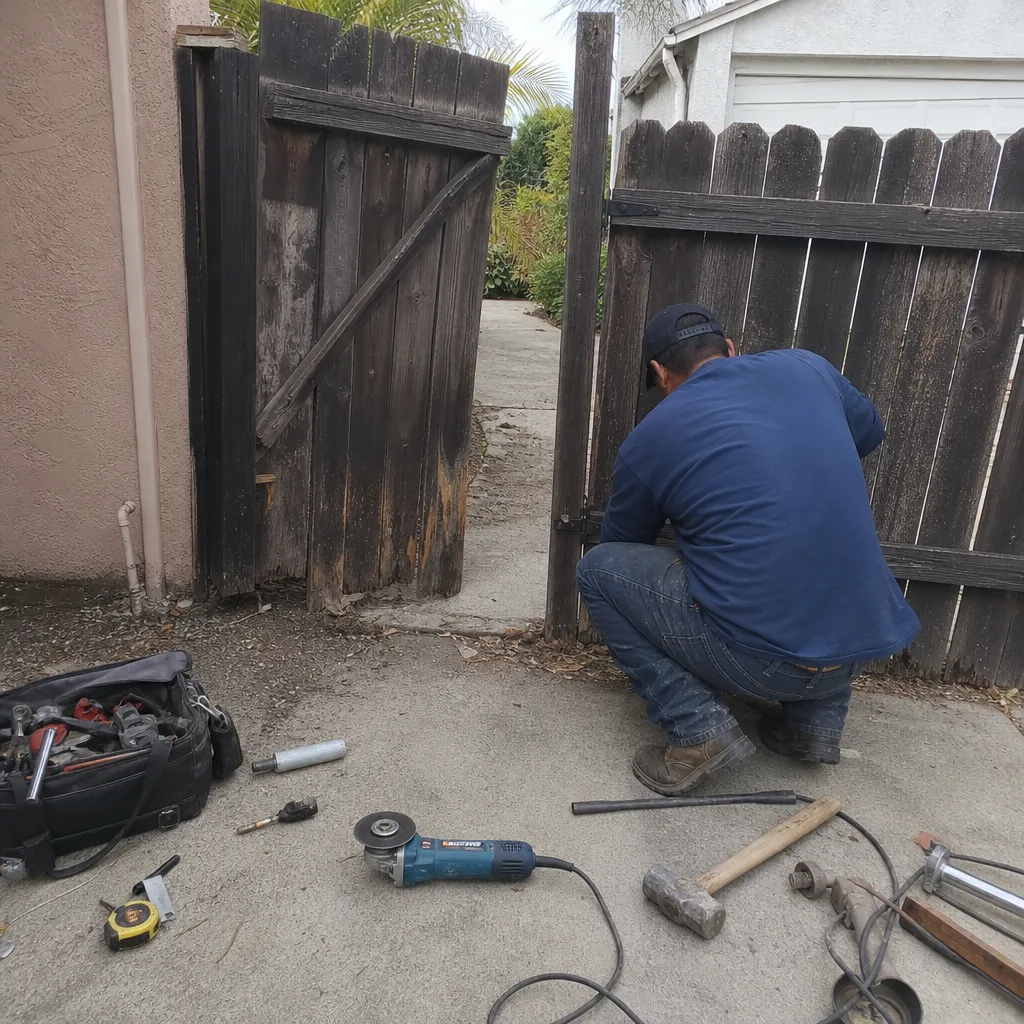 Before
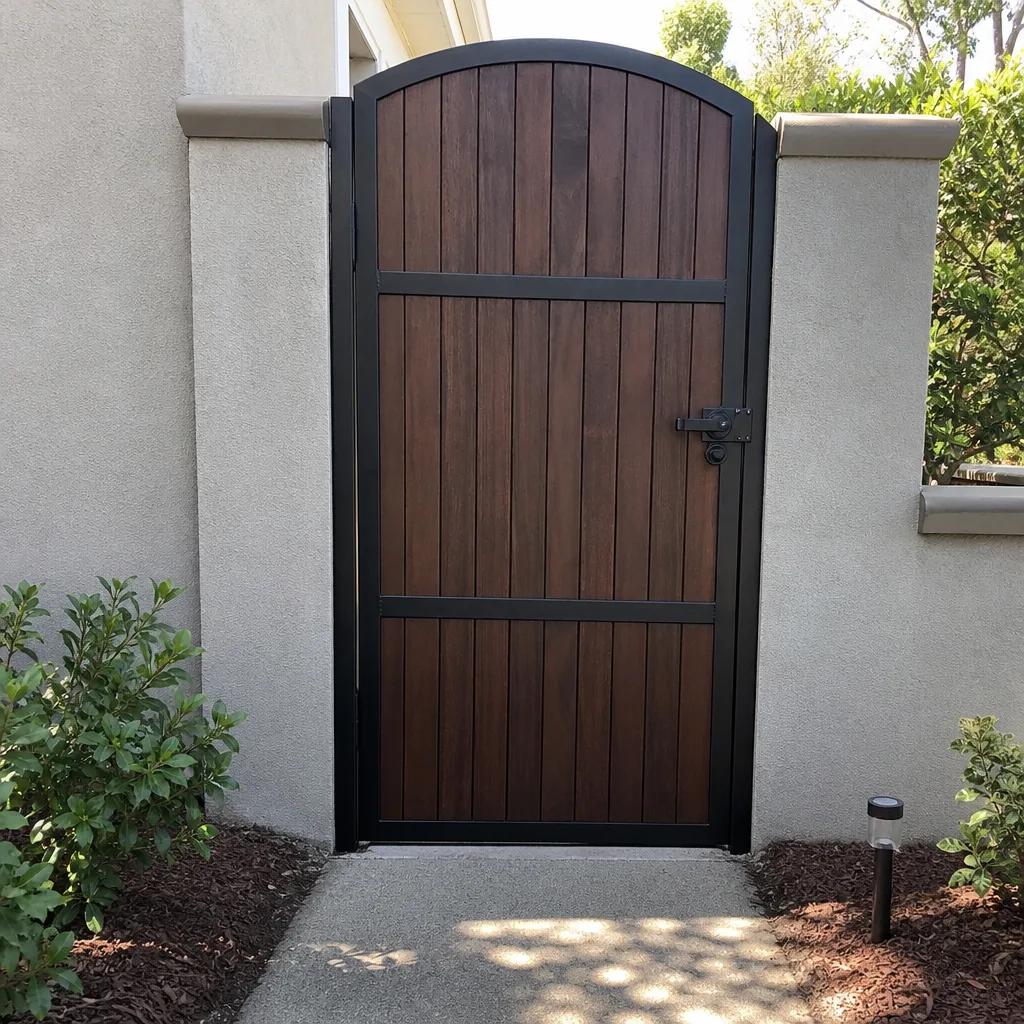 After
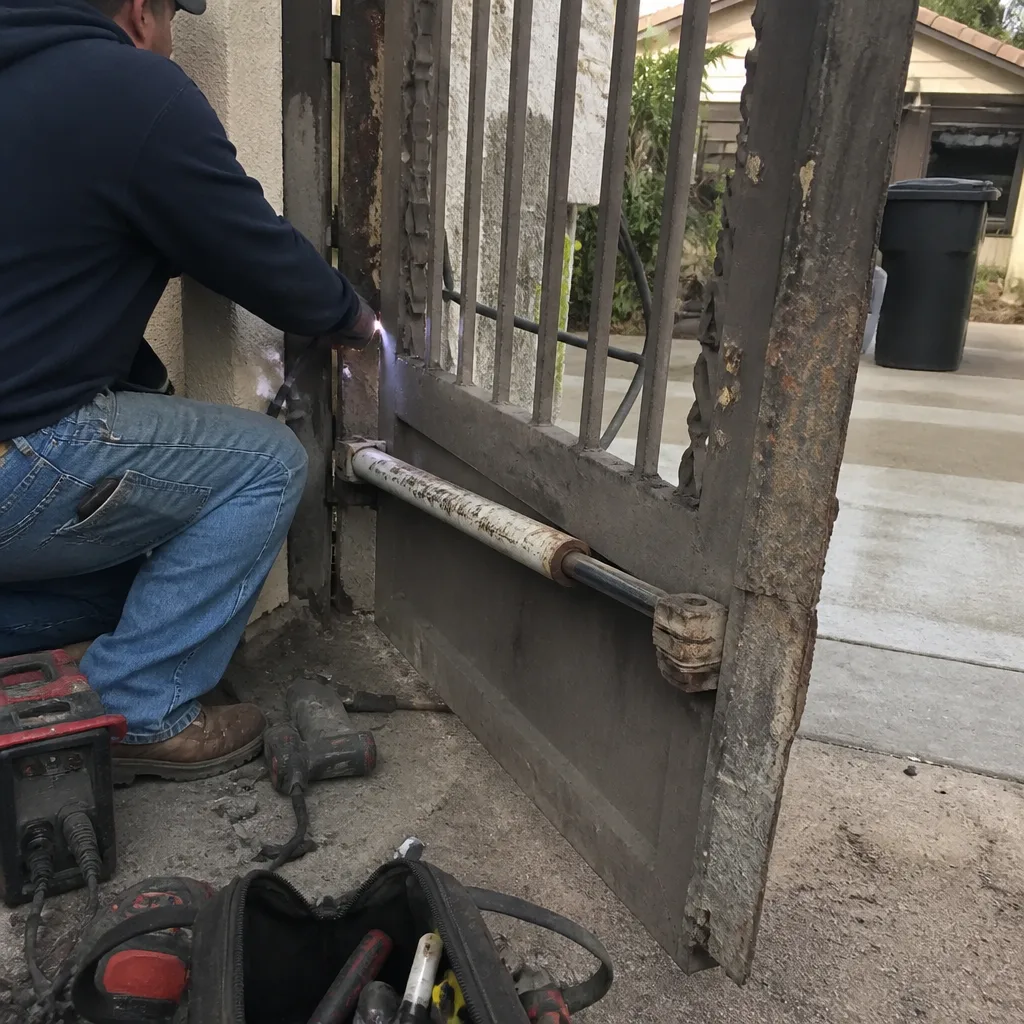 Before
 After
 Before
 After